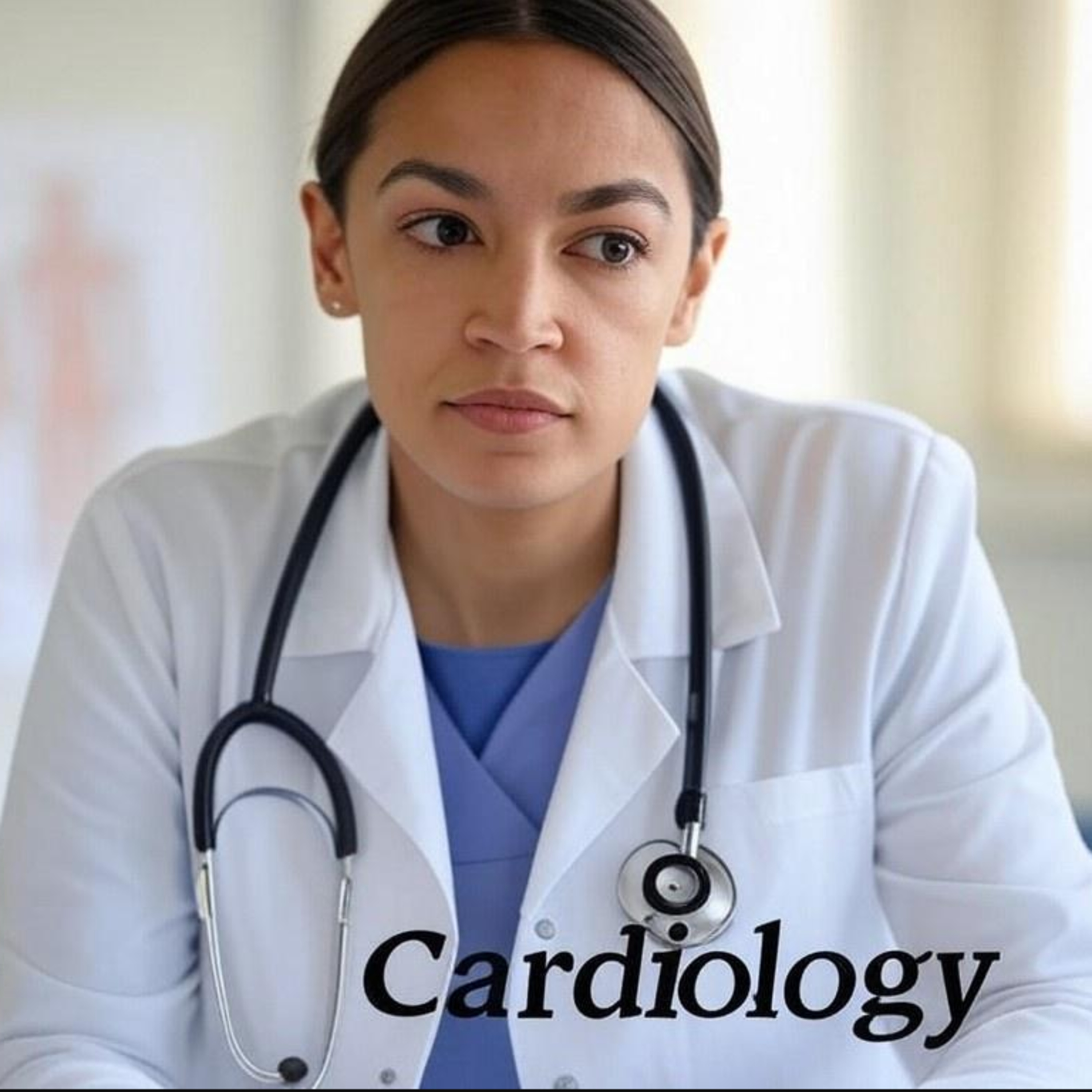
Beating heart disease with AI, tech, wearables, knowledge and access. With Ami Bhatt, M.D.
In this episode
DoctorPodcasts Episode 130:Harvard cardiologist,🩺 Ami Bhatt, M.D., American College of Cardiology @ACCmediacenter Chief Innovation Officer, reveals how AI, @Apple Watches & wearables are revolutionizing heart health & longevity. From trustworthy AI to lifesaving habits - don't miss this!❤️Watch all 130 episodes of the DoctorPodcasts || Cykiert Files video podcast interview show with physicians, scientists, healthcare specialists, entrepreneurs and other experts. Please SUBSCRIBE & FOLLOW @DoctorPodcasts. Please LIKE, REPOST/QUOTE and SHARE the episodes. Send questions, comments and messages to @DoctorPodcasts. Thank you. Robert Cykiert, M.D.
#heart
#cykiert
#cykiertfiles
#videopodcast
#cholesterol
#LDL-c
#LDLcholesterol
#coronary
#calciumscore
#PrecisionMedicine
#ValueBasedCare
#WorkforceShortage
#MedicalAITrends
#AgenticAI
#HealthEquity
#SystemsInteroperability
#ClinicalReasoning
#PersonalizedHealthcare
#PhysicianAssociate
#MedEd2025
#HealthTechInnovation
#MedTwitter2025
#PatientAccess
#HealthcareStrategy
#DigitalTransformation
#MedicalMarketing
#EvidenceBasedPractice
#HealthcareCost
#MedSchoolPrep
#DoctorPodcasts
#VideoPodcast
#MedicalPodcast
#HealthcareInnovation
#HealthTech2025
#DigitalHealth
#MedEd
#DoctorEntrepreneur
#PatientEngagement
#MedicalNews
#HealthTips
#WellnessJourney
#HealthcareMarketing
#PracticeManagement
#Telemedicine
#ContentCreator
#MedTwitter
#DigitalMarketingForDoctors
#HealthEducation
#FutureOfHealthcare
#PhysicianLife
#MedicalVideo
#HealthPodcast
#PatientCare
#ClinicianInsights
#HealthcareLeaders
#MedTechTrends
#Biohacking2025
#EvidenceBasedMedicine
#PhysicianBurnout
#MedicalStudent
#PublicHealth
#HealthcareCommunications
#PodcastStrategy
#DoctorVlog
#HeartDisease
#AIinHealthcare
#CardiologyInnovation
#WearableTechnology
#AppleWatch
#HeartHealth
#Longevity
#Telemedicine
#DigitalHealth
#CardiovascularCare
#AmiBhattMD
#AmericanCollegeOfCardiology
#ACCInnovation
#PreventiveCardiology
#AIinCardiology
#HealthTech
#MedicalPodcast
#DoctorPodcasts
#HarvardCardiology
#TrustworthyAI
#LifesavingHabits
#RemoteMonitoring
#PersonalizedMedicine
#CardiacCare
#HealthInnovation
#CongenitalHeartDisease
#VirtualCare
#CardiologyPodcast
#HeartLongevity
#TechInMedicine
Thanks for joining us on episode #130 of the Doctor Podcast Show. And I'm your host, Doctor Robert Sicard. Please subscribe and follow Doctor Podcast and also like and share this episode with your friends and family and colleagues. So we can catch up to Joe Rogan, who today was announced to be the top podcaster on Apple and Spotify. But we're catching up real quick. So thanks for subscribing and following. Today, we're discussing something that is very near and dear to you, and that is your heart.
We have an expert on this subject today, Doctor AMI Bhat. Dr. Bhat is a cardiologist and is the Chief Innovation Officer at the American College of Cardiology, very prestigious organization, which we'll talk about some more in a few minutes. She's a pioneering cardiologist blending AI, telehealth and digital tools with real clinical care. She's Harvard and Yale trained expert in adult congenital heart disease and virtual cardiology. She's also one of the early founders of a telecardiology program back in 2013, so she saw this coming many years ago.
She's also a global voice for equitable human centered healthcare that reaches everyone, everywhere. So today, we're going to discuss how AI, wearables and smart data are transforming heart health and prolonging longevity. So Doctor Bhatt, thanks very much for taking time to join us today and sharing your years of experience with cardiology and heart disease. Really appreciate it. Thank you so much for having me. Other than feeling a little bit old when I hear my own introduction, things are great.
All right, but you know how to extend longevity now, so we're going to find out from you how to do that. So. So tell me, what inspired you as a busy cardiologist for many years, to dive so deeply into digital health and innovation over a decade ago? It's a great question. It was actually my patients. So the the field of adult congenital heart disease is a relatively new one, or at least it was when I started practicing 20 years ago. And that kids with heart disease weren't really surviving all that long into adulthood.
And then they started to because of all these advances and we didn't have people to take care of them. I was trained in both adult medicine and Pediatrics and I liked cardiology. So I got to be one of the first kind of groups of people to care for these individuals. As a result, they were aged 2430, and that meant when technology was affecting their lives everywhere else, they demanded that same technology in the office. And so they were the ones who first said, hey, why do I come in four hours just to talk to you?
Can't we FaceTime? And I thought, well, I'm pretty sure I'll get arrested if we just FaceTime your healthcare. And so that was what led me to start looking into telemedicine platforms and see whether I could do that with my patients and for my patients. Wow, that's that's awesome. So your your patients gave you the idea and a light bulb went off. That's great. Now the American College of Cardiology is one of the most prestigious medical associations in the USA and the world. How did your career lead you to become the AC CS Chief Innovation Officer?
Yeah, so I, I loved telemedicine. I loved seeing my patients Wednesday afternoons from their home, sitting on their couches. Just the insights I got. It was really great and nobody else was very excited about it because we had no infrastructure. The tech was OK, not great. There's no payment back then, and I happened to be the director of outpatient cardiology operations at Mass General Hospital when COVID happened. So. Yeah, we, we, you know, we had to stop seeing patients or there was no way to do it in March of 2020.
And they said, does anybody know how to do this virtually? And I was like, hey, over here and I also happen to be the director of the clinic. So we went from, you know, roughly 60,000 visits a year to over 70,000. We improved access to care. It was a phenomenal opportunity to to look at a different way to deliver high quality health care into the communities where people live. And I think that was my first taste of, you know, I loved my patients so much and seeing them one at a time. But I realized that this technology would be an opportunity to, to help millions at a time.
And so that was kind of the, the impetus to start thinking about how do I do that? And the American College of Cardiology, 60,000 members, 2500 health systems, you know, 2/3 in the US, One Third Global was looking for a new chief innovation officer. So the timing was, you know, just right. And it was a good fit. Wow, so one of the very few benefits of COVID. Yes, yes, the very few. That's right. Now a lot of people are nervous about AI. I'm a little nervous about it also, especially in in medicine and healthcare, because there are stories about hallucinations and coming out wrong information.
How do we build AI tools that both doctors and patients can really trust and work with? Yeah, the phrase that I like to use is collaborative intelligence. And the reason I prefer that to artificial intelligence, first of all, when you tell somebody something's artificial, they're they're not going to want to trust it. So inherently it's not a great word. But the reason I like the word collaborative is I think in order to be able to actually trust the use of advanced computing technology, which is what AI is, you have to understand why was it created, how should I best use it?
And when you use it, you have to think about is there a way to make it better? And so that collaboration with the computer or, or the technologist building that compute power, I think that's really important. And, and so if we do that, then I think patients, clinicians, we will start to trust it more because we're involved in the process. And I think that's really important. So it's involvement in both sides, physicians and patients and collaborating together that that's good. We should change AI to, you know, collaborative.
AII think that would build trust immediately. Ma'am, I'm hoping so. Right now, what are the biggest red flags for bias in cardiovascular AI currently, and how is the American College of Cardiology tackling governance and transparency with AI programs? Yeah. So I think there's two things. One is the bias that comes from the data that we put into AI and and now we have to recognize it exists. We have kind of systemic bias in a lot of the the data sources that we have right now. And so we have to build more diverse data sources and, and that's important across the field, right?
Not just cardiology, but then we can talk about the AI itself. And I think the most important thing to us is what are you using it for? So when you're using AI in medicine, there's the administrative side, there's the back office, the systems, the supply chain, yes, all good places to kind of use that AI. There's also thinking about our workforce and thinking about all the non directly medical things that medical personnel have to do, right? That the paperwork in the and and how can we make that administrative effort a little bit easier and maybe even a little bit cleaner and better such that we can spend time looking each other in the face, eye to eye, communicating rather than typing all day.
So I think that's the other area that that I'm really excited about. The third area about AI, where I think some of that bias risk exists is when are we going to get to a point where we can use AI to get the right data about the right patient at the right time and then let a clinician make judgment based on it. And that's what we're all working towards. I like to call it navigating to knowledge, not clinical decision support. But I think the key goes back to collaborative intelligence. When you use AI and it tells you something, you have to determine if it's doing the right thing and if it's doing something wrong, don't throw out the baby with the bathwater, but instead say, hey, can we go back and make this better?
I'm pretty sure we can iterate on it. And and I think that's kind of the approach from a technical standpoint that's really going to help us with AI. But the data I think in terms of bias, the data is the first thing, right. And we just we need more dura status that's to be able to do right. Right. So it's got to be more than just a cool demo that you have. That's right, right. It's got to be valuable data that can be used. Let's talk a little bit about the data and, and wearables. Apple Watches, Whirl rings, Fitbits, just about everybody and all my I'm an ophthalmologist, but a lot of my patients are, are using these devices.
Just about everybody has a wearable now for one purpose and another. What's the most useful heart health data that they're giving us today, these wearables, and what's still kind of in the hype zone? Yeah, I think so. First of all, I think it's great when people want to use wearables and they want to measure their own numbers because we really, we can't do population health without patient agency. What we have to want to take care of ourselves. People often say, hey, that last mile of healthcare getting to the patient out of the hospital and it's not the last mile, it's the first mile.
Like we are where healthcare starts. It's with us in our home, wherever we're going. And so I love having something on us that helps us get a sense of who am I? What's my baseline heart rate? What happens to my blood pressure, right? What is my oxygen, whatever it is that you're supposed to be measuring? What is my baseline and when am I off? Do I get a feeling of what things I do or what medicines I take? I think that's really healthy for us. So my phrase for this is it's not consumerism, it's patient agency.
And so it's OK for people to measure. Now, the thing I said, though, is what you're supposed to measure. And I think that's important, the conversation between us as a patient and with the clinician saying what what's going to help me and what's just going to worry because, you know, health related anxiety is a real thing. We don't want to make it worse. So I think having a conversation with your clinician about, hey, I wear all these wearables for me specifically, are one of these things more helpful than others.
And, and for people who haven't had that conversation yet, I'd say doesn't hurt to measure heart rate. I like things like heart rate variability. It kind of helps you tell where you are. I say never compared to something you asked Google about, Hey, what's the normal number for this? Just run in your own baseline and get a sense for when you do different. If you don't sleep well, what happens to all those numbers, right? If you eat well, what happens if you're exercising? What happens compared to your own baseline?
And just get familiar with your body. I think that's the best thing to do. Right. So you're in favor of these devices, but it sounds like we need to educate people and patients about which of the data is important and how they should follow it. Like, for example, the Apple Watch now checks oxygen saturation, which is incredible technology. Do you think that's valuable for patients to know? It's, it's such a good question. A lot of these devices are increasingly doing more and more about medical related measurements.
Really important to kind of have FDA approval for those things as we're as we're thinking about using them and prescribing them medically. For the Apple Watch, the atrial fibrillation, knowing when you have an irregular heart rate was one of the 1st and big things that we thought that this watch was really useful for. And so we actually partnered the American College of Cardiology with Apple and we created an Apple Watch guide. And it's quite a few pages long, but it has sections and it's pretty darn readable at the 7th, 8th grade level.
That helps you understand as a doctor, what can this do and what can it not do as a patient, how should I use this? How should I not? And then if I'm talking to my patient, what a shared decision making look like. How do I educate people about how do I want, you know, the one thing that people always tell me is please don't let patients print out 100 sheets of Apple Watch or, or ring or whatever it is tracings, right? And bring it. I don't want that. And so the goal is learning how to communicate with one another and bring the right information back and forth so everybody feels respected included, right?
That's really important. Specifically for Apple Watch. I'll say a few things. One is oxygen levels by and large are normal in a majority of the healthy community. So I'm not a big fan of like randomly measuring your oxygen. This is just me speaking. I'm not giving clinical care to anybody who's listening on your channel. But you know, in, in general, that's not unless somebody's told you to measure your oxygen levels. Whereas things like how your heart rate responds to your day actually kind of interesting for everybody.
And, and now we're getting blood pressure trends, not blood pressure measurement, but a sense of, hey, over the past 30 days feels like your blood pressure might be high. Why don't you go check it and then you get a blood pressure cuff and you go to your doctor and you keep 7 days of a log and you. And so I think those kind of hints of, hey, there's an algorithm that's suggesting something might be going on. Why don't you do something medically to measure yourself? I think that's the other area I'm excited about.
Right. So the atrial fibrillation detector definitely works, right? Absolutely. All right, that's interesting. And the blood pressure sounds like it's more of a screening device, correct you to hey I better check this out and be sure whether my blood pressure is up or not. No, that's exactly right. And you know, it's funny, there's a couple of eye companies now, since you're an ophthalmologist that have come by and said, hey, with our phone, like you can actually see inside the eye and we can also give you a hint that you might have high blood pressure.
So I think there's a lot of different ways we're going to start finding that algorithms and AI say, hey, you might have this. And the question then is as a medical profession, what are we going to do about that? Because we don't want to worry everybody, but the same time we need an infrastructure like, hey, if you get a wearable data that says this, now what? And we need to help people with the now what? Right. Can the Apple Watch detect reduced oxygen levels to the heart muscle or what we call ischemia medically?
Yeah. So the Apple Watch cannot detect a heart attack. And so there really are no wearables that I would recommend you use that are not something that is a prescription grade, something that we're giving for, you know, there are no wearables right now that are going to say, hey, you're having a heart attack. What they can tell you is, hey, your blood pressure seems high on a blood pressure cuff. That's not a wearable, that's a remote monitoring clinical grade device. Or hey, your heart rate seems really high.
Are you uncomfortable? Right. And then symptoms, I'm feeling this. So again, I'll go back to you're not going to find things like a heart attack on a wearable right now. Atrial fibrillation is the one you're going to find the most. It's an abnormal heart rhythm. It can lead to the risk of stroke if undiagnosed. And so that's why we think it's important. But mostly we're still in the beginning stages of getting to know my own blood glucose with a chronic glucose, you know, monitor getting to know maybe blood pressure trends, getting to know my heart rate.
I think we're in that getting to know phase and learning how to work with that data. Education is key for patients, so that's what I find. That's true in all specialties, so that's good. What about the aura ring that also apparently can detect fluctuations in heart rate and possibly links those to stress? You know, there are there's so many wearables companies out there right now, right? So there there's a whole bunch of companies that have watches throughout the globe there, there the rings like the aura ring.
I've heard there's a couple other ones that are around, although they don't sell as much just yet. There's, you know, whoops, there's a garments and I think at the end of the day for those, what I would say is if something does not have FDA approval yet, you can't want to know that. That's a differentiator for now, right? It doesn't mean don't use it. It just means no, that there is a bar or a level that they haven't yet crossed necessarily. However, they may have great studies and they're just not there yet right there in the process when you're using those.
The aura ring people, I used to wear it quite a bit. I stopped wearing anything for a little while. But I think it's one of those things where the best part of a lot of these is the ability to help us take care of ourselves. Life is so busy that we forget ourselves, right? And this is a trigger to say, hey, you're not doing so hot today or, hey, look, you took time to take care of yourself. And it shows. And so that's where I think the greatest value to start with for a lot of these wearables like the R ring and others you're asking about are if I sleep poorly, boy, a whoop and or it doesn't matter, they're going to yell at me, right?
Like I'm going to know it now, maybe I already knew it, but I think it helps to see those numbers. And then you want almost like gamification, you want to get back up into the good graces of your wearable. And so you're going to try and fix that. So I think sleep stress, enough time for walking or closing your rings or whatever you want to call it, Those are the kind of things that I think these wearables are the best for. We're not taking good care of ourselves. We're not doing good lifestyle preventive behavior and we'll talk later about longevity, but there's nothing better for longevity than like good cardio, metabolic health, taking care of yourself.
Right, so now it's it's education and an occasional red flag from your wearable. Hey, watch out for this. Yep. And if it persists, see your doctor to figure out what's going on and and what's wrong before it leads to serious complications. Now how about how do these digital tools help close the gap for underserved communities or people in rural areas where they don't have easy access to a cardiologist or other specialists? Yeah. One thing we really have to recognize is for population health to happen to take care of a whole lot of people that wants, you need things that people are likely to want to use, right.
So kind of consumer facing and friendly, right? Easy to use and whose data can come in and maybe even be screened first by a computer. Like this is all in normal range here, Here are the things that are out of range. And then you don't need the cardiologist. Maybe you need a local primary care, you need a nurse. We can, in the future, our goal is to upskill and train community health workers both in the US and globally to be able to then identify trends based on some of this digital health. People would say, but wait.
The ideal is you want a cardiologist for everybody. I get that. But first, I'm not sure that's the ideal. And second of all, it's just not possible because we don't have enough cardiologists for the amount of cardiac disease we're going to have. We don't have enough doctors for the amount of patients we're going to have. And so we need to start thinking about how do you put more power in the hands of the patient, in the hands of the community, in the hands of the caregivers who are willing to upskill and do this work if you train them.
And so we really need to expand the, the pool of caregivers throughout the world. And it's it's very doable now with the advent of education, AI and some of this digital health. Right. It makes a lot of sense. I want to get a little deeper into heart disease. It's, it's still the number one killer in the USA. According to the latest data from CDC, about 900,000 people a year die from cardiovascular disease. And the cost of, of cardiovascular Healthcare is about $400 billion a year. So it's it's massive.
So can you tell us, first of all, what is a heart attack? We mentioned it briefly earlier. And what's the one thing most people get wrong about keeping their heart young and healthy and increasing their longevity and preventing heart attacks? Yeah. So let's just start with heart attack. There are a lot of things that can go wrong in the heart. Heart muscle can get weak. Heart valves can have issues, either leakage or narrowing. Heart rhythms can be abnormal. The heart attack typical that we talked about is actually the heart has arteries, coronary arteries.
They're like highways that are feeding the heart with fresh red blood to help the heart pump. There's a side on the left of the heart. There's generous side on the right of the heart. And they, they look kind of like this, right? And so they're just, it's like an artery and the blood flows through it. And what happens over time is from stress, inflammation, cholesterol deposition in patients with diabetes, you can start to see little blockages that occur. And they just kind of, you know, block the heart, just block the artery just a little bit.
The blood's still flowing through, but it's a little blocked. And generally that kind of starts early, can start as early as our 30s and increases over time. And if you have a family history and a genetic predisposition, you may have more of that, but you can still get blood flow through. Now sometimes then that plaque, we call it plaque, becomes what we call unstable. An unstable plaque can rupture or, or it means that that plaque can start to kind of not look so smooth, right? What happens if you picture just your hand and you scratched yourself?
You scar, right? Everything rushes to like scab over that area. Imagine if you're this, you got a little blockage, something happens like a little scratch and now you scab it over. No more blood flow. So that's the acute event where now the heart downstream for that goes where is my blood? And that is what we call a heart attack. And so that's kind of the process that I there's lots of more complicated ways, of course, to teach it, but but that's what I think about. And so for us, starting with understanding that we can control plaque development, but being aware of your genetics, keeping your LDL, the bad cholesterol low, decreasing inflammation, exercising regularly, sleeping well, less stressed, no diabetes, no smoking, all those things we know that that we just call like good lifestyle.
Good lifestyle means that won't happen, right? That's the goal. It's just hard because that happens later in life. And when you're young, you may not be paying attention. Right, that's the problem. It's caught too late. In many. Cases. So you mentioned the LDL cholesterol or otherwise known as bad cholesterol there. There's still some controversy out there about whether lowering LDL cholesterol is really beneficial in preventing heart attacks and, you know, clogging that artery that supplies the blood to the heart muscle.
What's what's the real story is, is it beneficial to keep your cholesterol low by taking medications or not? The the real story is lower cholesterol is 100% better. Yes, you want your LDL to be lower. Now you can play this game of how low can you go? I'm not having that discussion. I'm saying that we definitely have numbers. Blood pressure needs to be lower. LDL needs to be lower at the American Heart Association, our cyst organization. But we have life Simple, eight kind of eight things that matter.
If anybody wants to kind of Google and look that up, it gives you exactly the numbers of what you should be under, right? And that's really important, going to your doctor annually and checking all of those numbers. Blood pressure, risk of diabetes, cholesterol, your weight, your belly circumference. Oh gosh, nobody wants to measure their belly circumference, but we really should because we might be skinny but also have a little bit more than we should there. And that fat in the belly can actually translate into bad things for the heart.
And so knowing those numbers is really important. And yes, lower LDL is better. You must lower your LDL. You can try lifestyle. Some people it'll work and some people it won't, in which case medications exist to help us. Right now a lot of my patients I noticed are now taking injectable medications to lower their cholesterol, like Repatha for example. A lot of my patients take that instead of the statins. What's better, statins or the injectables like Repatha? Or is it different for every patient?
Best to talk to your clinicians, but definitely the injectables are strong, they work well. And if your clinician thinks you just need to get down fast and that's the way to do it, or if you, you know, haven't been able to get the kind of response you want, a big fan of all those medications. We're working on making injectable medications across the world, right, more affordable as well. And so the co-pays may be different and there are a lot of different factors for that, but absolutely they're they're not, there's not just one way to lower your cholesterol.
There are many different medications or you know, oral lifestyle as well as injectables and ways to to really get that down. Now one of the other things, there are some tests and biomarkers that are available to see if you're predisposed to an increased risk of heart attacks and strokes and other things, things like high sensitivity cardiac CRP, lipoprotein A blood test and apolipoprotein B blood test. Most of my patients are not getting this these tests done. Even when and they go to cardiologists they don't have this done yet.
From what I've read and researched these are really correlated with heart disease. Anybody be getting these tests and at what age? Yeah. So I think one of the things I want to start by saying is I have the greatest respect for primary care physicians because whereas I only have to think about the heart, they have to think about every single organ in the body. And like, God bless them for remembering the rules for everything. I, I do think that when you're seeing either your primary care or if you have a cardiologist, we have to increase the education.
And that can be direct to the clinicians, but it can also be direct to the patients to say, Hey, you need to ask for this test. And so, for example, lipoprotein lowercase A, this is a type of cholesterol that's not done during your irregular lipid profile, if that's what somebody asked for. So if you say you were getting your cholesterol checked, it may not include that. It's not in the panels right now. It is a marker, it is a bad cholesterol, if you will, but it is a marker that usually is genetic in the family.
Your family often times has it high too. So if somebody else has it high, you may. And it's associated with a much earlier chance and greater chance of developing plaque in your arteries. And so while some companies are developing, you know, drugs and therapeutics to try and control that and see if that helps, you know, people's outcomes, it really right now also tells us, hey, that's a higher risk feature for you. You should get on top of that blood pressure or that LDL faster. Let's get you in shape a little sooner.
You have an additional risk going on. And so there are many additional risk factors, both the blood markers we're talking about and biomarkers. Sometimes things like inflammatory diseases like having lupus or rheumatoid arthritis. For women who had pregnancy and had pregnancy complications like preeclampsia, high blood pressure, a congeal heart disease baby, some of those people may have an increased risk of heart disease. So there are a lot of additional things, not just the weight and the blood pressure and the sugars and the cholesterol.
And we're trying to teach everybody about it, but you have to recognize there's so much to teach every clinician out there in the world that the more we can go, go straight to a patient and say, hey, for you. I tell my South Asian patients this all the time. Lipoprotein little A is quite prevalent in South Asian people who tend to have heart attacks earlier in life. If you are a South Asian, you must tell them, not just a lipid profile, add that lipoprotein little A. And so we're working on it, but it's a campaign and it's an educational campaign that we have to do.
So we have to educate the doctors as well as the patients. That's right. That's right. Yeah, I tell a lot of my patients who tell me I have high cholesterol, I actually write it down for them. It's great. You should get this test done in addition to just knowing what your cholesterol is, especially because of family history. So I now that we know those markers and what to look for in red flags, tell us why exercise is so beneficial in prevention of heart disease. And how much exercise do you need?
That's still kind of debated. Is walking enough you have to run or cycle? How high a heart rate do you have to get to really get benefit? Yeah. So to start with, everybody should have this discussion with their, with their own provider because you may have other things going on that affect what you do. This 150 minutes has been a touted time of moderate exercise and, and we have actual charts to show you what different things your moderate exercise. I love to dance. That could be moderate to even high intensity exercise, depending on, you know, how aggressively and for how long I'm doing it, right?
The key to me is a few things. So one is let's just talk about why exercise works. So exercise works #1 because it's really good to help lower your heart rate, your blood pressure, kind of keep your cardiovascular system calm, right #2 you're actually using your whole body, so you're helping your muscles. We know lean muscle mass is important for longevity, right? We're working out our heart and lungs as a unit, working together. And so there are other effects in the body that are really important.
We know that there's kind of endorphins, if you will, right? Exercise in whatever form you like, can actually also just help you overall in terms of spirit, in terms of mood, right? And so I think that's even a little underappreciated part of this. And if you actually look at the arteries themselves, the way the the arteries we were talking about, you know, the arteries go through your body that deliver blood, the health of those arteries, and there's a bunch of different ways we measure it. That's better than people who exercise, right?
And so there's so many benefits to it, right? It can be a social thing if you go with other people. That's great for your longevity. OK, let's put that aside. When we talk about how much exercise, they tell people the following. Do more than you're doing now if you feel like you don't do exercise at all. So if you like to sit on the couch and watch Netflix, some of us like that, then sometimes pausing at the end of an episode and saying I'm going to walk for 15 minutes before I start the next one.
That's great. And the improvement you get from doing that just can't be measured. Like it's just so good. So you don't have to say I'm going to go run a marathon. You just have to do more than right. So I think that's kind of that. That's going to step one. The other thing is we see from there's some recent data that came out of East Asia that really just walking alone multiple times a day during the week, that can be enough for a benefit. And so I don't like people to feel that they can't get to something because they can't do aggressive exercise and not going to the gym.
The best exercise is the one you stick with, whatever form of that is. And that goes for diet as well. You know, just as we're on the exercise lifestyle topic, you can try some sort of aggressive diet. But at the end of the day, I always say everything in moderation, moderate what you're doing, and that's going to be your best bet. Nothing in excess, nothing too little. And then if your doctor says no, actually you have a problem with blank, you do need less than usual. Like that's different, right?
But for the general person, I think those are the lifestyle principles that I try and live by. And some days I fail, some days I don't go from 1:00 next episode to walking around. I just click next because I got to know what happened and you know, sales happen sometimes it's OK too. You forgive yourself and you try and remember the next time. Right. Depends on what show you're watching. That's right. Now I want to talk about imaging a little bit. In the old days, there wasn't any imaging. You'd have to have an angiogram to figure out what the blood vessels in your heart looked like.
But now many of my patients have CAT scans or MRI scans, which actually give information about the arteries in the heart. Which of those are the standard now and and why do some people get CAT scans and some Mris? Yeah. So again, if we go back to the heart, there's heart muscle, there's heart valves, there's arrhythmias, there's coronary arteries and and sometimes different scans are helpful for different things. Let's go to stick with what we're talking about, which is the risk factors and the blocking of a coronary artery to give you a heart attack, right.
Let's just talk about that one for now for that. You're right. We used to put a catheter in the body through the kind of great artery up and didn't take pictures. We've learned now that measuring a lot of the things we just talked about, right, the potential biomarkers are helpful. We've also learned about something called a coronary calcium score. It's a way a CAT scan without any dye or anything else can be taken of your heart and see whether or not there's not there is any calcium in your plaque.
What we know is that a calcified plaque or calcium in the heart in the artery means that there might be some plaque there. And so that kind of gives you a hint that there's something going on, right? And the greater the degree of calcium, maybe we think there's more plaque. And so it's kind of one of those screening tests. That's a next level screening test, but there's also an actual CAT scan. And what we say is that's called a non invasive, right? Doesn't go in your heart way to look at your coronary arteries.
Now we can get these pretty pictures of your arteries and we never put a catheter in you. And so we get these great picture spreaders and we can actually see whether or not there's an anatomic blockage anywhere. The most recent science in the trials going on right now take it one step further. This is what I'm excited about. And this is where the AI comes back in, which is it doesn't just tell you anatomically is there a blockage or not. It tells you how likely is that little plaque that we were talking about before to rupture and need scabbing and close off.
And this is the first time we're now talking about Physiology. We're talking about stability of a plaque. And it's an AI driven kind of mechanism that people have trained on the CT to look for that. And those are in trials right now. Some trials are done already, bigger ones are coming. And so we're really excited for this idea that instead of just saying, hey, you have risk factors, we move to, hey, you have disease moving from hey, you have anatomic disease. We're now saying, hey, that thing is more likely to rupture than this one here or these aren't likely to rupture or in this person while they're really likely to rupture and give you a heart attack.
And so it's, it's a real advance in our ability to tell people before they have an event that they might be at risk. And, and I'm, I'm envious of the cancer doctor community, the oncology community, because they've got it down. Like you have risk of blank and we are largely going the other direction. Hey, you have blank, let me treat you. And I really want our cardiovascular profession to be 1 of provincial. Let's get the risk factors in control. Let's find the high risk people and then let's treat them early.
And then we're moving towards that paradigm now instead of catching people after the fact. Right now, the way AI can do that is by looking at 10s of thousands of scans and then knowing the future history of that patient and seeing how many of those developed a heart attack. And then by going through all that data, it can figure out which of those plaques eventually led to a heart attack and which didn't. Is that how it would work? There's two different things. So 1 is what you're describing, which is kind of machine learning.
It started in radiology kind of the typical this is a pneumonia, this is a pneumonia. And after 10,000 of those, the computer says, hey, this is a pneumonia, right? And so I think that's kind of the other is taking a lot of different sources of data and saying based on your family history and your imaging and this and what we know about the world, again, remembering that the data has to be good, there's an X percent likelihood that you are one of these people, right? And so that's kind of Step 2 predictive mechanisms.
Now, the Physiology one actually says, I'm looking at the activity of this plaque, I'm looking at how inflammatory it seems, I'm looking at maybe some things that you can't see with the human eye. But let me tell you again and again, I know that this specific thing means this is a heart attack. That's a little harder for us to accept because we say, but I don't understand how you got there. But the truth is the computer's a little bit smarter than the human brain. And that's when we demand trials that show outcomes.
If you can't be transparent, you can be transparent about the data that goes in. But if the black box is in between a little bit, then I really need to know I'm safe in a way, MO, I'm safe in a Tesla. I'm safe with this diagnosis of heart disease, right? And then so that's, that's where outcomes are really important then. What about MRI scans? More and more of my patients are having those and they tell me that that also can see the blood vessels in the heart. Is that right? Yeah. So the MRI is actually not all that helpful for blood vessels in the heart in the same way that a CAT scan is.
It is a different mechanism, this magnetic mechanism, and we use it for for a lot of things. And I'm not saying don't get one. If your doctor says you need one, there might be a reason for it. But we don't use MRI as a screening mechanism to say, do you have coronary heart disease? But that's not the the traditional mechanism. There are research mechanisms looking at that. But right now, if you walk into your primary care's office, you wouldn't say, hey, I'm having heart systems, let's go get an MRI.
If we're thinking about the coronary blockage at this point in time in regular care, it's used a lot for muscle, for heart muscle and looking at the healthfulness of heart muscle, that's helpful. Sometimes used for other anatomy. And again, in research phases, we can look at arteries and a whole lot of other things. But walking into the office, you're more likely to get a CAT scan for coronary artery disease at this current time. How much radiation does one get from those calcium score CAT scans?
Is it or is it significant? It is, it is minimal. If you think about the amount of rain down that comes out of the ground that's in your house. I don't know if anybody's ever, you know, rented or bought a house and people do this radar measure. Yeah. It may be more like living in the city of Boston in a year than it is than it is from these scans. They're getting lower and lower in the radiation that they need to use. And the the companies behind that are are really careful about starting to make better and better scanners and then switch them out and upgrade them.
Right. So ask your doctor see if if you should have one. Ask your doctor, don't necessarily be scared of radiation, but please don't go getting a CAT scan every other day because that doesn't make any sense either, right? So that's not a mechanism to just what we get it when we need it and that's important. Right, so if you could wave a magic wand and fix one thing in healthcare today, what would it be? Oh, that is a great question. Yeah. If I could wave a magic wand and fix one thing in healthcare.
Or all of healthcare, which is a little bit chaotic these days. Yeah, it would be access, access. There are people out there who just can't possibly get the kind of care that, you know, you have in New York City or we have in Boston. It's it's just not possible. And then there's some people who even live close to us who can't even access that healthcare. And so if you ask me, our biggest problem is we're, we're not reaching everyone. And I think that's to me, the greatest promise of, of digital health and telemedicine and AI is, is being able to get out there into communities where people live, get the data, make recommendations, upskill people to deliver better care, even if they weren't trained in it.
You know, how do you take a nurse who's trained in something else and make them better and something else or a primary care doctor could do some cardiology community health worker can can make a difference and triage somebody to the right doctor next. I just think there's so much opportunity for us to use different versions of AI and different versions of digital health to, to bring access to more people. And I find it's funny because they go back to my original patients, right? They wanted to FaceTime because they wanted access to me in a way that made sense to them from their home.
And, and I think that's still my my biggest hope today. Well, that's great. So this has been very educational for me and I'm sure the audience loved it as well. And I want to thank you for taking time to share your knowledge and experience and it's it's been very helpful. So thank you very much. Thank you so much for having me, and then thanks for focusing on heart health for the audience. Yeah, the heart is really important. I like to think so. Thanks again.
 Apple Podcasts
 Spotify
 YouTube