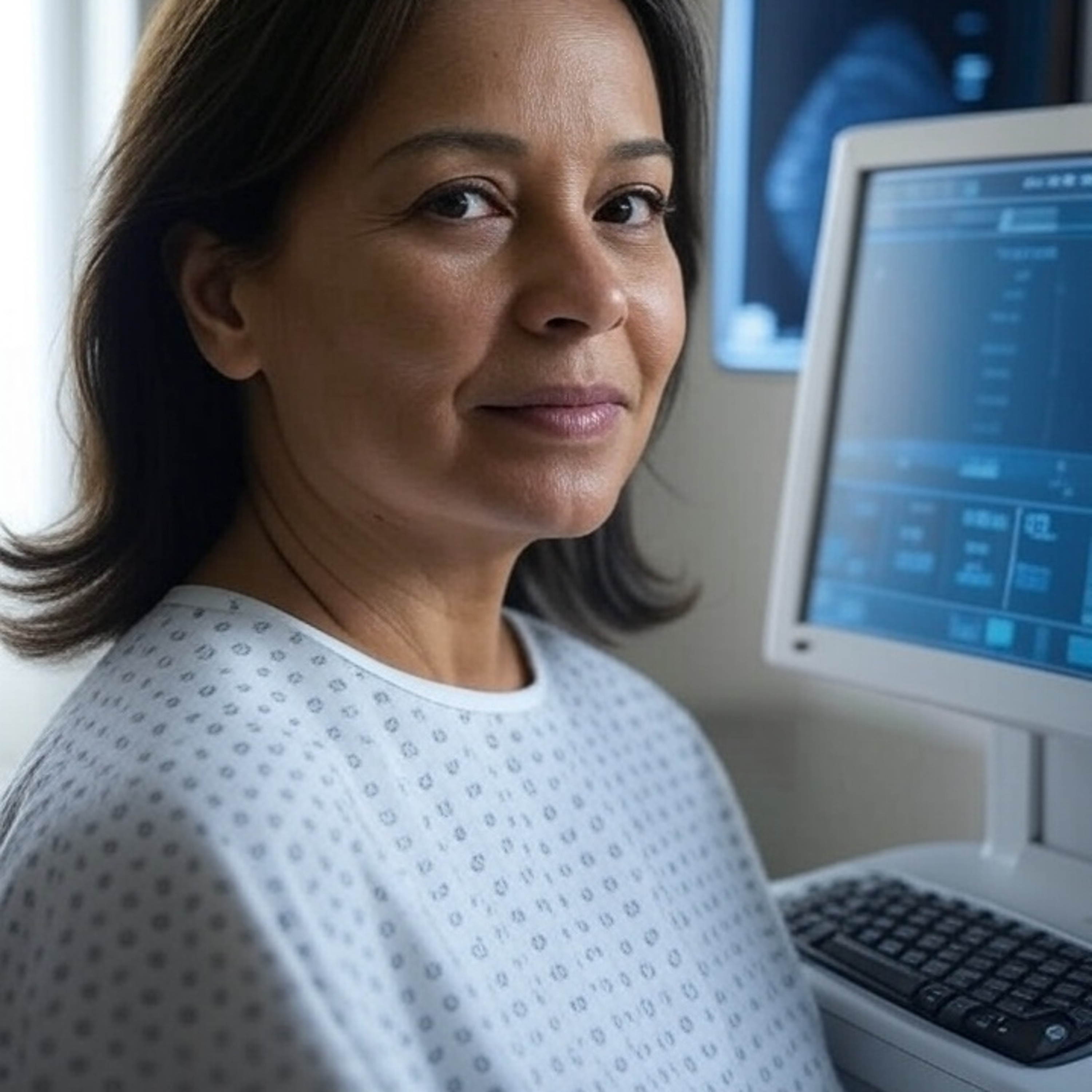
CLAIRITY BREAST: First A.I. tool authorized by FDA to predict 5-year breast cancer risk.
In this episode
#DoctorPodcasts Episode 117:
Breast cancer kills 42,000+ women in the USA annually. Connie Lehman, MD, PhD & Jeff Luber, JD, MBA of CLAIRITY, Inc. have received FDA authorization for the first A.I.-powered mammography tool - CLAIRITY BREAST - that predicts 5-year cancer risk. It will save many lives. For details go to Clairity.com
Watch all 117 DoctorPodcasts || Cykiert Files video podcast interview episodes with physicians, scientists, healthcare specialists, entrepreneurs and other experts. Please SUBSCRIBE & FOLLOW @DoctorPodcasts. Please LIKE, REPOST/QUOTE and SHARE the episodes. Send questions, comments and messages to @DoctorPodcasts. Thank you. Robert Cykiert, M.D.
#BreastCancerPrediction
#FDAuthorizedAI
#ClairityBreast
#ArtificialIntelligence
#MammographyTool
#CancerRiskPrediction
#WomensHealth
#MedicalInnovation
#HealthcareTechnology
#DoctorPodcasts
#CykiertFiles
#Episode117
#ConnieLehman
#JeffLuber
#CLAIRITYInc
#FiveYearRisk
#EarlyDetection
#PersonalizedMedicine
#AIinHealthcare
#BreastCancerAwareness
#MedicalPodcasts
#HealthcareExperts
#InnovationInMedicine
#TechInHealthcare
#RiskAssessment
#PreventiveHealthcare
#DigitalHealth
#MedicalResearch
#ClinicalOncology
#ASCO2025
#FDAApproval
#HealthTech
#PrecisionMedicine
#CancerPrevention
#MammogramScreening
#AIHealthcareSolutions
#FutureOfMedicine
#HealthInnovation
#MedicalBreakthroughs
#PatientCare
#RobertCykiert
#RobertCykiertMD
According to the CDC, there are about 300,000 new cases of breast cancer in the USA annually, and unfortunately there's about 42,000 deaths every year as well. That's about a 12% mortality rate, which is very high. Like most other cancers, early detection before the cancer spreads to other parts of the body is the key to prevention of death and also prevention of all sorts of morbidity and complications. That's why women are advised to have annual mammograms by age 50 or sometimes earlier to pick up early cancer findings on the mammogram, leading to more effective treatment and significant reduction in the death rate.
But what if the mammogram could also predict who is at higher risk of developing cancer? And that's what we're going to discuss today on Episode 117 of the Doctor podcast, Sicard File Show, where we have two great guests who are going to explain how AI can be used to predict which women are at higher risk of developing breast cancer. And our guests today are Doctor Constance Lehman or Connie. She is an MD and APHD and a radiologist and she's the Co founder of Clarity Incorporated, which we'll talk about some more.
She's a Harvard professor and a leading authority in breast imaging AI and she was formerly serving as the Chief of breast imaging at Massachusetts General Hospital, which is the Harvard Affiliate Hospital. Doctor Lehman has pioneered the use of AI and machine learning to enhance mammography workflows, focusing on equitable and accurate risk prediction for diverse populations. She's the Co founder of Clarity Breasts, an AI platform, which was just recently authorized by the FDA to analyze mammograms to predict five year breast cancer risk, addressing limitations in traditional previous risk models.
Doctor Lehman is authored over 300 peer reviewed scientific publications addressing the role of imaging and detection, diagnosis and treatment of breast cancer. She's also supported by the Breast Cancer Research Foundation and her work is recognized for advancing precision medicine and reducing disparities in Breast Cancer Care. Very important topic. Our other guest is Mr. Jeff Luber. Mr. Luber is an attorney. He's also got an MBA and he's the President and the Chief Executive Officer and Director of Clarity and he's working with Doctor Lehman on this.
He was appointed in 2024 to lead the company through its market launch AS. Well as its. Global expansion. He's a veteran life sciences leader with extensive experience in oncology, genetic sequencing, infectious disease testing and digital health. And he's been the CEO, president of several health companies, including the CEO of Exact Sciences, which makes the Cologuard test, which is a very popular test for early detection of colon cancer. Jeff's leadership will be scaling Clarity's AI driven breast cancer risk prediction platform called Clarity Breast to revolutionize Women's Health by enabling early detection and personalized care.
So, Connie, Jeff, thanks very much for taking time from your busy day to join us today to explain to us and the public. This very important topic which will save lives. I really appreciate it. My pleasure. Thanks for having us. All right. So I want to start, Jeff, by asking you, you've LED transformative healthcare companies like Exact Sciences and another company, Binks Health. What drew you to Clarity, and how do your past experiences shape your vision for the company? Yeah. So I, I, I'm always enamored by companies that are born of real problems from the field, from those on the front lines of care.
So it's not often you come across someone like Doctor Lehman, who has spent a lot of time thinking about the shortcomings of current risk models and rather than lamenting it founded a company to fix the problem. And, and when you think of the problem, and it's been a lot of time in, in markets where there are large overlooked clinical problems with new technologies coming to solve that problem. And when you think about 85% of women who are diagnosed with breast cancer having no family history, it means that there's many women flying blind.
So that's an opportunity for us to, to do a lot of good. And then we think about the power of AI and the research and work that Doctor Lehman did to actually shift the timing of when care can be delivered. So we're moving the lens now from a paradigm of detection to a paradigm of prediction, and that's as about a big as big an opportunity as it gets in my estimation. Yeah, that's great. So, Connie, Doctor Lehman, as a pioneer in breast imaging AI, what inspired you to transition from your clinical practice at Harvard and Mass General and academia to to founding Clarity in 2020, a few years ago?
Well, you know, I think first, thanks so much for having us. We're just delighted to share our story and our vision and, and the the future for for women in this domain. You know, I often think that a story begins with someone that says something important and makes a difference. And I had been working in this field, knew how important it was going to be to find more effective ways to identify women at high risk. Continued to have that experience. And I would share the news with a woman that her biopsy result had come back and she had breast cancer.
Continued to have that experience where she would say, well, that's impossible. No one, no one in my family's ever had breast cancer. No one's ever even talked to me about my risk for breast cancer. But recognizing that there was a reason why that's the most common response to you have breast cancer, how can that be possible? Because we didn't have risk models that were identifying these women and and giving them some inclination that they were at increased risk and that this could could be happening.
So I think it was seeing that again and again in the clinic, doing the research in the science to develop these AI image based breast cancer risk models. And then having Peter Slavin, who is the president of Mass General, say you're someone that wants to have an impact. You're not going to have an impact if you, you keep this within the walls of Mass General. You need to talk to some people and learn how to get this out to scale, not just in the US, but globally. And I, I am so grateful for that, for him to take the time and to see that and encourage me to meet with the right people met with Joe Cunningham at Sante Health.
That was a very good day. And he said, I'm all in. Let's let's do this. Bringing Jeff in was incredible. The, the fresh energy perspective it, you know, it's easy when you're outside the ring to say, oh, you, you've got an idea, then get it out there and let patients use it. But to have a seasoned CEO that understands the field, understands the vision who can actually make make that happen, we're feeling very fortunate and very excited about the future. Right, Jeff, you certainly got the experience, that's for sure.
Now what? Connie, what gap in breast cancer screening did you aim to address with the AI driven solutions? Well, so much of my career as a radiologist was helping understand how to both develop better technology and how to apply it to the right patients. So mammography is a fantastic tool and we've made incredible advances from film screen to digital to Thomas synthesis, 3D to contrast enhanced mammography. So that's, that's fantastic work. We did a lot to show how you could have a better breast MRI to use it as a not only a diagnostic tool, but a screening tool, use of ultrasound and and all of that was great, but we realized that we we couldn't have the impact we wanted to have because we weren't using this advanced technology in the right women.
In fact, the methods we were using were just so crude. So that was the other side that are are ability to identify the right women that need these tests had not at all kept pace with our advances in the imaging sciences around the actual technology to find cancer early. So while my earlier work had been in a more traditional domain of computer data detection and diagnosis, helping radiologists interpret mammograms better with the assistance of a computer, I was certain that it in this revolution of AI, we needed to do something different.
We needed to leverage the fact that computer vision and deep learning allows computers to see into a mammogram signals that my radiologist, eye and brain, no matter how well trained I am, how much experience I have, I can't see these signals that computer vision and AI can see. That's that's amazing, right? Even though you've looked at 10s or hundreds of thousands of mammographies, the computer is seeing millions of them and can pick up subtle changes that you would not be able to detect. So that's amazing.
Now, Jeff, joining Clarity in in 2024, what was your initial impression of the company's mission to shift from a reactive diagnosis to a proactive prevention? Yeah, honestly, I saw it as the future of medicine. I mean, I've, I've been in this business for a long time, long enough now where I remember in the early days of exact sciences, we focused, you know, entirely on early detection. It's a critically important thing, you know, today as well to focus on and, and, you know, it's it, it used to be let's find it early and, and now it's let's see if we can see it coming.
It's, you know, we think about risk is an interesting thing. Risk, we think about risk in almost every aspect of our lives, from the weather to traffic to the stock market. And yet in healthcare, it's reactionary, right? We spent 4 1/2 trillion dollars a year in the US on healthcare, billions of dollars on screening and detection and treatment. And I saw this company and I saw the work that Connie did. And when you shift that lens to prediction, you got a chance to really flip that script entirely.
And, and the other thing which struck me is there's kind of several things that that caught me as a guy who's been in the business for a while, is it also changes lab medicine entirely in my view. If you think about it, there's billions of biological samples being shipped around the world and being accessioned at labs around the world right now. Physical samples, physical supply chains, costly global supply chains. And we're not shipping test tubes, we're shipping intelligence. And and it strikes me that data now becomes the new analyte, if you will, for figuring out how to keep people healthy.
And that's a really interesting business opportunity when you think about scale and frictionless scale and an opportunity to save a lot of lives. Right now, Connie, can you explain how Clarity Breast works to predict the five year breast cancer risk from routine mammograms and and why this approach is really a sea change in Women's Health? So we stand on the shoulders of some amazing, amazing minds in the field of computer science, artificial intelligence, computer vision. And these thought leaders developed technology where they could take images, label the images, and then allow through neural networks and deep learning for computers to learn what those images were.
And at a very basic level, it could start with having thousands of images of cats and dogs, not teaching the computer how cats whiskers are different than dogs or how this sounds different or whatever. It was just giving the computer the labels and allowing the computer to learn on its own by giving it continuous feedback. The more diverse the images, the larger the number in general is, the faster that computer could learn. And then when we test those computer vision models, it turns out they're incredibly good at seeing fresh images of cats and dogs and being able to identify them very, very well.
But a lot depends on the data in and the methods used. But the the whole world opened up when we saw that computers can see, can see, can recognize, and can learn things that again, go beyond what our human eyes can see. So we applied the same kind of construct where you, instead of taking photos of cats and dogs labeled as such, we took 4 standard views of a basic screening mammogram. And we let the computer know this isn't a mammogram in a woman who developed breast cancer in five years. This other mammogram is in a woman who did not develop breast cancer in five years.
The company had amassed over 4 million images with known five year outcomes. It's a very, very large curated database. We were able to train the model with this geographically diverse racial and ethnically diverse database, and the model learned to recognize patterns in mammograms in women that were more likely to develop breast cancer at a level of accuracy and precision we just haven't had before. And right out of the gate, these were so, so much outperforming our traditional risk models. We realized we've we've got to get this out to women.
Wow, that's incredible. I was wondering how you did this because AI has only been around now two or three years, so how could you do the five year prediction? But that makes sense because you have all this data from previous mammograms going back for many years, and you feed it to the computer and it can figure out the difference. How long did it take for you to? Feed all those millions of images to the computer, the AI system. Well, the whole process has been depending on, you know, glass half full of glass half empty, very, very rapid or I wish, you know, we could go faster.
So founded the company at the very end of 2020, really got started in 2021. Thanks to incredible visionaries in the field that that knew what I wanted to do and wanted to be part of that and wanted to help. We were able to bring together what we refer to as the Clarity Consortium. These are other healthcare systems, imaging centers, thought leaders, remarkable leaders in Europe, South America, US. So we pulled together the data and we started to train. So it, it actually started to happen pretty rapidly.
Of course, we also had in parallel to that sort of the conversations with the FDA to ensure that we were having close communications with them as we moved forward developing the models. So we were aligned with the expectations of the FDA and what they would be looking for in a safe and effective product. Right now, can you explain what it is that AI is is seeing in the mammograms of women or who are at high risk as compared to the women who didn't develop breast cancer over a five year period? What is it that the the AI and the computer vision and the machine learning is seeing that tells it whether somebody's going to get breast cancer or not?
So I'll answer it in two ways. One, I'm going to answer it just as a human with some good instincts about what that might be. One of my favorite radiologist was John Wolf in the 1970s when I was a resident training at the University of Washington. I read his papers and he said, I don't think it's just about the density of the breast. I think there are patterns that I see more associated with my patients that develop breast cancer than I see in my patients that don't develop breast cancer. And he literally wrote a paper and said, wouldn't it be amazing if we could use computers to identify patterns and predict cancer?
Wouldn't that be incredible? I was so excited. I took the paper. I showed it to one of my faculty mentors who said, oh, everyone thought John was crazy. Density doesn't matter. You're certainly not going to predict breast cancer. So I sort of set the paper aside. I wish you were still alive now. I wish you could see, you know, what had happened with the that, you know, brilliant thinking before it's time. So, So certainly, I think the patterns of the breast parenchyma, how organized or chaotic they are, that's one of the things that John Wolfe was really, you know, paying attention to.
But I also know if we list all the things that seem to correlate with a woman's risk of breast cancer, we know her body mass index is relevant. We know her reproductive history is relevant. When did she did she have pregnancies? Did they result in bursts? Did she breastfeed? At what age did she have her first period? Did she go through menopause? Was she on hormone replacement? So there are lifestyle factors, her diet, her environmental exposures, exercise. When we look at all of these factors together, that while they have weak signals, we know they have signals associated with future risk of breast cancer.
Many of those we have a hunch. We can see not particularly well with our human eyes, but we can see in the breast. I can see when one of my patients has gained a lot of weight, the appearance of her breast, the fat and the glandular tissue and the size of the breast changes. We also know that when a woman is breastfeeding before and after the breastfeeding, the appearance of the breast tissue on the mammogram changes. If a woman has a benign breast biopsy, which is associated with the future risk of breast cancer, almost always a small tiny clip will be left at the site of that benign breast biopsy.
So there's a lot of risk factors that we could track back to say, well, how might how might we see that on the mammogram? So that's as far as our human brains, I think can go. There's another side, which is from a computer's perspective, we do have techniques where you can map to see where exactly is the computer program paying attention to what are the areas in those patients? It's in this patient seems to be at high risk. What are they focusing in on? And we can look at those maps to start to have the computer teach us what's important on that mammogram.
And that's where it gets really exciting because there can be a, as you can imagine, you know, a, a flow of information and learning and education in both directions. Yeah, that, that's incredible. So that's Jeff. That's all the data points that you were referring to that we can now feed this computer. And in addition to the imaging, you get some answers that you previously couldn't get. So Jeff, tell us what the significance is of AFDA authorization for your software and and for the AI that you've developed?
Yeah. I mean, look for for us it's an exciting, it's a, it's, it's historic in in many ways. You know, there's a couple thousand or more 510K clearances every year in the United States and there's 30 or 40 de Novo clearances. You said before it's, it's, it's interesting, you know, that this AI and, and ChatGPT and the rest have been around for a few years. Machine learning has been around for a very long time, But, but it's kind of captured the human consciousness now. And yet we are now at the, at the starting point in a lot of ways.
You know, it was a it was a exciting time, but where so many people are focused on detection with AI, we're really the only ones with an FDA authorized five year risk horizon predictive tool. So that puts us in a unique spot. We've got a lot of interest from partners and and investors and so forth. And it's an opportunity for us to bring this bedside. Now what we're focused on is a company. Our mission is around affordability, access and HealthEquity. There's a lot we can do to help reach underserved populations.
If you think about the 40% plus people who live in healthcare deserts and need access to new technologies and and better answers, well, AI and digital platforms and and access to care. I think a lot of doors open for you in that way. But we need to do the hard work. We need to look at the hard work of reimbursement, you know, unfortunately and, and it's there continues to be this lag between FDA authorization and pay a reimbursement. The wheels of modern medicine turn very slowly. But we think for something like this and, and, and the enormous good it can do, we're hoping that those conversations will accelerate and we're building our commercial infrastructure and we're going to market and those conversations with partners are, are already underway.
But, and I, I think the other key take away here is this isn't, we're not looking to replace, this is an aid to the radiologist, right? This empowers radiologist. It also empowers women, women who want to know a woman who otherwise would leave a clinic with a normal mammogram and have really no insight into what her risk might ultimately be. We want to provide that, that insight. And then it's the clinician who can then provide an action plan. What do you do? What do you do if you are high risk and there are things that, that you can do.
And that's what we're looking to to accomplish. Right now, is this your your own AI or you've licensed this from one of the monster AI companies like Open AI that makes ChatGPT or one of the Google ones? Yeah, no, this is our our own AI built from the ground up. It's 100% our own. You said something earlier when people talk about intellectual property as well. It's a very interesting concept because it's, you know, normally they talk about it in the clean, the clean boxes of patents and trade secrets and know how and so forth.
I, I actually like this concept of relational IP. All right. When you, when you, when you talked about the several million images and you were surprised at how quickly we were able to do that. I, I was too. And I the, the reason we have the kind of lead we do, when you look at think about Connie and the relationship she has with these lead leading imaging centers around the world, acquiring those images and that outcome data is not an easy thing to do. It's not the kind of thing where a company can get in business, no matter how much funding they have, where these centers are just going to open their doors to imaging and outcome data.
And yet here we are. I think that has a whole lot to do with why we're out in front. And, and, you know, and we spent a lot of time, a lot of thoughtful time. We have excellent scientists. We put scientific rigor and clinical rigor first and has spent a lot of time with the with the FDA over many months talking about meeting expectations in a very high bar of quality which which we had and and we look to bring that to market now. Right. Can you explain specifically what FDA authorization means as opposed to let's say FDA approval for, for a drug and what advantages or benefits does it give you and your company and, and patients out there that it's FDA authorized?
Yeah. I mean an FDA approval has to do with something called APMA which is a pre market approval. It's it's the highest level of approval that's that's required of certain categories of drugs or devices and so forth. The FDA categorized ours as a Class 2 medical device software as a medical device and an authorization kind of regardless of what the nomenclature is that's used means you could you now have the authority to market it under the indication for use and with the cautionary language that the FDA has permitted.
That's what you're entitled to do. And that's what, and it's important because it provides kind of a road map for those who are on the front lines of care of what the device can do and can't do and make sure expectations are met. That's great. It gives it a stamp of approval, which is good for patients. They feel confident that this is reliable, actually. 11 more thing I might add 'cause I think you're you're, you're spot on it actually, the FDA is, is kind of widely regarded as you know as well.
These kinds of authorizations are viewed as the gold standard. So we actually see it as as a starting point also for a, for global reach. I mean we're a small but mighty company but we have global ambitions and we've already started our our regulatory processes outside the United States. I mean, this is a global need and with partners around the world, it's something we think we can deliver and start to meet some ambitious, ambitious goals for. But but we really are mission driven and and want to bring this to women everywhere.
That's great now. Connie, I just want to add in, I just wanted to add in about the, what I what really pleased me about our relationship with and our process over years with the FDA to get to this point was their understanding that this is completely different than all the CAD detection and CAD diagnosis AI tools that were out there. And in that understanding, they worked with us and the bar is set so high as it should be because this is a completely new domain. So when I was working with different groups that were developing the CAD detection and CAD diagnosis and following the five 10K pathway to have those tools, roughly what you would need to demonstrate the clinical performance was a heavily enriched data set of 240 mammograms read by one to two dozen radiologists with and without the CAD markings.
The FDA understood that this was an assistant to the radiologist. The radiologist was still fully responsible for interpreting that mammogram. But these marks might help the radiologist do do a better job when they moved into having the image predict the future health of a patient. This is not something that's assisting the radiologist ability to predict the future health of a patient. The radiologist can't do that. So they and we spent a lot of time thinking about how do we move into this domain together, what kinds of studies.
So rather than 240 cases where they knew whether cancer developed in one year, we ended up testing in over 75,000, not selected, but consecutive screening mammograms from 5 facilities, diverse geographical locations, diverse racial and ethnic makeup of the patients that were contributing to this five year clinical follow up. And two really, really essential metrics of performance. One was, does it discriminate? Does it actually do a good job in separating out those women without high risk that develop cancer from those with a low risk that don't develop breast cancer?
But the second part, which is critical is calibration. If we're going to use an actual number, not your high or your low, but your five year risk is 1.5% on your five year risk is 2.7%. That risk model has to calibrate. We have to know how precise it is at that level, particularly given the fact that the clinical decision making from all the guidelines committees is working in that window of roughly 1 to 5%. So we need to be both highly accurate in discriminating high and low risk women, but we also have to be extremely well calibrated and both of those components are part of this authorization from the FDA.
I'm just so proud of how high the bar was set and that we're establishing A pathway that others will follow to make sure that these products as they can continue to be and they will be developed to take an image and predict the future health of a patient that we're we're setting, we're setting ourselves up for success for our patients. Right now on that topic, I have a couple of follow up questions for you, Connie. What is the percentage that the computer can figure out? In other words, like for the first patient, patient A, it says oh, you're only a 2% risk over next five years.
Is the next patient oh you have a 75% risk or or is it a narrower window? It's, it's a narrow window. The score itself can be as low as 0 and as high as 100. But the bulk of patients, it's a, there's a tail of it, just as you said, we're really looking more in that window of .5% to 4%. That's where most patients are going to live. We certainly have patients that are going to be 10 and 15 and 20%, but the vast majority are in this smaller window at the lower risk levels. And we've got some work to do too.
We've got a lot of education that we're excited about to teach patients and teach their healthcare providers what risk means of 2% to one woman will feel like nothing. She could think to herself, well, if 98% I'm not going to give breast cancer, why am I even bothering having a conversation when actually she's at increased risk? We think of under 1.7% five year risk as an average risk. And so we're excited to move into that domain and to think about those domains where patients have become more familiar with thinking about risk and what it means.
Because really here we're saying for, you know, women like you that have the types of mammograms that you have, more of these women will develop breast cancer than women that have other patterns. And you're in a group of women where healthcare providers and guidelines committees agree that we want you to have more than just an annual mammogram and more than just the standard healthy living that we recommend to keep breast cancer risk down. We actually are going to have a different pathway of recommendations for you both and how to detect your cancer early with supplemental testing as well as some more advanced risk reduction strategies and conversations around that.
Right. On that topic, if you think about it, while the absolute numbers are sort of a narrow window, if you have a 0.5% risk and or a 2.5% risk, that's five times the risk. So that's actually huge if you look at the relative values. And I suspect that with time, as you get more images and the computers get smarter, but you'll probably be able to make that window less narrow with time and be able to predict even better. Absolutely. And that's what we're doing at Clarity. I mean, we're not, we're not standing still.
And it's not just that we're looking for how incredibly important is to get this out to women, but also the new models, the new approaches. One of the things I'm particularly excited about is that for the first time we have the opportunity to have a dynamic risk score. So, you know, with our patients before we had Clarity breast, we would assess all the traditional risk factors and those typically didn't change from year to year. You know, woman, she had her first period at a certain time. She had so many pregnancies, she breastfed, she didn't.
And so it would be the same, it would change a little bit with her increasing age. It was rare that a patient would have a family member develop breast cancer, but then the risk would be adjusted. So we couldn't. It was very static. But now every time a woman has a mammogram, we have the opportunity to assess the risk on that mammogram and see how it's changing over time. It's it's like assessing cholesterol levels over time before and after statins. It's like assessing your blood pressure, your weight.
Any of these areas where we're making interventions, we need to measure it with the intervention and the idea that we can do that now in breast cancer has not been something we've been able to do before. We, I'll just tell you about one study and, but we evaluated AI risk scores over time in women that developed breast cancer and those that didn't. And we could go back six years before the cancer diagnosis and see the creep up of those risk scores was already happening. And that just did not happen.
And the women that did not develop breast cancer, they were just flat for the six to seven years before they're before the end of the study. So this is yet another new domain. Not only for the first time are we using a mammogram to predict a woman's future risk of breast cancer, but we also have a technology that can change over time. And we think it's going to be able to help guide women to the most effective personalized risk reduction strategies for her. So your retrospective data analysis allows you to make the predictions, and that was not possible before without the AI and the machine learning.
Exactly. Right. So on, on that topic, Connie, I want to ask you, so let's say a woman comes in with a high score, you mentioned 4 or 5%. Now what do you do about that? Does that mean that woman has to have more frequent mammograms or she now has to have Mris frequently or ultrasounds? Or is she going to be put on tamoxifen early or Raloxifene or one of the aromatase inhibitor drugs to reduce her risk? This is exactly the domain that we're hoping for women to hear a message. That's very empowering because basically it's not necessarily a terrible thing to know your risk.
It may be somewhat concerning to hear that you are you have double the risk of average risk women. But because there's things we can do, that's the part where knowledge is power and we are going to make sure that these patients if they are diagnosed with breast cancer, it's detected early. As as your point, we know that when we add MRI or contrast enhanced MRI to the mammogram, we find cancers earlier and it significantly lower stages when they are much more readily cured and without, as you mentioned before, without the morbidity associated with the more advanced treatments needed in the later stage cancers.
So we know we have better methods for early detection and screening for women at increased risk. So that's one pathway that's open to these women identified at high risk and the other door, the other pathway is improved risk reduction. So as as you said, we have conversations with our patients at high risk about chemo prevention, The medications that you can take to block the estrogen receptors, the medications can be taken to reduce risk over time. So both of those pathways risk reduction through enhanced screening as well as risk reduction which is associated with cancer prevention.
Both of those pathways are open to these women and increase risk. I wonder, I don't know if you've studied this yet or not, but let's say a woman is put on tamoxifen or one of the other drugs because she's in the high risk score. I wonder if that changes the subsequent mammograms in some way that you haven't been able to notice previously, but now with AI you might notice that hey, tamoxifen is doing something to the breast tissue. I am so confident that is what we will discover for two reasons.
All of us that read breast Mris are amazed when the patients who are at very high risk, who've been getting annual screening Mris, they go on tamoxifen and literally the lights go out. You have a woman that has this intensely enhancing breast tissue and she starts tamoxifen and there's no enhancement of the breast tissue. So we've been excited about that as a way to measure a woman's response to risk reduction strategies. But MRI is expensive and the enhancement itself is is a piece that has not been integrated into clinical care.
The other group of people that have studied this have found subtle changes and the density patterns of the mammogram. So it's just as you say, we we've heard these whisperings. But now with AI, we feel very confident we'll be able to extract those changes with our computer vision technology and our AI tools, and we're excited to start to do those studies. Yeah. You might also be able to figure out which drug they should go on. Is it tamoxifen, Raloxifene aromatase inhibitors. So we're going to get lots of answers that up to now we've just kind of been shrugging our shoulders about.
So that's. Exactly. And that's really, that is what that's what's so exciting about precision medicine. That's what's so exciting about a tool that can assess risk in a dynamic way of some of my colleagues have been doing these beautiful studies, really focus on how can they tailor the amount of chemoprevention to really reduce the woman's risk without all the associated morbidity. Because frankly, these these medications are fantastic. Many, many women come off of them because the side effects are just too, too, too strong and too much so.
So my colleagues have been, there's a trial, terrific trial called Baby tan. So you, you rather than give higher doses of tamoxifen to give smaller doses. This works great in some women, but not all women. Now we can tailor, we can not only tailor which medication, but how much of that medication is needed. The way we do is statins. You know, if we, when we first started out, if you gave the high dose statins to everyone, they had all kinds of side effects. But then they found that you can make much lower doses, check the cholesterol, see what's happening and go from there.
We're going to move into that with breast cancer. I I can't wait. So not only can you predict, but the prediction allows you to customize future care for the patient, which is, which is awesome. Now, Jeff, you mentioned that you want to spread this all over the USA and globally. And I, I think that's definitely going to happen because it's, it's a major breakthrough. I have a question is, is your clarity breast software and the AI, is it patented? Can any Medical Center using that? For example, I'm on faculty at NYU Langone and Mount Sinai, NY City.
Let's say they watch this podcast and they say, wow, this is awesome and they give you a call and say, can we use this? How does that work? How are you going to spread it in the USA? You should, yeah, that's a great question. You should have them call me so. What's your number? Oh, no, don't, don't. I'll ask you later. Yeah, exactly. No, I mean, look, and it's, it's the right question. The nice thing about what we're doing is it's, it's, it's pretty close to plug and play. You know, the, the hospital systems and you know, a lot of hospital systems have different infrastructure that I appreciate.
But there are pack systems. There are pack systems where images are, are housed and archived and they're generally in a DICOM format. Now our authorization, we are authorized on, on a, on a logic machine right now, right. So it's not for any platform, it's a logic. So there are some, there are certain requirements the, the test needs to be ordered by a clinician and results need to be delivered to a clinician who who will then elect to deliver the results to a patient. But the, the integration part is something that medical device and software companies do all the time.
And, and we're already having those integration discussion. So, so in that way, it's something that offers us great opportunity. I mean, we're talking about 15,000 imaging centers across the United States and 33000 hospital based imaging set. So it's a big, you know, we're going to do this a stage at a time, but we've got hiring plans that are going to be staged with that growth. We have a lot of conversations with partners. I mean, changing medicine is done through a collective and and that's something we intend to do both both here and abroad when we get regulatory clearance abroad.
So it's, you know, there, there's work to be done, but this is this is like all things when you've got a company with such great employees and focused team members who've been able to do something quite visionary that many have tried. And it's not a slam dunk. I think it's the right kind of team with the right DNA then to go do the next climb, the next mountain. And that's what we're starting with. So Connie, I have sort of a medical legal question from you because of the Clarity breast, what's available now?
Would it be almost malpractice if women in other medical centers or private radiology clinics have a mammogram and don't use Clarity breasts and they're told, oh, your mammogram's good, we'll see you next year. And somehow they develop cancer six months later. And then if you do a retrospective analysis of their normal mammogram and find through Clarity breasts that they were actually at high risk, isn't that almost malpractice? Well, you know, it's we have some history here that we can lean on in, in this domain and we have the broader conversation about medical legal risk associated around AI products.
So when the CAD products for mammography were first regulated by the FDA in 1998, everyone was very nervous about it because there were a lot of marks that you couldn't possibly biopsy every mark. So radiologists would have to make a decision, this is a mark I'm going to pursue, and that's a mark I'm going to ignore. They said, well, what if a patient comes back three years later and goes back and says, well, my cancer developer, that mark was. So there was a lot of angst about it. Should we not keep records of the marks?
You can just, you know, jump all the images with the marks on them. As it turned out, while there were a couple anecdotes of a case in Florida where a woman said that the marks should have been pursued by the radiologist, it didn't become a real thing. Like this just wasn't. We, we have a lot of medical legal risk in mammography because there's such a clear yes or no assessment. And then, you know, what happened to the woman, you know, within the subsequent year. But that didn't happen. The domain of, of CAD detection and CAD diagnosis.
And I think in this domain it's, it's going to fall in with all the other components. If a woman has a delayed diagnosis of breast cancer, taking everything in together, you know, did, for example, we've been living in the domain of a patient has a genetic mutation. Was she recommended to have an MRI or not look to what the standard of care is, what the recommendations are, how those decisions were made. So I think we're in a good situation to manage and deal with that right now. We're really focused on working closely with the guidelines committees and making sure that we are aligned with their, their area.
You know, it's, it's interesting. It hadn't really dawned on me until I started thinking about engaging. I've been on the NCCN committees and they're so rigorous in what they do. But until now they have not had a single risk assessment tool that's regulated by the FDA. The traditional risk models aren't the, the breast density isn't regulated by the FDA. And so, so this is really something new to actually have a tool that has that rigor of regulation and we're pretty excited to move forward with them and that.
Right. I think some things we'll just have to wait to establish what the rules and regulations should be because we're heading into new territory here that just hasn't been explored before. We'll we'll see what happens with time. Connie, you, you mentioned that you want to use this to diversify and also allow for equitable healthcare. How, how are you going to do that? How are you going to use this tool? This is so important to us. It was pretty shocking when I was moving into this domain and wanted to study the performance of traditional risk risk models more carefully, so we did.
Lots. Of disparities in healthcare, we know so. Yeah, my, my good colleague David Jones wrote a beautiful article in the New England Journal Hidden in Plain Sight and really went through so many different domains of healthcare where we have these racial disparities. And particularly in AI, we have to be so cautious. You know, it's, it's garbage in, garbage out. And we have had some very bad experiences where AI tools were developed exclusively on white patients and particularly in domains where it's almost unfathomable that that would have been seen as acceptable.
So, you know, AI models that are evaluating skin lesions, but only in light skinned patients. So we applaud the FDA paying attention to these issues and looking for the rigor that these tools will be applied across diverse patients. So what we did from the beginning with our company was ensured that the databases that we were developing and establishing for the training, the testing, the validation of our models that we were developing were diverse. So we had strong representation from black, Asian, Hispanic, white women from geographically distinct locations within the US and around the world.
And, and then we tested it in those as well. So I think that's, that's what's required. That's what we have to do. We learn from our past. You know, it was fantastic work with the NCI and the Gale model. I mean, that model has been around for 50 years, the entire acoustic model. These, these have important places in our history. And it's so important that we identify our patients with a family history that largely these models are, are based on age and family history, but 85% of women diagnosed with breast cancer do not have a family history.
And when we've tested these models in black, Asian and Hispanic women, they're just not performing at a level that we we have to insist that they would perform in order to have widespread views in our healthcare system for the full diversity of patients at risk for breast cancer. So, so we started off with that mission as a company and we're staying true to that, that path that's. Great. So I want to thank you very much, Jeff and Connie for taking the time to do this podcast with me. It's been very educational for me.
I've learned a lot. I'm sure the public will as well. And you guys are great pioneers doing great work. So we really appreciate that as well. Thanks very much for having us. Thank you so much, it's been a pleasure. Thank you.
 Apple Podcasts
 Spotify
 YouTube