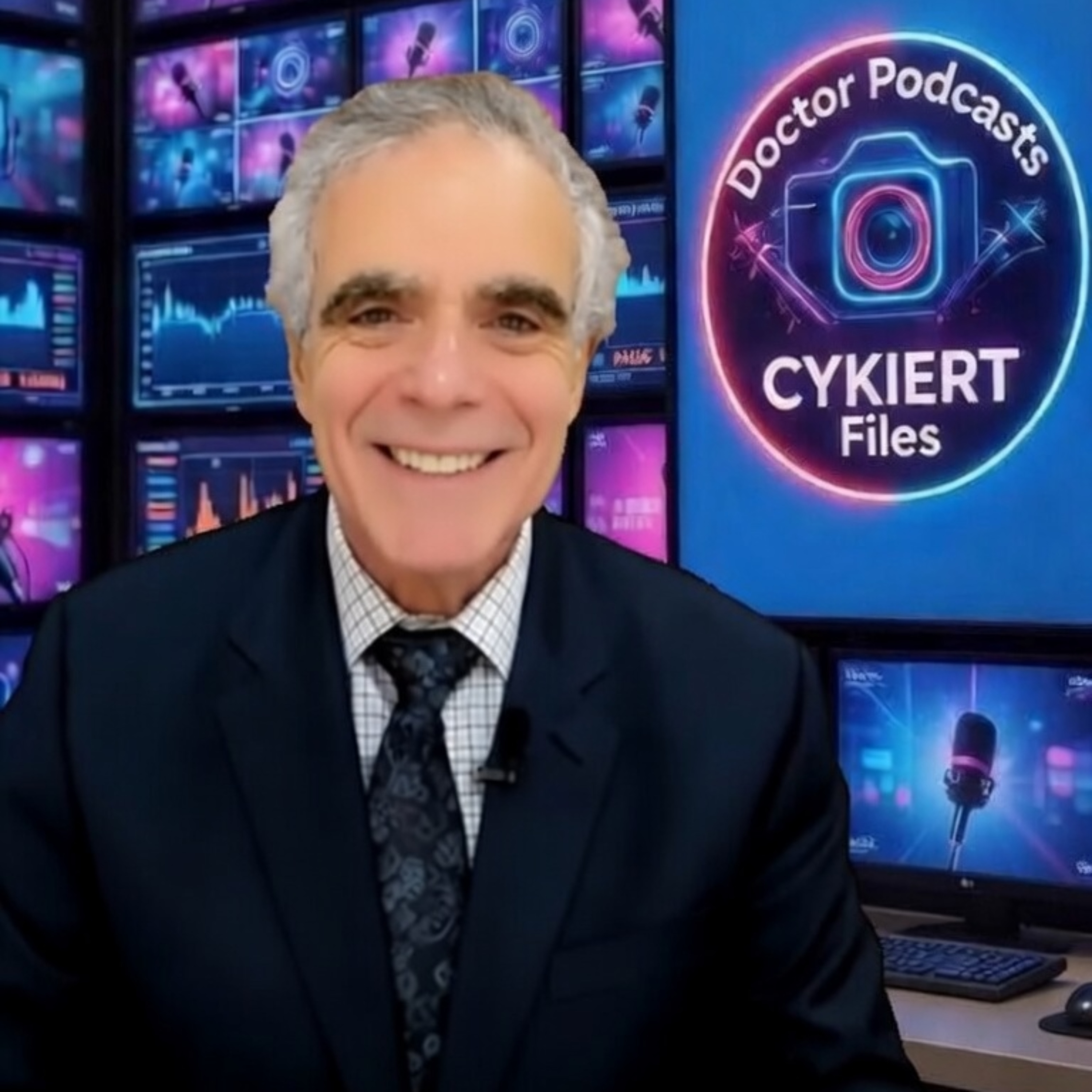
Drug addiction psychiatrist, Pantea Farahmand, M.D.
In this episode
#DrugAddiction is one of the USA's biggest health problems & causes of death. Watch #addiction specialist #psychiatrist, Pantea Farahmand, M.D. discuss #heroin #fentanyl #cannabis #marijuana #kratom #cocaine #alcohol #benzodiazepene addictions, causes & treatments. https://nyulangone.org/doctors/171032...
Hi, thanks for tuning in to Episode #27 of the Doctor Podcast Show. And I'm Doctor Robert Siker, your host. I'm really pleased to have as our guest today Doctor Ponta Faramond. Dr. Faramond is a Clinical Assistant Professor of Psychiatry at the NYU Langone Medical Center and the NYU Grossman School of Medicine. She's a board certified psychiatrist and specializes in addiction psychiatry, which is a very, very important subject these days because I'm sure all of you have heard that approximately 100,000 people a year in the USA are dying from drug overdoses.
So we'll speak with Doctor Farman today to find out what's going on and what we can do to solve this problem. Thanks very much for coming today. I really appreciate it. It's very kind of you to take some time to speak with us. I'm. Very glad to be here and thank you so much for inviting me. It's it's truly my pleasure and I love getting the chance to talk about this. That's great. So tell us what got you interested in in psychiatry and then especially in addiction psychiatry? So I I can definitely say I was not born thinking that I wanted to be a psychiatrist.
I knew I wanted to help people, and when I went to medical school I like neuro neurology. I love neuroscience, but when I was doing my clinical rotations, what I found the most interesting was mental health and psychiatry, which I think for a lot of people when you first start it's a bit scary because how our rotations work is you put it on a unit in the hospital and you're locked in there and the patients are locked in there. So, so the the start of it is a bit scary, but as you're doing it, it's lovely because you're sitting there getting to know different types of people on a deeper level and you're helping their quality of life through their mental health and through starting medications that they might not have ever considered taking, but they currently need.
So, and that was where the interest in mental health came from. And then as I was doing my psychiatric residency, I got to work with kids and I love working with kids. Kids are absolutely the best human beings. And I I truly can't. Yeah. And I truly can't imagine a better profession than one where you get to spend time playing games. So I went to Child and Adolescent Fellowship 1st and within that fellowship training I noticed that there was a treatment gap, an addiction psychiatry. So I ended up following my intuition about pursuing that as well.
So I I did 2 fellowships first and child, then the second one an addiction. And now I'm really fortunate because I get the opportunity to work with child now, lesson populations and their families when they have a mental health condition as well as an addiction. I see. And sometimes they go together, those those two. Things more often than not, they go together. So how many years of training is that after four years of medical school? Tell us about that. So the fellowships were two years and one year, and residency was for me.
I I did a truncated version of three years, so roughly 6 years. Six years. That's a lot of training, but that makes you an expert in this. So tell us. We hear the word addiction all the time on the news. Now you can't escape. It's on the Internet. It's in the newspapers, in the news. Can you define what addiction means? Yeah, there's a couple of different definitions of addiction. The one that medical health professionals often follow and most professionals follow is through the Diagnostic Statistical Manual, which is currently in the 5th edition.
Some of the criteria we look at are if a person is using more than they intended, they're experiencing loss of control over the use. They're finding that when they stop using, they're experiencing withdrawal symptoms, sometimes anxiety, sometimes more severe withdrawal symptoms like muscle aches, nausea, vomiting. And then they're finding that they need more to get the same amount of effect. So what might have been a euphoric experience the first time a person took a drink or took a hit of cannabis?
It's no longer one hit. It might be a full blunt, or it might be a blunt every single day to get the same benefits of it and to keep from having withdrawal symptoms. So the symptoms could be either mental problems like anxiety, or sometimes physical problems as well, or both combined. Often it's both. Both. I think people start to recognize that the the mental health ones first, but they might not necessarily associate them with the substance withdrawal. They might just sort of. I think that they have anxiety and not necessarily attributed to a period of withdrawal from the substance I. See.
And that's true of most substances. Or all substances or or is it different for different types of drugs? Yeah. The withdrawal symptoms are different for different types of drugs, but anxiety, I think the vast majority of them, when you're coming off of the substance will cause an increase in anxiety. But they're when you're coming off of opiates versus cocaine versus alcohol, there there's vastly different experiences that a person may have, and a lot of times you don't necessarily pass away from those withdrawal symptoms.
But there's two substances that when you withdraw from them, you you can't pass away. And so that's benzodiazepine. So if a person has a problem with things like Klonopin or Ativan or Xanax. Or Valium or Valium. Classic one, right? Yeah, yeah. They should not abruptly stop that medication. They can have a severe withdrawal that results in death, and the same thing with alcohol. A person should generally, if they're using heavily for many years or many decades, they should not, without the council of a medical professional, just abruptly stop because they could pass away from that.
Things like opiates and cocaine. When people are withdrawing from those things, they'll want to be dead. But it's not it's that bad it it's truly some of the the worst withdrawals a human being can experience. So that's a big reason why people continue to use it's it's not because they're getting a pleasurable effect from it anymore. It's just because they're trying to avoid that misery that can last days, weeks and then some of the the mental health conditions like depression, anxiety can last a year or more.
So people are trying to avoid those negative consequences of use. Right now there are neurobiological aspects of of drug use, substance abuse and addiction. Can you tell us some more about that? Yes, yes. And there's genetic variations between how people get addicted and versus not get addicted. So I'm going to give a general sort of overview, but there's individual variations. So if a person takes a exogenous illicit substance, they start to develop more dopamine receptors. Very, very Simply put, which dopamine is the reward pathway.
It's what we kind of get hits of when we're eating food we like or when we fall in love or, you know, we're doing generally pleasurable things. So that's a chemical in the brain, dopamine, right? Yes, yes. And So what keeps us doing the things that keeps us alive is dopamine. So I wouldn't necessarily hit like from an evolutionary standpoint, want to eat and go through the struggle of finding food if it wasn't for the fact that I'm getting hits of dopamine when I do it and then I'll slowly, you know, die if I don't.
So it was self preservation in excessive amounts, which is you get excessive amounts with cocaine, heroin, alcohol and these other things. You get more dopamine receptor buildup, and so over time you need more of that substance to get a same response or to not experience the withdrawal symptoms. So by taking these drugs, you're causing release of this dopamine chemical, which is a reward. It gives you pleasure and satisfaction and you want to get more and more and you have to take more and more drugs to achieve the same level of dopamine.
Yes, yes. But some of that is dependent on your biology, and different people react differently to them. Yes. So when a person there's about 40 to 60% overlap between the genetic risk and developing a a problem with it. So there's some people who have genes that protect them from problems. So for example some people if they have alcohol they'll become violent legal and so they generally don't drink and so that's protective. There's some people when they take prescription of opiates for the first time, they'll get very vicious stomach problems and it it's not something they want to keep taking.
So they're very unlikely to develop a problem with opiates where some people, the first, the first couple of times they've been to drink alcohol, they don't experience any sort of negative consequences from it. They don't get hungover the next day, nothing along those lines. So there's no consequence, just whatever fun they had the day they were drinking. So they drink some more to obtain that. So you mentioned the genetic component. Is there any way to test what kind of gene you have so that you can determine if you're susceptible to addiction?
So there you certainly could an an easy way to kind of do that without having to do the genetic test though is to talk with your family and find out if you have loved ones that might have had substance use disorder that was either diagnosed or just evident because they were drinking every single day. So that's kind of a. So alcoholism runs in in families? Yeah. What about the other drugs, The opiates? Same thing. Cocaine. All. All of them. Yeah, yeah. I I wouldn't even sort of like suggest that just because if you if you have a family history of cocaine, it doesn't mean that you are not likely to have a problem with alcohol or opiates and things like that or very specific to cocaine, but there might be more than one.
You're also more at risk if you have a mental health condition because there's a lot of overlap between the receptors that are involved with mental health conditions and substance use disorders. So if you already have an anxiety disorder or an OCD, obsessive compulsive disorder or other types of disorders, then you're more prone to becoming addicted when using these drugs. Yes, and it it's nuanced with them. There's certain mental health conditions where you're more likely to develop a substance use disorder and others that you're less likely.
So some some folks with generalized anxiety might be less likely to use these substances just because they're warriors and they're very, very they might be very, very cautious. Whereas someone with ADHD or someone with a panic disorder might be a little bit more likely to develop a substance use disorder or a problem with alcohol. And how difficult it is is it to get the genetic test? Is it complicated, expensive. Or you can just go and ask your primary care doctor do my gene test. It so it's probably dependent on where you are.
So I I personally have never asked or asked for genetic testing for a substance use disorder or for a patient specifically, but I'm I'm sure people can can find it maybe online or through one of these genetic. Basically, the family history tells you the story. Most of the time or by the time a person seeing me, they they already have the problem. So we're not necessarily. Right. Not interested in doing it. One of the things I'm curious about that I don't understand is it's in the news every day that people are taking drugs.
They're getting real sick, they're almost dying, they have overdoses. And like we said, 100,000 people a year in USA are dying knowing that why would a young person even take it the first time and and how long does it take to get addicted to let's say cocaine or opiates? How many doses do you have to take to become addicted? And does it vary from person to person? That that's a wonderful question for for many, many reasons. One of them it's because that's what parents ask all the time and that's what people wonder all the time why?
Why are these kids doing this stuff? Kids will do a lot of things where from the adult perspective, we're like why? Why would why would someone do that? The reality is is developmentally, they're in a place where they're taking more risks and they're feeling a little bit more invincible. I if I go do something dangerous nowadays, I will feel it in every muscle, every bone of my body. So when it comes to even taking a vigorous hike, sometimes I'll I'll have like my best shoes on with a good jacket.
I'm carrying water. Very, very different experience than when you know you're a young person and you could just bounce off the walls and not feel it. So they're they're less cautious and they're more prone to taking risk. They're the part of the brain that considers risk isn't as fully developed at that point. And, you know, This is why kids are inventive. This is why kids do creative things. This is why kids also end up, you know, joining the military or driving cars really fast. There's adaptive qualities to it, and there's also unsafe aspects to that.
But it's the age where they're going to be experimenting, trying new things. So they're feeling like, oh, I could take this once or twice. I'm not going to get addicted. Yeah. Or, you know, that's just not going to happen to me, right? That happens to other people. Right. So if they're at a party and somebody gives them some codeine or Percocet and try this, it's great, You'll have a good time. They don't think they're getting addicted. How many times would I have to take it before they become addicted to it and start seeking more and more of it?
It depends. It truly depends on the person. So for example, cannabis, some people can get addicted the very first time they try cannabis. About 9% will get addicted the very first time they try cannabis. Is that young people and older people also?
Just the very first time they tried. So that that's on the lower end of getting addicted the very first time with nicotine, it's higher, it's in the 30s. So people get addicted to nicotine 30% of the time. The very first time they try a cigarette or use tobacco and so you know, that's extremely unfortunate. You will hear a lot of stories about this. I tried heroin once and now I'm hooked and heroin is absolutely terrible to come off of in terms of withdrawal symptoms. It is extremely unpleasant.
And that's an opioid, right? Yeah, heroin, fentanyl, Percocet, codeine. Those are all opiates and. Kratom. Kratom is also an opiate because to be an opiate you have to bind the meal opioid receptor which is down the line, it increases dopamine like we talked. About earlier. That's a receptor in the brain. But it's also considered a natural compound, so that's why you can buy it in stores, on the street without, you know, any sort of caution. You could buy kratom on on the street everywhere. Literally anywhere.
So when when I was walking, a lot of the cannabis stores were also selling kratom. Really. And it's addicting. And it's an opiate. And it's legal. Yes. And that's crazy. There's there's a debate there. There's definitely a population of people that find it to be beneficial. So it it's been around in Indonesia for centuries, but it was largely used by people who were laborers who had a lot of physical ailments for and who needed to work as like a painkiller. I don't think they were using it the same way that we use it here or in the same product that we use here.
So I will find that people, it becomes prohibitively expensive because people will take more and more and more and then when they try and stop it, they'll have withdrawal symptoms that are similar to opioids. Do they move on from kratom to to heroin and fentanyl? Sometimes I see the reverse. Sometimes people are trying to come off of fentanyl or heroin using kratom. So it you know, because this is a lot of times there's not enough providers that are providing treatments and so they're they're coming up with their own ways.
So what you said was interesting. 9% of people who try marijuana or cannabis become addicted after the first time. Why are they legalizing it all over the country? So on the state level, it's being legalized. On the federal level, it's still not legal, right. Why they're legalizing it, it's a bit complicated and I don't, I can't necessarily say that there's a there's different perspectives on why it's being legalized. Part of it is some people may be wanting to study it. You know, if it's legal, if it goes from a schedule it, it's not at this point yet.
But if the federal government changes it from a Schedule 1 to a lower schedule, then we could study it and we could look at the medical uses for it. Because there are medical uses for cannabis out there, other people feel like it's too punitive. So if it's illegal, then people can go to federal prison if they're caught with it or if they're caught selling it. And we don't necessarily want to fill up our presence with people that are using cannabis or, you know, selling like carrying around small quantities of cannabis.
And I think a lot of people are using it for self medication. There's a lot of false advertising that it helps with anxiety and depression and things like that. Does it? It's not FDA approved to say it does yet, so it's being studied. So there's a lot of politics, economics, social factors, political factors. Difficult to say. It's difficult to say, but definitely it's the cart is leading the horse in how it's being legalized because right now the studies for its benefits and for its uses are are ongoing, but commercially it's already available.
Right. So there's almost no point studying it. It's available. Everybody's going to take it. We have to study it in a controlled environment to see what the benefits are and what the the consequences are and it there may in fact be significant mental health benefits from it but. For some people. Yeah, for some people. Is it a gateway drug that leads to using cocaine and heroin and other drugs? Has that been established? I I think the gateway hypothesis has has largely been pushed aside, but a lot of times people will start with things that are common and things they have access to.
So alcohol, nicotine and cannabis are accessible to young people. And so if you're starting to use substances at a younger age, it's more likely that as you get older you're going to start using other substances too. But it's not necessarily just because you use cannabis, you're going to end up using cocaine and heroin. I see. It's just you're basically predisposed to trying different drugs and seeing what their effects are, so you move from one to another. There there's a lot of factors that go into a young, like a younger person or a young person or any human being using alcohol.
Nicotine in cannabis and why they're using it matters a lot too. So if a person is using these things as a coping mechanism that that's really putting a person in an unsafe situation because what are you, what are you gonna do if you don't have access to that? Well, you're gonna stop coping and you need to cope to get through day-to-day stuff. Life is stressful and so if you're completely reliant on these things because you you've never learned coping skills and that could be for different reasons.
High conflict, families, seeing other people using, having depression, anxiety that's untreated. Et cetera, et cetera. So the factors that lead to the use are are important too. Right. So I've seen and heard and read that a certain percentage of young people who smoke marijuana will have a schizophrenic episode or a psychotic break, sometimes become permanently schizophrenic. Is that correct? It is unfortunately correct. What percentage I'm roughly? Obviously I I wouldn't even be able to say so there there have been genetic links to it and they've so there's a couple of genes that have been affiliated with it.
So if a person has a genetic predisposition to developing a psychotic illness, if they're using cannabis, they are 25% of that population will end up developing A psychotic illness and they have that genetic risk independent of that risk, people can. That means like no family history, they can develop a psychotic illness or even a bipolar illness. So they might present with bipolar mania, which is not sleeping at all, moving very fast, talking very fast, doing high risk sorts of things that can also present with cannabis.
And I don't think there have been enough longitudinal studies looking at that, that could accurately say what percentage of people are doing it. It does happen. Is it more likely to occur in a younger person than an older person or adult? Certainly. But I think the the biggest risk that the studies are showing is that if you're using high potency cannabis every day, then you're more at risk for these things than you are if you're just using it maybe once or twice a week or once or twice a month.
So it's the heavy daily use of high potency compounds, and I'm gonna let you in on a secret everything you buy. It's a secret. Listen carefully. So everything you buy or get in a dispensary or get from these smoke shops is high potency. So if you're. If you're using every single day, multiple times a day, you're exponentially increasing your risk of developing A psychotic illness. Really. It's pretty frightening it. It's very frightening. I walk the streets back and forth to work. I I smell it almost every day and it's pretty frightening that people are using.
I see it early in the morning, 7:00 in the morning. People are smoking cannabis to get their day started. Seems like it's becoming an epidemic, no?
It's going to be a a bigger problem if it's not more regulated and if education isn't spread. The perception of risk in different communities and by different people, parents, treaters, young people, it's it's low, you know, we we can all kind of agree that using a lot of nicotine is bad for us. We can all agree that using heroin is bad for us, alcohol is bad for us if we're binge drinking. But not everyone sees cannabis as being a problem. Going back to opiates for a moment, years ago it used to be all heroin, but now it's shifted to fentanyl.
What? What's caused that and and why is that? Some markets, but you know going back 100 years it was primarily morphine, morphine. So turn of the 19th century, people were using morphine more than they were doing things like heroin. And then 60s, seventies, 90s, that was heroin. And later on in the 2000s, early 2000s, it was more prescription opiates and then it was heroin. People would move on from heroin to fentanyl market market demand. So if you're competing, if you're a drug dealer and you're communing with a pharmaceutical company that's putting out prescription opiates and people are already using heroin, you've got to stay in competition and fentanyl is very cheap.
Cheap. It's a cheap additive that you can put in a lot of different things. That's why a lot of people are dying because they don't realize they're taking, they think they're taking other drugs and they're laced with fentanyl. Yes, yes. It's also just sort of like the natural evolution of things. People are always going to evolve to get people more addicted to things. And fentanyl is is the most addictive, even in tiny dosages. It it can be very so. It can be very addictive and also very lethal.
It's it's about 100 times more potent than heroin. So when we think about you know how much can kill, you will 100 times less than the amount that it takes for heroin to to end a person's life. A big risk factor though is when people are in recovery for a period of time and then start to use the same amount they were using before because their body no longer has a tolerance built up as it did before, and so they're at much greater risk for unfortunately not breathing and passing away all. Right.
So the way fentanyl and heroin kill you is they basically stop you breathing. So you stop breathing and and you basically die. You know, that's that's not a good thing. What about treatment modalities for for these different drugs? How do you treat the the different addictions, for example alcohol, how's that treated? So there there's four FDA. There's often there's medications involved. And there's other strategies that are involved. Because if you're spending a considerable amount of your time consuming alcohol or working to obtain alcohol or other substances, you now need another hop or another activity to keep you busy and to, you know, help you get you through some of the negative times and negative experiences you're probably going to have coming off of this stuff.
So during the acute withdrawal period, which is right after you stop drinking, you're going to have increased heart rate, you're going to have increased anxiety, you can run the risk of having seizures. There's a detox protocol that a lot of times people will will do in that period of time of acute withdrawal, longer term withdrawal. It's the cravings, anxiety, the depression. The recommendation is for FDA approved medications or medication assisted treatments and and there's four approved for alcohol Naltrexone, the oral version is one of those.
Another one is the long acting injection which is naltrexone as a 30 day liquid that you inject in a person that's called Vivitrol and then Antabuse is 1. So that that's one where if you take it and you drink alcohol or half you get, you get violently sick. It's not very popular in the US but in some countries it is popular. The the last one is it can't proceed. So this is a medication that you can take three times a day. It's digested in the kidneys or excreted in the kidneys. So if you have liver problems, this is a really safe medication that you can take for.
Alcohol and how does that get you off of alcohol? It it helps reduce the cravings. And you know, even if a lot of people, their goal isn't complete accident accidents is to cut down so they don't experience the consequences of it. And these medications can help cut down and to be yourself for for obvious reasons. It's a negative reinforcer. You really are not You're just not going to want it. It's no longer be possible if you keep taking it like that. Why do people relapse from various addictions, alcohol and opiates?
You hear about a lot of celebrities who unfortunately spend weeks or months in rehab. They're good for six months and then they're back into it. What happens? It's a chronic illness like most other chronic illnesses. So we often put addiction in a separate category. But think about a person with high blood pressure. Some, you know, we're going to put them on medications, we're going to get them on diet and exercise, but sometimes their blood pressure's going to go up again and we'll have to make adjustments.
And, you know, there are consequences to high blood pressure too. But as a culture, as in the society, how, how things have kind of evolved, We've been much more punitive for people with addiction. But it's a chronic illness that's going to have a relapsing and recovering oscillation. All right, so it's a chronic condition that requires chronic maintenance and treatment. What about is there a treatment, A medication treatment for marijuana or cannabis? So for off label purposes, there are medications that have been studied for cannabis.
The ones that we use in kids that are showing promise are an acetyl cysteine. So there's studies that are coming out that are showing and people that are younger than 2122 years of age, they do benefit from an acetyl cysteine to decrease the amount of cannabis they're using and to help with cravings is. That available over the counter it is right? You want to make sure that you're getting the right dosage, and it's hard to determine quality of these sources, but you do your best and you can online find pharmaceutical grade in a single cysteine.
I'll sometimes use gabapentin as well, because this can help with some of the anxiety in the sleep that comes with trying to cut down or discontinue cannabis. What about cocaine? Are there any drugs that can be used to can help that? Again, not FDA approved, but there's researchers that have looked at different medications that that can be helpful with that people will try a medication called Wellbutrin along with Topiramate, or sometimes will use stimulants in people who have an ADHD history. Or even if they don't have an ADHD history, they might benefit from having an ADHD medication on board as well.
So specifically a stimulant medication can help with that and. What about the opioids? Are there medications that can be used for that? Absolutely. So methadone and Suboxone are FDA approved treatments for opiate use disorder. Naltrexone is also approved, but the outcomes are just generally not as good with that one, especially in the oral version taking the injection, there's better outcomes, but much better outcomes using Suboxone or methadone. And those are medications you stay on long term so that you don't go back to using, yes.
Yes, it's been found in particular in adults, that if a person stays on the the longer a person stays on the medications, the better the outcomes.
What about other treatments besides the drugs, and that's speaking with a psychiatrist or a psychologist? Tell us about those. So definitely a lot of times people with a substance use disorder or alcohol use disorder will have a Co occurring mental health illness. Things like ADHD as we talked about a little bit, PTSD, depression, anxiety, bipolar illness. You've got to treat those things as well. And there's also behavioral strategies that have been helpful. So there's cognitive behavioral therapy for substance use disorders, Motivational enhancement therapy.
Motivational interviewing can be helpful depending on the Co occurring illness. If a person has a PTSD along with a substance use disorder, there's programs called seeking safety which can be very helpful for treating both of those things. Support groups such as NAAA, Sometimes they're specifically called so Crystal Meth, Anonymous, Even these support groups they often take a stance against medications, which I I most addiction providers do not support. But having the community and having a sponsor and a place to talk and be supported is has definitely been found to be helpful.
So behavioral therapy is very important in addition to the medication assisted treatments. Yes, yes. And you do a lot of that with with your patients? I it depends on the patient and I I I personally do not do cognitive behavioral therapies but I do work with folks that do do that. So sometimes I could collaborate in that way for because the there's a whole family involved a lot of times as well. There's also treatments that are specific to families when we think about the support groups. For example, Al Anon is is helpful for loved ones of people who have a problem with a substance or alcohol.
And then there's some therapies that are specifically structured or geared towards helping the family motivate engagement and treatment and the person who has the the drug or alcohol problems. So one of them is called craft community enforcement and family training. Another one that's studied and particular in other settings besides addiction as well but also an adolescent addiction is family check up. So these are other things that they're geared more towards the family members and and can be helpful for the person with the addiction as well.
Let's see, what about Alcoholics Anonymous and and groups like that? They're helpful as well. Absolutely, absolutely, yes. And you know, because you do need a a super social network if you're using drugs and alcohol, you're using with other people sometimes where you're using alone. But when you're not using, you're very lonely and you can no longer rely on the the social networks that we're using with you, which is not going to be conducive to sobriety. So having a group like Narcotics Anonymous or Alcoholics Anonymous is very helpful.
So it's best to stay away from the people that you used to use with, right? And get new acquaintances, new friends that don't.
It's how we learn. So if I'm using every day and doing a same pattern every single day, for example, right now I'm sitting in this chair, If I come to this chair every day and I'm using heroin in this chair every day, the heroin is going to cause me to relapse. But also the, you know, doing that same pattern, it's now been linked to heroin. So the moment I see this chair, my, my, my body and my without thinking is going to start to go look for the heroin and do it in this chair, because that association is there.
Same thing with friends, which is terrible. So you you really want to try and separate the people that are still using from from yourself and then also just being mindful of certain patterns or activities that might be lead to that as well? So these patterns actually create a chemical reaction in the brain that becomes part of the addiction and and if you can break some of those patterns, it helps you get out of the addiction. But what's really challenging about addiction is a lot of times it's the the way the brain has developed circuits.
It's without thinking. Some of it is automatic when you're developing the the problem. So you'll be, without thinking, seeking out drugs and alcohol. And there might be certain cues in your environment that will trigger that unconscious network to to start moving and and doing the things. So you might have heard the story of someone going and being in recovery at a rehab for 90 days or six months or a year. And then they come back to the neighborhood that they live in where they were using and immediately relapse the moment they get off the train or the moment they are back in that community.
Well, all those same cues are there. So you have to not necessarily avoid an entire life that's not practical for a lot of people, but figuring it out and definitely if your friends are still using, they still have access to it. That is going to be a huge, huge trigger. It's very important to know what about in respect to that? What about social media influences on drug use, especially in adolescents which which you're a expert in as well? Social media is tricky because social media can be very positive when it comes to recovery.
And you know it's another way to connect to some degree with people that may be positive and might talk or provide education and recovery. And then it can also be very negative because it might a lot of times social media, kids will message through social media to get drugs. So it's a it's an Ave. to, for example, you can message your drug dealer through Instagram to to get access to drugs or the drug dealer and things like that. So that's that's an obvious negative. But then also there's a lot of top challenges and things like that that will come out.
What will result in kids doing really unsafe substances. So back in the 90s, I think we would call it huffing where people would huff paint and get high off of paint and do stuff like that. Well, there was a a challenge where they called it chroming and they basically said, oh you know, to kids, let's do this challenge where we Chrome and obviously people died doing that. So there's there's pros and cons. What's? Chroming. I'm not familiar with that one. It's it's like huffing. So you take a a solvent something.
It could even be deodorant sprays, gasoline and you put it in a bag and you huff it and you get euphoric, you get high and you know there's other negative consequences, including death, coma, those things that can come with it. People would do that. It's it's always been done. People will will do that, but they've rebranded it and they made it a TikTok challenge. And so as a result of that, it became a really quick way for kids to to get hurt. Yeah, that's terrible. Social media is very tricky. It can be beneficial in some ways, but are harmful in other ways.
Parents should really monitor what their kids are doing on social media to make sure they're not falling into the traps, right? That was actually a huge benefit of COVID-19 potentially. There was a notable noticeable decline in in substance use during that period and one of the theories is it was because everyone was forced in the home together so there was more parental monitoring as a result of parents not being able to go to work, kids not being able to lose for school or spend time with peers.
But didn't that also create other anxieties and issues and and problems? Net negative, but it was kind of an an example of how net negative and we're we're definitely still seeing the the mental health consequences and we will be for years and years due to COVID. That was an example of how parental monitoring did change substance use during that time. Now the USA is a melting pot of different cultures, and then there's something called cultural competence and other issues like that. How are different cultures affected by drugs and and what's your experience with that?
That's a that's an excellent question. So different cultures have different ways of approaching substances or how they get together in our, you know, maybe family involvement or how they identify religiously and and things along those lines. So what programs? Work for one culture might not work universally for other cultures, so it's very important for people in the scientific community and clinicians to be mindful of some of the differences and to study modalities within diverse clinical populations so we can make sure that what works for one with the appropriate adaptations will work for another population.
Right. So you have to evaluate that now, what do people do who are not near a major Medical Center like NYU or you're AT? And people can find you. What if they're in rural areas or suburban areas where there aren't too many doctors? With your knowledge and experience and expertise, what should those people do if they have somebody in the family who's addicted, or if the person themselves wants to stop the addiction? What should they do? So this is, this is the $1,000,000 question. Access to care is very restrictive.
And you know we know adolescents are not getting enough treatment for a substance use disorder. We know adults aren't getting enough treatment for substance use disorders because there's just not enough trained providers giving out the appropriate medications or the appropriate treatments or medications or treatment at all. You can go on samsa.org and look. Enter your How do you spell that? Samsa S AM sha.org and you can put in your zip code to find providers that treat mental health or and or substance use disorders nearby.
Telehealth has been very, very helpful in expanding access to care because I could be in one state, the patient could be in another state and we can communicate so that that's potentially one way. But the the negative is to prescribe a controlled substance. A person does have to be seen in person at least once a year unless there's a formal telehealth psychiatry clinic that's established in in that area. But it's really tough. It's very, very tough and a lot of times people are coming up with their own solutions.
So I'll tell you the anecdote that ultimately made me decide, you know, for sure, I'm going to go to an addiction fellowship. I was working in an emergency department, and a patient came in and I was talking with him and he was telling me that he was buying Suboxone off the street from his drug dealer. And I was like, well, why don't you go see a doctor? He's like, my doctor's too scared to prescribe it. So I'm getting it from my drug dealer. I was like, wow, that drug dealer's really providing the community services.
Seems contradictory because the Suboxone allows you to get to get off the heroin and the fentanyl, so why would drug dealers do that? And there's a market for it. There's a market for it. Economics.
Yeah. And you know, I think that's that's a lot of people are worried that if I prescribe Suboxone, it's gonna get diverted. My patient's gonna sell it, OK? Big, big. Problem What's the situation with physicians treating patients by telehealth in other states where they may not have a license to practice medicine? For example, can a doctor in Idaho treat somebody in Nebraska through telehealth? Not if they're not licensed in Nebraska. You can within the VA system because it's a federal entity. So it's you're federally licensed.
If you're working for the VA outside of a government agency, you cannot. You have to be licensed in both states. I see. All right. How do you, how do patients find out about you, your patients, but just word of mouth or just by reputation? A lot of it is word of mouth. I have an advertisement through NYU that people can live through, but I think the biggest referral network are are people who have worked with me before I. See, tell us about some success stories that you've had recently in patients who are addicted and maybe get into serious problems, almost die, and how you help them.
Absolutely. Before I I jump into that, I I do want people to know that the recovery rates for an addiction or substance use disorder are comparable to recovery rates and other medical illnesses. So it's not, it's not necessarily miraculous for a person to recover. It's definitely helpful to get it. It's more miraculous to recover without any help, but but the rates of recovery are are comparable. I have a lot of great cases. It's not all total abstinence, so some of my clients, the goal isn't total abstinence.
But some of the cases that we find or worry or may judge to be the least likely to recover are people who are unhoused or people who have a lot of trauma or mental health illnesses. I worked in a clinic for a long period of time that worked primarily with a an unhoused population, and there was a number of people there that were in recovery. And when you read their histories, it's very sad what they've been through. They've been in and out of hospitals numerous times. They've been in and out of residential programs for substance use disorders many, many times.
They were living complete lives. They were, they were rehoused, They had families. They were contributing to society in an incredibly meaningful way. And I really like talking about those examples because a lot of times when we see people who are unhoused or people who have had terrible mental health histories and life experiences, we just say, OK, that's overwhelming. They're not going to make it. They do. People do. People are resilient. Roughly what is the success rate with with alcohol? Let's say somebody's an alcoholic.
What's the success rate of getting them to be sober? With appropriate treatments, it's about 30% comparable to other other chronic medical illnesses is about 30%. It also kind of depends on what studies you look like. There's some variability in the percentage, but roughly 1/3. Is that true for the other drugs, the cocaine, the heroin? Yeah, yeah. It definitely depends if they're on the right medications though. So without a Suboxone or methadone, for example, a person to enter to maintain abstinence from opiates is very unlikely if they are on these medications.
It it, it's comparable to recovering from other medical illnesses as well. The medications definitely help. A lot. So the medication assistant treatment is is critical. It's extremely critical and we found that in the adolescent population they're getting no treatment. Roughly half are getting no treatment. Half of that is only getting therapy, like 14% are getting any sort of FDA approved medication. So if a person has an opiate use disorder and they're 16, which is the age where it's FDA approved, they're still not getting Suboxone though we know it's very helpful.
I've read that in years ago the IT was very difficult for physicians to prescribe Suboxone for example. Now I I think it's become easier what what's the situation with that? Yeah. So you used to have to take a training and then complete a waiver program where after you do the training you mail in a letter and you receive the ability to you get an XDA and you're able to prescribe Suboxone. But there are restrictions on the number of patients you could see at a time. So in at first you're only limited to 25 and then they would increase that number.
So it was, it was very difficult. Now those restrictions aren't there. So you do an 8 hour training, but you don't need the waiver and there's no limit to the number of patients you can treat. That was difficult. That was also more accessible than methadone, which you can only prescribe for an opiate use disorder within a licensed clinic. And these licensed clinics a lot of times are put in challenging areas to get to, So not necessarily the most savory neighborhood and in areas where there's a lot of stigma, you know, you don't necessarily want to be seen to go into that clinic because people are aware of what it is, right?
What about the other addictions, the medication assisted treatments like for alcohol, do you need special training for that or any physician can prescribe those drugs? Any physician, any nurse practitioner, any PA can prescribe those. Things. Oh, really? And and that's true for the cocaine medications and also the marijuana. So that's good, it's it's more accessible for doctors and therefore more patients will will have it as well that's that's a wise decision. How do you measure success in your patients?
What do you consider success, let's say in in somebody who's addicted to alcohol or opiates? I I don't think it's up to to be completely transparent and honest. If my patient feels if they're doing well, that's important. If their quality of life is better they're going to school for the young ones, they're going to school. They have good relationships with their friends. They have positive relationships with their family members and or positive relationship with themselves. That's all successful successful outcomes.
I I'm not necessarily trying. I think a lot of times there's a lot of pressure put on that other person to do what makes other people in their lives happy. It's not really about that. It's about what's going to help them live lives that they're happy with and to have a quality of life that's different from what they're experiencing using the substances. Right. And so I assume therefore that you interact with family members a lot, especially with adolescents or or young people who are addicted. Absolutely.
That's really important, family support. Family support is is incredibly important for for a number of reasons. One, they get the the kiddo into care. So if if the person is 18 to 25, it's harder to get them to to go seek treatment because there there's not necessarily an adult in their life or a person in their life that can get them to come. With younger people, middle schoolers, the parents can can't get them to come more often than not. Right. So that's critical. What about interacting with other physicians that take care of those patients?
Is that helpful as well? For Yeah, absolutely. I think you don't necessarily have to be an addiction specialist to treat addictions. And I think the, the conversations that can happen between different specialties that are all interacting with patients with these challenges are really important and extremely helpful both in reducing stigma regarding treating substance use disorders, but also increasing access to care. So if I'm in a rural part of the country and my primary care provider is comfortable and familiar with Suboxone and they're prescribing it, that's, you know, that's wonderful.
Same with antabuse for alcohol or the gabapentin for other addictions. So it's really a matter of educating primary care physicians, internists about this because it is a raging epidemic, it seems. Yeah. And a lot of, a lot of them are seeking education as well. But you know, we there's a shortage. So it it has to increase, right? Why do you think this is the seems like it's becoming a bigger and bigger problem in our society? I mean it was like that in the 60s and 70s and then it it kind of the drug situation kind of got better for a couple of decades and now it seems to be at an all time high.
Why? Why do you think that is? There's different factors that that come into play. Some of it is you'll see during times of war there's an increase in in like opiate epidemics, for example. When people are coming back with injuries, there's more trauma, things like that often increase the use of illicit substances. Access is a big one prescribing. So you know, one of the controversies or one of the reasons why there was a robust opiate epidemic was because of over prescribing prescription opiates.
So that, you know, we're still kind of dealing with the consequences. That's cut back though that that's stopped to a great degree and now it's it's just illegal drugs basically that are coming in it seems. There there's, I mean, yes, yes and no. We're we're definitely more educated and we're definitely prescribing as healthcare professionals. We're we're prescribing fewer prescription opioids than we were, but there's ripple consequences of it. So if my parent developed an opiate addiction as a result of the prescription opiates, I'm more at risk now of having that problem.
Not only because there's the genetic link, there was also increased access. My parent was using the house. I have more trauma or psychological consequences of seeing someone using the substances. I've learned how to cope from that person. So they're it. It's still impactful, even if it's not as much access as it was before. Right. So it's it's a complicated situation, multifactorial issues that cause the addiction and then treating it is also extremely complex. I also think that we're talking about it a lot more.
In the 1990s, we weren't necessarily talking about heroin being an epidemic. Since the prescription opiate crisis, people have been talking more about opiates being an epidemic. So it's it shined a light on a problem that's been around for millennia. So it's just being diagnosed more and being discussed more. How many open? Part of it is because it's sort of transcending cultures. If a person, we would see it a lot more in cultures that were less representative or you know, more poverty stricken before and so we wouldn't talk about it as much.
Whereas with the opiate epidemic that came about due to prescription opiates, it kind of transcended into communities. You were seeing it in suburbs, wealthier communities and things like that. What about another drug that's in the news a lot lately is ketamine. Have you heard about Matthew Perry, who supposedly died from that? An overdose from that And other celebrities apparently are using it for treating depression and other mental disorders or or problems. What's situation with ketamine? First of all, is it helpful for treating depression and other conditions?
And secondly, why are people all of a sudden overdosing on it? It's so it's been studied in FDA, approved for treatment, Refractory depression. I can't speak specific to the a celebrity situation or overdose,
but I I do wonder if there was other substances that were involved. A lot of times when blood samples or toxicology results are obtained following a person's overdose, there's more than one substance that's seen there. And so I often wonder if benzos were involved, if opiates were involved. And you know, sometimes they'll just say that if I have one one substance that was there because it might have been legally prescribed where everything else there wasn't.
So I don't necessarily think that there is a number of overdoses happening from ketamine, but people might be using it on top of using other things is. Ketamine given intravenously only, I believe, right? That's that's how it's given. For the the medical purposes. I'm I'm not really sure what the situation was with him having it at home. No, that's that's a big problem. What about you mentioned the benzodiazepines again, or the Valium and Xanax and those drugs, Are there medications to treat addiction to that?
Not, not directly, but. Just a gradual taper then a. Very gradual taper. And behavioral modifications. Yeah, sure, sure. Different things like that can be helpful. The the standard changing supports coming up with alternative activities can be helpful. A lot of times if a person has been on high doses of benzodiazepines for decades, it's an extremely slow taper. We do not want to take them down within a couple of months or a couple of weeks. We want it to be years because it's just unlikely that they're going to stop that quickly and and be successful in coming off of that that quickly.
But because addiction is such a psychosocially robust illness, you want to make sure that there's supports involved. There's other activities, there are different things that are supporting that person's recovery in addition to some of the the evidence based therapies such as common behavioral therapy for substance use disorder, maybe Narcotics Anonymous as well or other things like that. For the young people in the audience listening, what's your best advice to prevent them from becoming addicted to these various harmful drugs?
Ask questions. Ask questions from the people who who have backgrounds in substance use disorders. Find reputable websites to learn more about these substances before you you jump into them and use with other people if you're going to use. That way if something negative was to happen, someone can call for help there. There's it's very individual, individualized and I I would say do not get yourself in a situation where you can't get help if you are going to use. So now they've made Narcan, which is the antidote for opiates, available I I believe over the counter.
That's a great idea, right? That's that's great. So if a person, if there's going to be opiates at any party, kids should carry around a couple, like 3 Narcan things in case someone overdoses. Because it seems to me it's it's kind of bizarre telling people to carry Narcan because then you're sort of giving the message that Oh well, you know, you can use, just make sure you have Narcan is isn't that kind of a contradictory message a little bit. So I I don't necessarily want people to to use, but if you're going to go to an event where other people are using, it's a potentially life saving medication that you can give.
And more often than not, a person is is. If they're going to use, they're going to use. And me telling them not to is not going to change that It's not. Going to help, it's not. It's not going to make a difference. So when we started today, you said that people with underlying mental disorders or conditions or greater risk of becoming addicted. So if you see patients, adolescents with their parents or family members who are not currently using drugs of any kind, they just have anxiety or depression or some other illness.
If you warn the patient and the family that they're higher risk of becoming addicted and therefore if you go to a party don't take anything, it seems like that might be a good idea, you know? Well, even people without a mental health history are at risk of developing A substance use disorder. So I think you know that general recommendation is it should be coming out of primary care provider's mouths. It should be coming out of teacher's mouths and things like that. And a lot of times it already is.
Most, most adults are most people in the healthcare profession and are encouraging kids not to use.
They're still going to, they're. Still going to No matter what you tell them, they they just think they're invincible. They they think they're invincible, but how we can reduce it is by reducing access. So on policy levels, restricting access to these things is is helpful And you know, having more family dinners, having conversations between family members and and the child can be very helpful too. Kids having activities that are positive, being involved not only in sports but clubs, having, you know, support systems, these are all things that will keep kids from using drugs and alcohol, not not hearing anything coming out of my mouth.
So healthy socialization is is important. Yeah, And and or pursuing passions, volunteering, doing things like that. You know, some kids that really struggle are the ones that are getting picked on and bullied. And a lot of times they don't see their strengths. And so they start to identify with the folks that you know are using drugs and alcohol because it's a more rebellious group or it's a group that has the reputation for being quote bad. And if you're already feeling like a bad person without any strengths, that's where you're going to identify it's.
Interesting. So you tell them not to use. Doesn't help. No, I never I I don't. What I say is, if you have questions, feel free to ask me. Right. What about do parents sometimes meet with you and their and their children and ask you to come up with ways to prevent them from using drugs because many of their friends are using it and the parents are concerned that might happen? Yes, that that comes up a lot. Comes up a lot. Yeah. And it's individualized. You know, the the approach is is very individualized.
The key is to have a non judgmental conversation with the child. Just ask questions. Well, so Sally, your friend Sally has been using alcohol or you know, a parent will say in a more normal way than I am. But I hear that, you know, you told me that Sally's drinking or how how is she doing? A lot of times kids already know a lot of information. So just getting them to talk about it, you know, the the kid might volunteer. I'm really worried about Sally. Sally's drinking is totally out of control. I don't want this to happen to Sally.
Whereas if I'm like, I know Sally's using, you're hanging out with her, don't you dare use, you're going to get into trouble. Well, now we're kind of putting them in a position where they're they're naturally going to say you suck. Sally's my friend. I'm going to do whatever Sally's doing. So you don't want to be confrontational. Non judgmental kids are very smart and then you know doing your own research into stuff in a reputable websites can be helpful so your kids have access to accurate information and and ask.
Obviously people are more than welcome to ask me questions about drugs and alcohol. Ask your primary care provider about drugs and alcohol. In some communities, you know churches and religious organizations have representatives that are knowledgeable in recovery processes and things like that. So so talk with people that are reputable and. It's great information. This has been very educational and informative for me. I learned a lot and I'm sure the audience out there as well. I really appreciate you taking the time to come today and discuss this extremely important topic in today's times.
Thanks very much. It's good to. Be here. Thank you for having me. It's been a pleasure. Thank you.
 Apple Podcasts
 Spotify
 YouTube