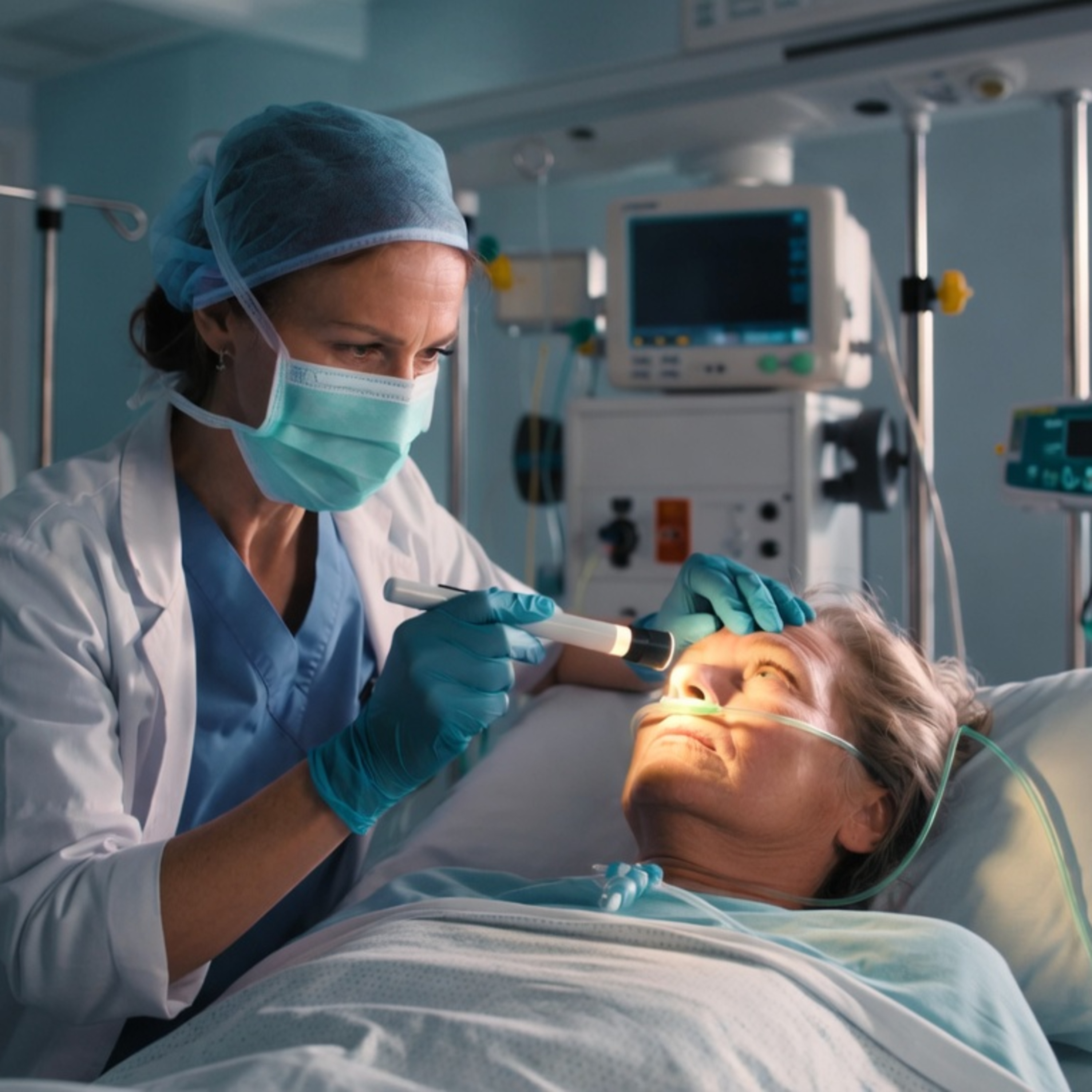
New potential treatment for brain bleeds from aneurysms and strokes
In this episode
#DoctorPodcasts EPISODE 138:
A DukeHealth neurosurgeon invented a breakthrough "NEURAPHERESIS" device for treating brain bleeds from strokes or aneurysms. It will likely save lives, improve quality of life, & may have many other future brain health uses. Watch📺Dr. Lad⬇️explain how it works. More information here:
https://pharaohneuro.com/newsroom/
and
https://www.ladlabneuro.org/
Watch all 138 episodes of the DoctorPodcasts || Cykiert Files video podcast interview show with physicians, scientists, healthcare specialists, entrepreneurs and other experts. Please SUBSCRIBE & FOLLOW @DoctorPodcasts. Please LIKE, REPOST/QUOTE and SHARE the episodes. Send questions, comments, suggestions, reviews and messages to @DoctorPodcasts. Thank you. Robert Cykiert, M.D.
#Neurapheresis
#BrainBleed
#SubarachnoidHemorrhage
#CSF
#CerebrospinalFluid
#Neurosurgery
#DukeNeurosurgery
#DrNandanLad
#NandanLad
#BrainHealth
#StrokeRecovery
#Aneurysm
#MedicalInnovation
#Neurosurgeon
#MedicalBreakthrough
#DialysisForTheBrain
#PharaohNeuro
#Neuromodulation
#BrainSurgery
#FunctionalNeurosurgery
#DoctorPodcasts
#CykiertFiles
#RobertCykiert
#MedicalPodcast
#HealthTech
#MedTech
#HealthcareInnovation
#LifeSavingTech
#BrainEmergency
#NeuroInnovation
#FutureOfNeurosurgery
#StrokeAwareness
#AneurysmAwareness
#CSFDrainage
#NeuroDevice
#Vodcast
#MedicalVodcast
#NeurapheresisDevice
#CleaningTheBrain
#TreatingBrainBleeds
#DukeUniversityNeurosurgery
#InnovativeNeurosurgery
#NewTreatmentForStroke
#DoctorPodcasts
#CykiertFiles
#RobertCykiert
#RobertCykiertMD
#DrRobertCykiert
#DrCykiert
#MedicalPodcast
#HealthPodcast
#MedicalVodcast
#Vodcast
#DoctorPodcast
#PhysicianPodcast
#MedTwitterPodcast
#HealthcarePodcast
#MedEdPodcast
#HealthTechPodcast
#MedicalInnovationPodcast
#NeurosurgeryPodcast
#BrainHealthPodcast
#DoctorPodcastsEpisode138
#DoctorPodcastsEp138
#CykiertFilesEpisode138
#PodcastHost
#PhysicianHost
#MDPodcast
#DoctorLife
#PhysicianEntrepreneur
#MedicalInterviews
#HealthInfluencer
#MedTwitter
#HealthcareInnovation
#MedTech
#DigitalHealth
#MedicalEducation
#FOAMed
#MedEd
#HealthTech
#InnovationInMedicine
#NeurosciencePodcast
#BrainBleedPodcast
#StrokePodcast
#MedicalBreakthrough
#LifeSavingPodcast
#PhysicianCreator
#DoctorPodcastsSeries
#CykiertMD
Hi, thanks for joining us for episode #138 of the Doctor Podcast Show. And I'm your host, Doctor Robert Sichert. To help us get excellent guests for the program. Please subscribe to and follow Doctor Podcast and also like and repost episodes that you enjoy and learn from. We'd really appreciate it. Today's guest is Doctor Nandan Ladd. He's a neurosurgeon, scientist and inventor at Duke University, where he serves as professor and vice chair of innovation in neurosurgery. He directs Duke's Functional and Restorative Neuromodulation program and has dedicated his career to finding better ways to treat brain and nerve conditions.
He's also the cone Venter and chief medical Officer of Farrow Neuro, which we'll be discussing in detail the company that's developing A groundbreaking new device called neurophoresis. He's got an MD and APHD and has written over 150 research papers and has founded multiple companies. Doctor Ladd brings both world class clinical experience and real innovation to the table. So Doctor Ladd, thanks for taking the time to join us today. I'm sure you have a very busy day every day, so I really appreciate it.
Thank you so much for the opportunity. Appreciate it. Yeah, so now most people have never heard of cerebrospinal fluid or the abbreviation CSF. Can you explain in simple terms what this fluid does and why keeping it clean is so important for brain health? Sure. Now think of cerebrospinal fluid, or CSF. As for the brain's own cleaning and cushioning system, the brain and spinal cords sit in about 150 milliliters of this normally crystal clear fluid. And it does a few important jobs. One is it cushions the brain and spinal cord from impact, you know, in sports and trauma, it delivers nutrients to the neurons of the brain and spinal cord.
And most importantly, it also clears waste products and toxins. And so your body's making and recycling this fluid about 3 to 4 times every day. And when that fluid is clean, it's 99% water. The system works beautifully, works well, but when something contaminates it or changes that equilibrium, for example, when blood enters after a hemorrhage, after an aneurysm rupture, which is one of the conditions we're focused on treating first, it's like, you know, contaminating that normally clear fluid and the plumbing essentially gets clogged and pressure can build up, and it starts this cascade of inflammation that causes several secondary problems.
Right. And it damages brain cells if it's not perfect, right? Exactly. Can lead to a delayed strokes, things like water on the brain, hydrocephalus, a lot of downstream complications when that gentle balance or equilibrium is altered. Right. And this fluid, the CSF fluid, is derived from the bloodstream, right? Correct. Yeah. So the brain has something called a choroid plexus, which is looks almost like algae, if you will, in the ocean. And it's what essentially filters and produces new super spinal fluid every minute, every hour, every day.
And that's a by product of the bloodstream of the plasma. So CSF is an ultra filtrate of plasma, but really it's water and electrolytes and albumin is really the the main primary protein. Pretty amazing that evolved over billions of years. It is. Right now, one of the scariest emergencies in neurosurgery, as you know, is a brain bleed or what's called a subarachnoid hemorrhage or you mentioned the ruptured aneurysm. How many people does this affect yearly? And what happens inside the brain when this occurs when you have blood in the CSF or cerebrospinal fluid, Is it?
Is it a big problem? It can be, I mean aneurysm. Also recognize hemorrhage is a life threatening condition. It affects approximately 30,000 people in the United States every year. And what happens in aneurysm is kind of like a blister on a blood vessel, and it has a weak spot. And when that weak spot opens, it ruptures and then blood is then released. There's a burst of blood into that normally pristine cerebral spinal fluid space around the base of the brain typically. And so when that equilibrium is disrupted, it starts to fill with blood.
The immediate step is to secure the aneurysm, which we have a variety of great innovations over the last two decades, whether it's coils or stents called flow diverters or clips, to sort of secure the aneurysm. So there's a variety of tools that are used to stop the bleeding. But what we don't currently have and what we're developing is how do we fix the bolus of blood that has now disrupted that normally pristine environment? And So what happens is that blood starts to break down over the next couple of weeks.
So there's a red blood cell, which is a large cell, and then it breaks down and it releases hemoglobin. And then the hemoglobin releases iron and iron starts this long complex cascade of neuro inflammation that triggers essentially spasming of the vessels around the brain, which leads to secondary strokes and hydrocephalus and fluid buildup. So nearly half of the patients that experience subrected hemorrhage are either they pass away or they're left severely disabled. And it's, you know, not necessarily from the initial bleed, but all these sort of secondary injuries that accumulate and unfold over the following days or weeks.
And so that's really the window that we're trying to change and change our standard of care. Right. So you're basically trying to clean the blood products out of the normally pristine and clear cerebrospinal fluid. Now, how do doctors usually manage these patients? What are the limitations of the standard treatments like lumbar drains and other things? Sure. So, you know, after the aneurysm is secured with a clip or a coil or a flow diverter that stops the bleeding, but then that blood is contaminating the Cerberus spinal fluid.
And so there's a couple of different solutions that people that we still use today hasn't changed, you know, in more than 50 years. Essentially, it's a tube that goes into the head that's called a ventriculostomy or external ventricular drain or EVD. It's really just a silicone tube that goes from the surface of the skin through the skull, drill a hole and then into the brain into the ventricle space where that CSF is made. And really it serves as kind of an exhaust valve. So if the pressure is too high inside the brain, it drains that pressure and that excess fluid into a bag.
And we just sort of wait for that pressure to slowly get back to normal, if ever. And if it does, we can wean that tube away. If not, some patients end up something called a shunt, which is an internal way of diverting that fluid from the brain to the abdomen. Another tube is called a lumbar drain, which you mentioned, which is similar. It's a silicone tube, but instead of the brain, it's inserted into the spine and the the lower back. And that similarly drains into a bag. And so we've been limited by gravity and by the body's own production rates in terms of how quickly we can drain and how much blood we can clear.
And that's really the the opportunity where innovation is possible with neurophoresis, which is what we're building. Right. So in the older technique, it basically takes a long time for the new CSF to kind of wash out all the blood products and it can take a long time, but in the meantime you can have damage to their brain cells. Now you have this new device, neurophoresis and new technique. Can you explain to us what that device actually does? Absolutely. So think of neurophoresis essentially like dialysis for the brain and spine.
And so if you're familiar with hemodialysis, where blood is filtered and returned to the body, it's a very similar concept but applied to the cerebrospinal fluid in the brain and spine. And so we place a specially designed duolumen catheter from the lumbar space from the low back, and it enters the cerebrospinal fluid and has one lumen down below the spinal cord and one up higher. And essentially it creates A circulatory system in the entire spine. And so we're removing sort of contaminated CSF, filtering the blood and returning the patient's own sort of cleaned or cleared CSF back to them.
And so we're not throwing any of the normal fluid away. We're sort of cleaning and giving it back. And so that's part of the secret sauce is where we can now run much, much higher volumes than just passive drains like lumbar drains or ventricular drains. And so we can do almost 10 times the amount of clearance compared to just passive drainage alone. So we call this sort of field CSF management as opposed to CSF drainage, because for the first time we're actually managing the composition of that server spinal fluid and not just draining it.
So instead of just relying on gravity and time, you're actually actively cleaning the the CSF fluid. Now, is this connected to some sort of electronic device that does this and speeds up the process tenfold as you mentioned? Absolutely. So neurophoresis is active circulation and it uses a very precise set of pumps and pressure sensors on inflow outflow transmembrane. The filter we're using is tailored for the condition. So in the case of a, a hemorrhage, we have a size exclusion filter where anything larger than a certain size like red blood cells and hemoglobin are excluded and anything less than a certain size like normal CSF and water goes through the filter and back to the patient.
But all of that is under the control of a, a very fine pump and lots of safety mechanisms built in, in terms of real time pressure monitoring before, during, after. And you know, because it's a dual lumen system, we're able to remove, process and return at much higher flow rates while keeping the normal pressure of the brain and spine in the normal range. And so that the, the trick is how do you turn over large volumes in a very short period of time? And the key is by keeping pressure in the normal range.
And we're able to do that by not removing more fluid than we actually have to. We're just removing the toxins. Wow, that's, that's pretty amazing. Now, what kind of patients could benefit from this technology and how might it change their recovery from a brain bleed? And do they need to be hospitalized for this while they're having this procedure neurophoresis done? Yeah, no, interesting question. I think, you know, the opportunity is, you know, really transformational. I, I'm very passionate about, you know, the idea of the inventors of, of neurophoresis and something I really believe in and I've been working on for quite a while, but I view it not as an incremental innovation.
It's similar to how hemodialysis changed the way we manage a lot of different conditions and LED to a whole field of transplant surgery, you know, kidney transplants and other things. And I think the opportunity for neurodialysis or neurophoresis starts with conditions like aneurysmal cell erectoid hemorrhage, where we remove large molecules like red blood cells and hemoglobin in a short period of time. These patients are very sick. They're often they, they are in the intensive care unit after a ruptured aneurysm and a brain bleed.
They usually spend 2, sometimes more weeks in the ICU and there's a very high morbidity, high mortality rate. So if we can reduce that secondary stroke, reduce hydrocephalus, reduce the need for shunts and secondary complications that happen from that blood burden. I think what we've seen in our early clinical studies is patients do better, they're more likely to go home and we can clear 80 plus percent of the blood in the 1st 36 to 48 hours, so in the first couple days. And so there's a future where maybe patients don't need to stay in the hospital for two or three weeks.
They might be able to go home sooner and they might be able to go home instead of a nursing home. But to answer your question more fully, I think hemorrhagic stroke is the first indication the vision really is to change our standard of care and treat conditions we don't currently have treatments for. So things like meningitis, where there's a bacteria or a fungus or a virus that is now disrupting that equilibrium, we can selectively remove those or subacute conditions. I've had a couple of people that I know that are close to me that passed away from ALS.
And we don't have a cure for ALS and we don't know what causes it, but it is a neuroinflammatory condition. And there's many small molecules and cytokines that lead to the death of neurons in the spine. And so the brain is intact, but their spinal cord shuts down. And so we've done some early studies showing we can reduce that neuroinflammatory burden and maybe change the slope of the curve from a fatal disease to something that's manageable or types of multiple sclerosis, primary progressive Ms. You know, we have antibodies against B cells and T cells and IVIG.
These are all large pharmaceutical treatments, but they don't address all three of those molecules, B cells, T cells and antibodies, which are the hallmarks of Ms. And finally, leptamine and Geo disease is another one. And that's when cancer metastasizes to the brain and spine. So breast cancer, lung cancer, colon cancer are the most common. And the idea there is the there's something called circulating tumor cells which spread from that primary cancer across the blood brain barrier and then seed the spinal fluid and then that leads to metastasis of the brain and spine.
So while we can treat the local disease, you know, at the breast, at the colon, at the lung, once it is trapped on the other side of the blood brain barrier, we don't really have good treatments either for reducing that tumor burden or delivering drugs and, you know, delivering intrathecal chemotherapy and circulating it and targeting it in a much more robust manner than what we do now. So I think the future is really, really exciting. We're starting off very focused on one area that we know is going to work based on preliminary data and expand from there to other conditions and hopefully provide new treatment options for patients that need it.
Fascinating. Could you possibly drain out some of the amyloid in the CSF in patients with Alzheimer's? So in the future, so we talked about acute conditions, subacute chronic conditions like Alzheimer's, Parkinson's are also, you know, very near and dear, you know, in my area of neurosurgery, it's neurorestoration. We tried to restore function. Alzheimer's is one of the largest indications of all. And the short answer is yes, I hope someday we can. I think we still need to understand exactly what the key pathogens are.
It's probably more than one. So a lot of the clinical trials to date for Alzheimer's haven't worked because they target 1 molecule, a beta 42 or 44 or phospho Tau. These are all small proteins that lead to that amyloid plaque or Tau tauopathies. But the opportunity with a medical device platform is you can be sort of agnostic to that and remove multiple things at once. And so I think if we have a, a better idea through, you know, additional research in terms of what are the the key biomarkers that are responsible for that dementia that we see in Alzheimer's and the neuronal damage of the memory circuits.
We can certainly develop a paradigm that is tailored for that. But you know, starting off acute large molecules, but the future is subacute and then chronic with smaller more targeted therapies. That will be amazing. Now how large is the machine that this this connects to? Is it is it size of a kidney dialysis machine or or smaller? Yeah, it's similar to a bedside IV pump, you know, if you would imagine that. So, yeah, pretty small. And, you know, currently it's designed again for acute indications like a ruptured aneurysm where patients are in ICU.
They have Ivs and pumps, you know, and other machines in the ICU surrounding them. And so this would be a focused one just for their Cerberus spinal fluid and for sort of cleansing that Cerberus spinal fluid of the blood early after the aneurysm is secured. Right now you call your company Pharaoh Neuro. How'd you come up with that name and why? I'm just curious. Yeah, I know the company's startups are fun and and names and culture is a part of it. And so, you know, the name comes from some of the oldest roots in neuroscience.
More than 5000 years ago, the ancient Egyptians were some of the first on the, the papyrus to write and describe the brain, the meninges and the Sriver spinal fluid. And so that's sort of the oldest surgical document in our human history and contains the first recorded use of the word cerebral spinal fluid or, or brain and fluid, if you will. And so our, our tagline is, you know, Nerf resis is 5000 years in the making. And so we're building on this lineage of understanding that stretches back to the Pharaohs and, and the, you know, the ancient physicians recognized that the fluid surrounding the brain was important, but we're finally building the technology to actually do something about it.
Wow. They they'd love to see this, right? Absolutely. Yeah. Now you're a very busy neurosurgeon at Duke and also an inventor. What originally sparked the idea for a neurophoresis while you were busy treating patients the standard way? Yeah. So I think innovation always comes from an unmet need. Back in my training, I did my neurosurgery residency and fellowship at Stanford and did the bio design program. And that was a really transformative experience. And now there's many bio design programs around the world.
But what it teaches you is to really start off with a problem and understand that problem well and then develop a solution to it. So it always starts with a clinical observation. And so in a standing in the neurointensive care unit, watching, you know, relatively young patients in their 40s who survive an initial hemorrhage from an aneurysm rupture. But, you know, the aneurysm's secured and they should have a good chance of recovery. But then you watch them deteriorate over the next two weeks because that blood is sort of slowly breaking down and causing, you know, red cell lysis and vasospasm and delayed strokes and hydrocephalus and one thing after another.
And then you look at the tools that we have, and it's like we have a tube and a bag. With all of the other innovations happening in around us, there has to be a better way, right? And so, you know, this concept of neurodialysis or neurophoresis came about was like, what if we could selectively remove pathogens from the CSF and restore that equilibrium? And so the earliest spark for it, and it started off with clinical observation in the ICU. Wow. And that led to where you are now. That's great. Now you mentioned neuromodulation earlier.
Can you tell us what neuromodulation is and how it fits in with neurophoresis? Sure. So neuromodulation is you know the modulation of nerves and you know currently it's used in in terms of electrical, chemical, ultrasonic, magnetic stimulation to change how nerves function. I Duke, I direct our functional and restorative neuromodulation program where a lot of the devices we use, whether it's spinal cord stimulators, which are like pacemakers for pain, or deep brain stimulators, which are like pacements for Parkinson's and essential tremor.
But you know, I think it's expanding from there. There's an area called intrathecal therapies, which is essentially delivering medicines to the cerebrospinal fluid. And we view nerve rhesus as A next generation intrathecal or cerebrospinal fluid platform that modulates how the nerves respond to different toxins or pathogens. And so the overall goal is to use technology to restore neurologic function and restore what has been disrupted. Amazing. Now as as someone who also directs innovation at Duke, how do you balance seeing patients do it, doing neurosurgery everyday, and building new technologies like this simultaneously?
How do you have the time to do all this? Yeah, I think it's, it's a blend for sure. But if you love what you do, it's not work, you know. And so I think every day in the operating room or in the clinic, you, you know, I feel very fortunate to be able to help patients in their time of need and, and see problems that need solving. And, you know, we have a a great team at Duke. So I certainly don't do it alone. And you know, as I'm teaching our students and residents the next generation. The, you know, what I tell them is that you're going to see lots of unmet needs over the course of your career.
And the key is to figure out which ones to work on. You know, there's a lot of smart people out there watching your podcast and learning. And the question is, you know, some are short, some are medium and some are long term goals, right? And I think understanding through that process of understanding the unmet need and developing the technology, which ones sort of rise to the top that you're really passionate about and then de risking them in a systematic way. And so as part of that bio design process, you think about not just the unmet need and you know what an idea for solution is, but all the things necessary to actually bring something from an idea to something that can help a patient.
And that involves things like regulatory strategy with the FDA, reimbursement, intellectual property, clinical trial design, actually building the device. And so there's a lot of other steps more than just wouldn't it be nice to. And I think drilling down into each of those things early on is what I try to teach our students in residence in terms of which problems to tackle. Right. So in other words, you haven't slept in a few years? I could use a little more sleep. That's good. Now, Pharaoh Neuro, your company, recently raised $20 million to move this forward, which is great.
What does that funding milestone mean for patients who might need this device? Is it going to speed it up significantly? Yes, no, thank you. That was very much a team effort. And you know that 20 million Series A was oversubscribed, meaning there were more investors that wanted into the company than what we had originally planned for. And what it does is it takes us from sort of really good clinical research into a commercial product that can actually be used to treat patients. And the funding is going to be important for navigating through FDA approval and then scaling up manufacturing.
So we can start to build these devices to support initially IC us across the country and and then expand from there, as I mentioned, from acute to sub acute where, you know, we'll design A port based system similar to how hemodialysis works now, where patients, you know, maybe with neuroinflammatory conditions that are subacute like ALS or Ms. or cancer, leptomeningeal disease and others would come in and you'd say, yeah, come in for your neurophoresis or let's neurophoresis them, you know, once a month or once 1/4.
So I think there's a future where that exists. And so that Series A is going to help us get there. That's great. Now tell us about the amazing Amaza Reitmeyer and why you picked her to be CEO of your company. Yeah. Now Amaza is amazing. That's part of her name. And so she she comes to us from Medtronic, where she spent over 2 decades in increasing at least senior leadership roles, most recently as a global manager of their neuromodulation business and deep brain stimulation specifically. And over the course of her career, she's LED multiple technologies and scaled them from early technology into, you know, market leading products.
And what made her the right choice was, you know, combination of things. One, she deeply understands neuro. She's been in the space for, you know, 20 plus years and been a leader in the space. She knows how to take things from a medical device that is moving through FDA approval all the way through commercial launch and massive global scale. She's done it multiple times at the world's largest medical device company, Medtronic and and 3rd. She's just a genuinely good human being and has a passion for the mission.
So when I've known Ameza for many years, you know, in the neuro field when she was at Medtronic. But when we started talking about the data for neurophoresis and explained the unmet clinical need, she really saw the potential to change how we could change standard of care. And I think that really resonated with her and we needed someone who could match, you know, the clinical and scientific ambition with operational excellence and amazes the right person to do that. That's awesome. She's going to do an awesome job.
Now, where's the technology right now? Are you in clinical trials? And when might this be FDA approved and become available to more neurosurgeons and hospitals around the country and around the world? Yeah. No, we're working hard on that. We've already completed 2 prospective clinical trials in the US, The first one is Pillar and the second one is called Pillar XTXT is extended. They were both conducted at leading neuro centers across the United States and both demonstrated safety and really compelling efficacy.
We were able to reduce blood burden in the Sriver spinal fluid by more than 85% and protein reduction by more than 80% and that far exceeds what current standard of care achieves. It would normally take two weeks for that to happen with passive drainage and with active neurophoresis, we shift that curve almost, you know, 12 days to the left. So wow, you know, 12 days sooner we're able to accomplish what the body would normally take to do. And so we're now in active discussions with the FDA. We're pursuing A regulatory pathway and our goal is to have the device available in hospitals in the very near future pending FDA clearance.
And in in parallel, we're building up the clinical and manufacturing infrastructure so that when we do get FDA approval, we can scale quickly to the patients in the hospitals that need it most. Now for listeners who have a family members had a brain bleed or a stroke or an aneurysm, what one message would you want them to hear today? I would say that we are working really hard on this, and that stroke is a terrible condition and very devastating. I've had family members who have had strokes, I've treated patients who have had strokes.
And what I can tell you is that there's a whole team of really dedicated clinicians, scientists, engineers who are working tirelessly to change the trajectory of these diseases. And the science of how the brain heals and how we can modify or modulate neuroinflammation is really advancing rapidly. And so we're building the tools like neurophoresis, which didn't exist just a, you know, a few years ago. And I'm hopeful that, you know, when we Fast forward five years from now that we will have dramatically changed the outcomes for many, many patients.
And it's just going to look very different in a very positive way. So I tell them, don't lose hope. And you know, there's great teams working on this and we're excited and committed to bring it to the finish line and make it available to patients. Sounds great. Now, I I know you can't predict this exactly, but if all the trials go smoothly and everything works out well, how much time do you think it'll be approximately before the FDA evaluates it and and hopefully approves it? Yeah, we're in active discussions now with FDA and you know based on their feedback, you know, the goal is over the next 12 to 18 months to have it approved and in IC us around the country.
That's awesome. So this has been really exciting discussing this. It's, it's a major advance that will not only help brain bleeds, but I foresee it will have many, many other uses, which I, I think you mentioned and touched upon. So that'll be very exciting as well. I want to thank you very much for taking time from your busy day and and schedule to discuss this with us and share your wisdom and knowledge with us as well. Really appreciate it. Thank you so much. It was a lot of fun. I appreciate you.
Thanks.
 Apple Podcasts
 Spotify
 YouTube