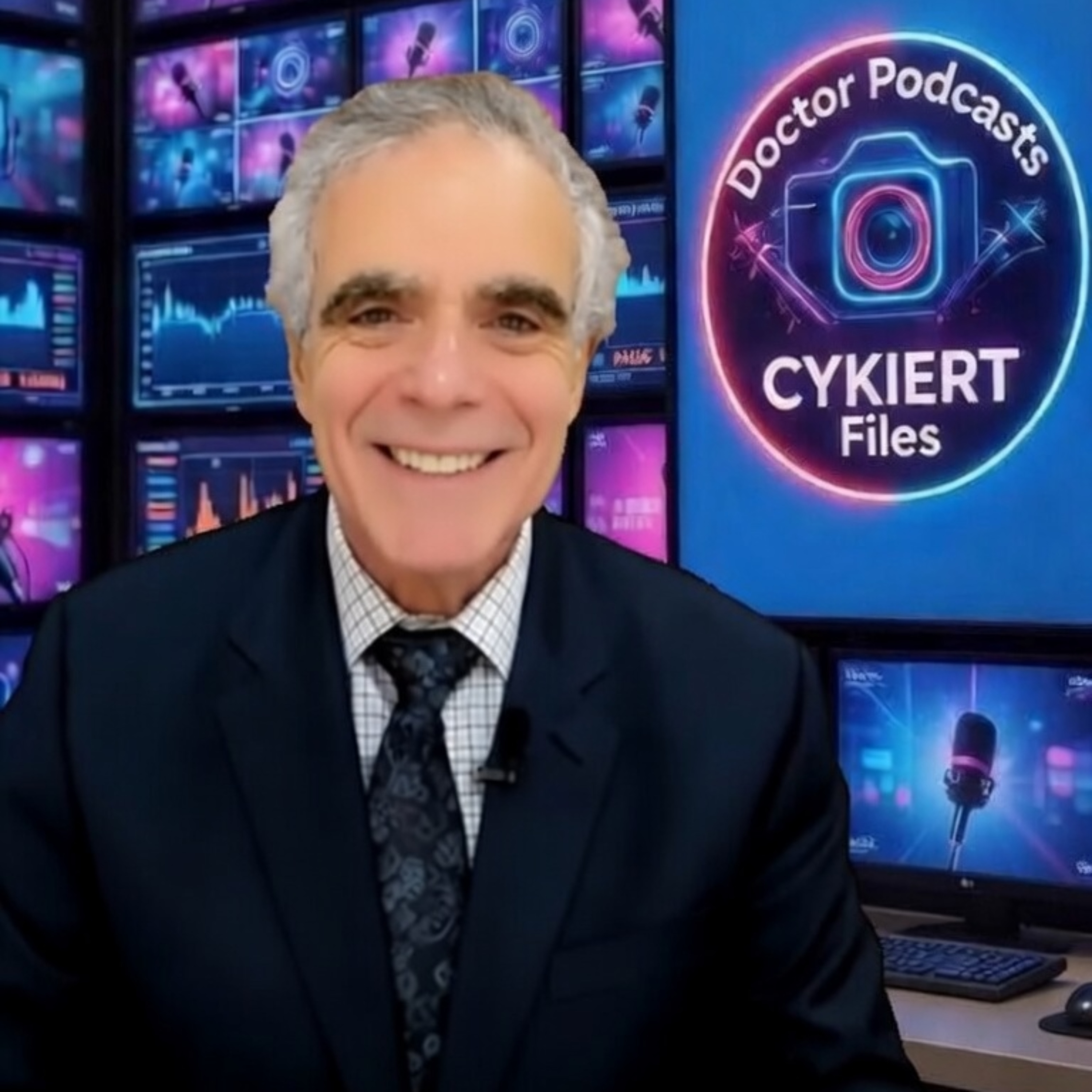
Plastic & Reconstructive Surgeon, Joseph G. McCarthy, M.D.
In this episode
Watch my DoctorPodcasts Show #video #interview, Episode #25, of expert #PlasticSurgery legend, Joseph G. McCarthy, M.D., Professor & Chairman Emeritus at NYU Grossman School of Medicine. He'll be discussing the origins, history, types of, and evolution of plastic and reconstructive surgery. Learn how to find a good #PlasticSurgeon.
Hi, it's Doctor Robert Seikert again with Episode #25 of The Doctor Podcast Show. If you're thinking of having plastic surgery anytime in the near or distant future, you need to watch Episode #25 of The Doctor Podcast Show. Because today we have the very esteemed guests, Doctor Joseph McCarthy, who's the Emiratist Professor of Plastic Surgery at the NYU Langone Medical Center and NYU Grossman School of Medicine. And not only that. Doctor McCarthy was also the. Chairman of the Department of Plastic Surgery for over 30 years at NYU and built one of the best, if not the best plastic surgery program in the USA.
So this is going to be a great show. Doctor McCarthy, Joe, thanks very much for coming today. I really appreciate your time. Well, I'm delighted to be here, Bob. It's a stormy night here. And then? It's sure it's been a stormy couple of days. Here it. It seems to be over, as you'll find out in a little while. Right. We'll we'll find out after the show. Well, thanks for coming. Could you tell us what plastic surgery is and where that name come comes from? Obviously they're not operating on on plastic, but where does that name come from?
It's good question, hard hard answer. And I I get asked it all the time and a lot of people when they ask me, they think it's because I work with plastic, but it has nothing to do with plastic material, right? It's actually from the Greek word plastos, which translated means to mold and to shape. I see. And it probably goes back to the 19th century, when when modern surgery really began in the 19th century. And if a surgeon invented an operation, they often would put the suffix plasty at the end of the operation, right?
For example, cardiac surgeons will talk about a valvuloplasty when when they work on the valve of the heart. And for some reason or other when plastic surgery got started, it sort of picked up the name plastic from the Greek. And that's that's about the best answer as to why we're called plastic surgeons. Right. So you you're actually molding the body, so it makes sense to to call it plastic surgery? It is. And I think there's always been this shaping artistic side to plastic surgery compared to other surgical specialties.
We don't own any of the human anatomy. If you're a urologist, you could say the kidney, the bladder. That's my territory. Cardiac surgeon, well defined heart. As a plastic surgeon, we don't own any part of the human anatomy. We really operate on all aspects of the human body. Right. Anywhere on the body you you can have plastic surgery and when did the first plastic surgery or was it called that, when, when was that first done? When were the first reports of that you mentioned a couple of 100 years ago?
Well, modern plastics, modern surgery began I think in the 19th century, particularly with the discovery of anaesthesia and also the understanding of antisepsis or the role of infection. And modern plastic surgery probably started a little later. We all look back to World War One, right? And World War One was trench warfare. And if you there have been a couple of good movies recently describing trench warfare, but the poor soldiers would be in the trenches for months and then they'd get the order to attack and charge.
So the first part of the human anatomy that went over the trench was, of course the face, right? So World War One was characterized by an inordinate number of facial injuries of facial wounds, and one WAG once said that when they got the order to attack, they should have put their helmet on the tip of their rifle and put it above the trench and had the helmet blown off. That's when plastic surgery began, and it was really operating on the facial injuries of World War One. So what happened after World War One you mentioned?
That it's it's interesting Bob because they formed these multi discipline teams with anesthesiologists and dentists and general surgeons and when the war ended they all went back to their original specialties. The dental surgeons went back to becoming dental surgeons, the ENT doctors became Ian went back to that and they and plastic surgery didn't take off at that point. When World War Two started, they recognized that they had to have plastic surgery teams, so they revived the concept of plastic surgery.
And World War Two was different because it wasn't so many facial injuries. There were a lot of burns, there were a lot of hand injuries, there were a lot of leg injuries. And so they were treating a much broader group of problems. And after World War 2, the young doctors working in the plastic surgery units started practicing plastic surgery in peacetime. I see. And it was really that generation of plastic surgeons who were my teachers when I was a resident. So it's it's it's a young surgical specialty compared compared to ophthalmology or ENT, right?
So how did you get interested in in plastic surgery? Why did you decide to become a plastic surgeon? Well, I was a general surgical resident, thinking I'd be a general surgeon or possibly a cardiac surgeon. And in those days, surgical residencies were five years long. We're on every other night. I mean, they were really grueling, right, in those days. And I had a rotation through plastic surgery and I was love at first sight. I I I liked plastic surgery because again as we mentioned earlier you operated all over the human body.
But it was creative. You could take 10 plastic surgeons and show them one the same problem and you would get 10 different recommendations or 10 different surgical procedures. It it was not a straight straight cut algorithmic type of discipline and and I I I liked that aspect of it that's interesting. 'Cause I always think of plastic surgeons as as being half artists and and half surgeons. They're very creative in their ability to think of new concepts and do things in different ways, where other surgical specialties have very precise, defined algorithms.
Do you? Are you an artist by any chance? Well, my I I I do like to sculpt. OK, there you. Go and I work in clay, but if you go to the annual plastic surgery meeting they have a whole display of the members artwork and it's impressive. A lot of plastic surgeons do art as a hobby. Yeah, it figures that they would do that. So you mentioned that general surgery was about a five year rotation. What about plastic surgery nowadays? If if someone wants to become a plastic surgeon out there in the audience, let's say you're in medical school for four years.
What what comes after? That well, then you can. In my day, you did five years of general surgery and then two years. Of plastic surgery 7. Years. And then I I went and worked with a famous plastic surgeon in Paris. So I I was 7 plus years in training and then. You could have been a heart surgeon. I I couldn't. Or or at least right. But today we accept the future plastic surgeons right out of medical school and it's six years of training. Six years, but most are, I would say 75% of the graduates from plastic surgery residency will do a post residency fellowship for one year.
It's unusual today that a plastic surgeon has a broad practice in plastic surgery. It's like ophthalmology more and more. Everyone is special. Sub specialized, right? So some people do more faces, others do a brass work. Breast or some may do only hand surgery, for example. Right now I know you were an expert in a in a certain to find sub specialty of plastic surgery. Can you tell us about that and and what milestones you had in that sub specialty? Well, when I started plastic surgery training, I think I was really open minded.
I I didn't come in with any set idea of what I wanted to do. I was very fortunate to have as a mentor John Converse who was the chief of the unit before I was at NYU at NYU and he was, he was sub specialized in plastic surgery in the face. And within a couple of months of being in the plastic surgery residency, I I decided that's the area I wanted. And so much so that when I finished my residency, I I spent several months in Paris working with Paul Kesier, who was the probably the father of Crania facial surgery.
Right now, I know you specialize in craniofacial surgery. Can you tell us what that is and and what kind of surgeries you do in that? Field Well, as I mentioned earlier, the historic roots of plastic surgery are in the face when you go back to World War One. But Crania facial surgery was working with a neurosurgeon and neurosurgeon and plastic surgeon working together and they traditionally facial surgery was done with incisions through the face, whereas Crania facial surgery approached the bones of the face through the cranial cavity and that that became my main interest.
So even even though I was trained in the all the broad aspects of plastic surgery, once I joined the NYU faculty I I was concentrating only on plastic surgery of the face, which was crania, facial surgery and the other interest I had was cosmetic surgery of the face. Right. Which brings me to the question that most people think of plastic surgery as just kind of cosmetic, but there's also reconstructed. Can you tell us the difference between cosmetic and reconstructed plastic surgery and and what role you had in both?
It's a good question, Bob, with a difficult, impossible answer. And it's a rare cocktail party that I go to that I don't get asked this question. What's the difference between reconstructed plastic surgery and cosmetic plastic surgery? Part of the problem comes from the media, because the media emphasizes cosmetic. Right. Yeah. You can't find a newspaper or Internet or TV show without mention of of plastic surgery. It's one of the hottest topics in medicine. And even at a dinner party is a plastic surgeon surgeon, Most people are much more interested in hearing about cosmetic surgery than reconstructive.
Did they ask you if you could fix this? Or yes, but as an example to show how the two terms sort of merge, you think of a child with a cleft lip where the child's born with a defect in the lip. The mother of that child is much more interested. I I think to the mother of the child, it's a cosmetic operation, isn't it? It's the appearance of a child that she's interested in. So you could say, even though most plastic surgeons will look at a cleft lip repair as a reconstructive procedure, here's the mother who really looks at it as an appearance thing, as a as a cosmetic operation.
And another example is the modern facelift. The modern facelift is a is a is a complicated operation. It's repositioning several areas, several layers of the face with the facial nerves exposed and in in other words, you can it's it's a complicated operation that could have a lot of complications if it isn't done well. And yet it is labeled as cosmetic and in reality that it's it's a reconstructive procedure. So there's no clear definition of what is a cosmetic operation and what is a reconstructive.
They overlap a lot. They do and and they they require good training. The surgeon should have and also execution of the operation of both operations have to be well done, right? How long does it take for a plastic surgeon to do a a facelift? Let's say a full facelift. Well, seizure is well, it it varies you know all surgical fields. We know that some surgeons operate faster than others and have the same result as someone who operates more slowly. But a a modern facelift today is. Three to four hours.
Three to four hours, Yeah, it's major. Surgery. It is major surgery and a cleft lip operation. If done carefully, that can take three to four hours. Three to four hours. It's incredible. You have to have lots of stamina to do that the surgeon has to do. That yes and. There's lots of complicated nerves and arteries that you have to be careful. Not not to injure and a lot of my early craniofacial operations would go 810 hours, 8 to. 10 hours? Wow, that's that's pretty amazing. And, and that's a misconception the public often has.
Is that plastic surgeries flim flam? Right. I think because they refer to it as cosmetic surgery, they assume that it's, it's kind of, oh, it's cosmetic, it's it's nothing, it's quick, but it's actually very complex surgery. It is and and a. Huge amount of skill and it. Has to be carefully done. For example, cosmetic surgery of the face. If there's a complication, it's out there for everyone to see, right? It's not like an abdominal operation complication where and put a pad over the wound and pull your pants and cover it up, but.
That's right. That's the interesting thing of facial surgery. It's right out there for everyone to see. Right. We don't see our gallbladders, no. Or our lungs or. Intestinal hip operations. Exactly. It's it's or even our heart operation, right. The plastic surgery is is right out there, yes. And I think for the patient it makes for a difficult decision because the patient is making a decision about an elective operation and post operatively he or she will have swelling in black and blue of the face.
I always found that was one of the for me anyways, the allure of facial surgery was just right out there. Everyone to see and and as a surgeon you have to guide the patient through this post operative period, right? Where there's a lot of swelling. Black and blue, right? So I mentioned before that you were chairman for several decades at at NYU Medical Center. Could you tell us how you became chairman and why you decided to do that? My predecessor, John Congress, who was a who was really one of the founders of modern plastic surgery, died and I had met on the faculty, oh, about six years.
And the search committee offered me the position and I decided to accept it. And it it was a difficult decision because I was so young, had a young family, but the job appealed to me if you wanted to do it. Right. Well, you did an awesome job because NYU is was known to have when you were there. The best plastic surgery department in the country is is what I'm aware of. How did you? Build that.
We built it around teams in many ways. We took the wartime model of building teams and I I I directed the craniofacial team and had neurosurgeons, ophthalmologists. We were talking about Mark Steele a few minutes ago, geneticist, psychologist, speech therapist, and it It again was the military model of different specialists working together. Then we had a cleft lip and Palatine. We had a facial palsy. Team again these required services of ophthalmologists. We had people sub specializing in cosmetic surgery of the face facelifts, eyelids and then we had hand surgery team.
We had an incredibly good microsurgery team and for example they would replant limbs that had been amputated in accidents and of course that led to first rate microsurgery team and and of course cosmetic surgery was a big speciality. So none of us on the faculty and at one point we had 26 plastic surgeons. None of us practiced the full spectrum of plastic surgery. And if someone came to me, for example, with a hand problem, I I would make sure that person was transferred to someone who did hand surgery exclusively.
So I think that is the concept of developing these teams is really what made the department what it was. It's pretty clever. You created a subspecialty team for pretty much every subspecialty of plastic surgery. So those people in each team gained a lot of experience and knowledge and they became top of their field, yes. And and I I I think it's very important as a surgeon or physician that you always feel you're learning, that you always are asking yourselves yourself, could I be doing this better?
Is there a better way? But the more you stay within a a focused field, you had more opportunity to learn more about it or to do research rate related to it. So there was a lot of merit to the concept of teams, right? About how many residents did you train to to become plastic surgeons? Over I I trained about 135. 135. Yes, 135. That's a lot of plastic. Surgeons. I got AI, got a big boot out of all of them I did. And and many of them I'm sure have gone on to do. I I think it's some it's I I think of my residence.
I trained. I think recently #25 became a chief. In other words, we The program turned out 25 chiefs of plastic surgery. Department chairman and chairwoman at other institutions. It's pretty amazing. I don't think anybody has a else has a record like that. But. And they're now training newer people, so it's like third generation. Well, education is a great joy. Right. And I think it it's good for the teacher because it keeps you in touch with young people. Right. You have to be on top of everything and have answers and.
You know to be in the operating room with a young resident and the young resident says, Hey Doctor McCarthy, why are you doing this? And and it it's it's great being with young people. The other thing working in a university setting is research because again the team concept promotes research often to solve a problem in the operating room, you can't solve it in the operating room. You have to. You'll have to do research and. So you have research teams also?
Yes, we we made a big commitment to research and we were fortunate to raise funds for that. And we had NIH grants and our research areas were bone healing. Also scarless healing. We we made a big effort at trying to figure out how to have wounds heal without a scar. There were a lot of microsurgical research that was done, and our unit pioneered transplantation research, which of course now is flourishing in the department under Doctor Rodriguez. He's the face. Transmission one of the top programs in the country.
Yes, he recently, I'm sure you know and the audience knows he recently that did the face transplant with the first eye transplant ever done in the entire world, which is pretty amazing and incredible. And and and I I think that operation epitomizes the spirit of plastic surgery. I mean there's there's no precedent for. It no. It was well, it was well thought out. It wasn't done casually and through the IRB, the Institutional Review Board at NYU, but at at the present time, I think the patient is what, 8-8 months out, right?
And the eye is alive. The blood supply to the eye is there. Right. The only thing left is to connect the optic nerve, the patient's optic nerve, to the eye. That we haven't quite figured out yet, but I think in five or ten years we'll probably come up with nerve growth factors or other. Things in the use of stem cells. Right. So that we can connect the the patient's optic nerve to the new eye and then restore vision in somebody who's not able to see. That's a remarkable achievement by Doctor Rodriguez and I'm sure I heard he had a team of like 80 people.
Doing yes and and that was not a short operation. No, you know, that went on for. I think it was 30 hours or so. Right. So that obviously requires team effort. One of the things that you see in TVA lot is and in the media and the Internet is patient expectations about cosmetic plastic surgery and the balance with with surgeon ethics. There are some people who have unusual or you know unexpected expectations of the results of their surgery. How does a plastic surgeon balance that and and tell the patient, look you're 70, I can't make you look like you're 20.
If the patient insists, they want to look like a 20 year old model. That's a very good question, Bob, because it is so, so important not only for the patient but for this, but for the surgeon. And the initial consultation is key, I feel. And of course, now in modern medicine, when we go to see our doctors, you'll see they always tell you how many minutes are loud, 15 minutes or 20 minutes. And the initial consultation should not be rushed because it is the first meeting of the surgeon and the patient.
And I think the patient and the doctor are both trying to get a feel for each other. And the patient is there because the patient has a genuine concern about problem that he or she may have and they're curious as to what the doctor is recommending or not recommending. And the surgeon is, is there trying to figure out how, as you say realistic, right, how realistic the patient is. It can't be rushed. You know it's it's it's not a 15 minute meeting, right. And I think the surgeon has to, has to be candid and about what he or she can accomplish with the operation, especially feeding into the decision making, the perception, the surgeon's perception of what the patient is thinking about.
And sometimes it just doesn't merge. And I always said to my residents, don't proceed any farther if you're not on the same, if the surgeon and the patient are not on the same wavelength. Right, 'cause you're going to have an unhappy. Patient, yes. And and I think it will also be a unhappy experience for the surgeon, right. And occasionally you just have to say, no, we're not on the same wavelength. Right now, I'm sure you've seen pictures on the Internet and TV of people who had multiple plastic surgeries, and eventually they wind up looking almost disfigured.
What? What is the role of the plastic surgeon? If somebody's had three or four facelifts and revisions and they're still unhappy, how does a plastic surgeon deal with that? Well, I said it can't be a quick consultation. That consultation maybe should be done over several visits. There's there've been a lot of
psychologic studies published on this. There's some patients out there who just I'm I'm never satisfied and at the same time keep requesting repeat operations right. I I, I felt as as a teacher of plastic surgery that with the residents, I always would would talk to them a lot about this initial, this initial consultation on how to deal with the patient. Because I think in the education of a surgeon, it's much more than what to do in the operating room. In fact, the problem area for a surgeon is before the operating room because you know, Bob, I'm sure ophthalmology is that way.
When you look back at what had been a problematic situation, invariably the signs were there at the initial consultation, right. And and I think it's incumbent on the surgeon to say, no, I'm not going down this path with you. Right. That occurs with me when I do LASIK surgery, which is laser vision correction. And I asked the patient, you know, what are your expectations of this? And sometimes they have unrealistic expectations. Like I want to be able to read a license plate number, you know, a mile away in on a dark country Rd.
and I go, well, basic doesn't do that, you know? And sometimes if I feel the patient's expectations aren't realistic and I can't really explain to them what the result will be, I'm better off not doing that, cause the patient will be unhappy with the result and I'll be unhappy that the patient is unhappy. So it's similar in. Oh, very elastic surgery, particularly cosmetic surgery he did face and someone will say I want to look the way I looked at 30 and sitting across from you as a a patient who is probably 6570 years old and I used to say I I I would never get involved in the birthday years.
I'd always say, well, successful plastics, cosmetic surgery of the face will make you look more rested. People may say to you afterwards, Oh, you have you been on vacation? Right then. I think the operation's a home run. Right, but for. A 65 year old patient to be told you look like 25. I think it's a problematic it by definition that's an operation that was not successful right. Because it gives the face a distorted look, right, You you don't, you don't want to have this type of surgery and have people behind your back say, oh they look she looks operated on or he looks operated on.
It's much better to say, oh you have you been on vacation? You look rested. Love that. That brings me to to this. A lot of celebrities you know in in showbiz say they've never had plastic surgery. And you can tell obviously they have, because if you look at old pictures of them, they look older and then you, you see the new pictures and they look younger, years younger, yet they deny that they've had plastic surgery. You talked about psychology a few minutes ago. What is that psychology about? Why don't people want to admit that they've had plastic surgery or Botox or or fillers or things like that?
I think that has changed a lot. When I first went into practice it was patients were very secretive about it, right? I remember I ran into someone in a in a group setting and the lady pretended she didn't, who was my patient, pretended she didn't know me, called my office the following week to apologize and everything. So. That's funny. There's less and less of that now. I think most people are open about it. For people in the media for that, it it's a bit of a burden because their their job security depends on them not looking tired or haggard or their eyebrows down on their eyelashes.
But I I, I I don't know how many of them fess up to it or how how many don't. But in general today, people are much more open about having had cosmetic surgery in their face. That's interesting, but there there's still some who deny it. On the other end of that spectrum that there's, I'm seeing more and more of this is the plastic surgery addict, the people who are out there and say I've had 38 plastic surgery procedures and have spent $800,000 on, what is that? What's that psychology about you?
You see more and more of that on on the Internet and also on. TV Regrettably, that seems more of a problem now than it used to be. And a lot of patients today get what we call the injectables, where all these different substances are injected into the different parts of the face, especially the lips, and they end up with very distorted facial and anatomic features. And it doesn't seem to upset a lot of them. I mean, they almost like the distorted look, right? And. I have a few patients like that who who come in.
I saw them a year ago and they come in and they've obviously had numerous injections in their face and their face is very tight and they think they look awesome but everybody else doesn't. Books have been written about self-image, as it's called. That's the term of a psychologist self-image. In other words, how do I feel about myself? And there's a subset of the population out there who who really prefers this distorted look. Right. And what about the plastic surgeons who do the 8th facial lift?
Should they be doing that? Or if a patient insists and the doctor tells them look, you're going to look distorted, it's not going to look. Great. I I mentioned earlier it's a very incumbent on the plastic surgeon to know the two letter word no I'm I'm serious right or I I never bought the argument. Oh the patient insisted that I do it right you're you're you're a free individual as a surgeon you you and and you carry a big responsibility because you're taking a patient into the operating room and you're under anesthesia.
There are risks involved and it it is, it is your decision as a surgeon and if you and if you and patient are not in synchrony on on what is a well grounded well thought out operation and you don't proceed any further, right it's. It's fascinating. I used to, I used to say to the residents, if if on that initial consultation you're just getting nowhere and and it's obvious that you you cannot proceed farther with this patient say there's no charge for the consultation. Obviously I'm, I'm a disappointment for you.
But on the other hand, there's no fee, because I just can't emphasize enough that that initial consultation is so important because it sets the groundwork for everything. So part being a plastic surgeon is is being a psychiatrist and that initial. Evaluation. Yes, yes. And that's basically what you're doing. But I think, I think that's what good doctoring is, right? I I was honored by my medical school and I had to make a little speech and I said I'm it was. I said I'm so grateful for the school because whatever doctoring skills I have, it was I learned it here, right?
And it it cosmetic surgery, plastic surgery is still doctrine. It is you. You have to do what is best for the patient. And if the patient and you look at it differently and it's obvious that you're not going to reconcile these differences, then you just have to say no. Right. Very important. Talk about facial plastic surgery. There are different subspecialty areas of that. For example, some doctors only do nose plastic surgery and some do other parts. Can you tell us about the different areas of the face and the the subspecialties of that?
Yes, I I dealt with both the soft tissues and the and the bones of the face in some. Most cosmetic surgeons do only the soft tissues. In other words, they do blepharoplasty or eyelid plasty facelifts. So they're dealing with the skin and muscles of the face, but not the. Bone not the underlying bones. Most cosmetic surgeons of the face will do eyelids, facelifts, brow lifts, rhinoplasty or nose, nose operations, right and. There are different specialties now that do some of those. For example, we have ophthalmologists.
We'll do eyelid surgery. You also have ENT doctors who who do eyelid. And they're, they're called, they call themselves Facial Plastic Surgery. Right. And and dermatologists. Dermatologists or is there any difference between those different specialties? Are they trained differently or is it just? Well, in the end Bob, it all comes down to how well trained the surgeon is. What is the experience of the surgeon and what are the doctoring, as I call it, skills of the surgeon and what are the ethics of it?
And and wherever they come from you, you sort of want to deal with a surgeon who has that package of attributes, right? Which leads. Me to the next really important question. A lot of my patients frequently ask me for a plastic surgeon. They want me to refer some doctor that I know who they can trust and and they'll know they get a good result. For me, it's easy. I refer them to one of the plastic surgeons at NYU and I know they're going to do a great job and get a great result. But for the average, average person out there who's looking for a good plastic surgeon, how do you determine who's good?
How do you determine who's going to give you a good result? Well, let's say someone called me from Ohio, a friend of my daughter or William. This happens all the time when you're a physician. And if and if I didn't know someone that I could recommend in that area, I would say, Do you have a good family doctor? Do you have a good PCP? Oh yes, I'd say, well, ask your PCP whom he or she would recommend in the area, that that's a good way to start. And then if you get a name with the Internet today, you can really look up this person very carefully and you get a handle on that by checking what was their training, what did they residency?
Do they hold membership in the American Board of Plastic Surgery. How are they? Board certified. Board certified. How long have they been in practice? Do they have a hospital appointment? I think that is very important today because if there's a complication, you want a plastic surgeon who has a hospital appointment. Right. So if the surgeon's not affiliated with with the hospital and they're just working out of an ambulatory surgery center or maybe a plastic surgery operating room in their office, that might be a signal.
Yes, from, I mean that's the way I feel about it. If there is a complication, you want that doctor to be able to transfer patient to the hospital where he or she holds privilege, right? How significant are the preoperative and post operative photos that you see on the Internet? Almost every plastic surgeon now has pictures of of patients that they've done. Of course they hide their identity in some cases, or in some cases they get permission from the patient to actually show facial features. And sometimes they show incredible results.
How reliable are those results on the websites?
Photography has always been a big part of plastic surgery, even going back to World War One and here at NYU we always had a first rate photography set up and we use the same technique on the preoperative photos and on the post op photos. In other words the lighting, the positioning of the head and we would not let the patients sit like this on the one visit and the next visit like that. I mean everything was positioned and but the photograph is really in facial plastic surgery probably the most important part of the of the record.
I mean that really shows what happened, what didn't now and and we were consistent in our technique. In other words, in the post operative picture, we didn't turn up the lighting to to obliterate for any lines or wrinkles. And in the plastic surgery journal now if you submit a paper to be published on plastic surgery operation of the face, you have to sign a statement that the images have not been manipulated. Right these days you can. Photoshop everything, right? I can say at NYU we never photoshopped.
I can say that in a reputable journal. You're not you. You you have to say you have not manipulated a Photoshop, but again when you go on the Internet and see all these Rasmataz ads. Right. Some of the pictures are incredible. Yeah, but yeah, they they could be Photoshopped. We could manipulate what we're doing right here now. You could turn the lights up. And I look, I look 10 years younger and then you look. Yeah, we could do that. Yeah, Yes. So that's another area now with artificial intelligence that could be even.
Oh yes, made worse. But for the person looking at Plastic surgery of the face, it's caveat empter. I mean, fire beware. And there's there are a lot of unscrupulous people out there. There's absolutely no doubt about it. Always were, always will be. So you just have to be careful. Get lots of references if if you know. Yes, and and and if whatever town you're in, I I think if you start with reputable doctors whom you know or you say to your internist, let's say it's a male internist or PCP, you say if your wife was going to have this operation, where would you send her, right.
That's always. That's always a good intro for asking for advice in terms of a referral. Right. That's a good way to to approach it. What about newer techniques in in plastic surgery, like lately there's been lots of talk about sex change surgery and I know a lot of plastic surgeons are involved in that. What? What's your thoughts on that? Yes, It's called gender affirming surgery and it is being done in a large scale across the United States and around the world, right. And it's it. It is bona fide surgery, but it has to be done carefully, obviously.
It's not just that initial consultation I was talking about. I I was, I was never involved in it. And when I was chair of the department here it it, there was very little of it done at that time. But there's been an enormous change in the last 10 years in this type of surgery. But again, you need a team, right? It's not just the plastic surgeon. You need a urologist. You need endocrinologist, psychologist. Gynecologist. Gynecologist. Yeah, I had a Doctor podcast episode I believe was #21, where I interviewed 2 surgeons who do transgender or gender affirming surgery, sex change surgery.
It was pretty interesting. One of the doctors and the surgeons is planning to do the world's first simultaneous surgery, where he transfers nail genitalia to a female and female genitalia to a male at the same time and and two adjacent operating rooms. And his plan is to find people who are immunosuppressed for other reasons so that they won't reject. And is he part of a transplant team? He. Works at Mount Sinai Hospital here in New York City, and he's also in Serbia, He. He spends about half a year in each place and he's he claims he's going to be the first person to do that.
Well, you you obviously this is a big undertaking. It requires IRB approval Institutional Review Board. It requires transplantation teams. Right. And then the patient needs to be immunosuppressed just like, yes. And and immunosuppression carries complications, right? So. It's a major. Undertaker talking about it and and and doing it. Two different things. He's been working on it for many years, so hopefully we'll see what happens with that. What about Can you explain what distraction osteogenesis is and craniofacial surgery relations?
Well that was my big research area and traditionally craniofacial surgery was done with big operations, blood transfusions, putting, taking bone, grass with ribs or taking bone from the hip using a lot of plates and screws, wiring teeth together, big operations 12 hours. And I became interested in the late 80s, early 90s and what was called regenerative medicine. Instead of doing big operations, you make small incisions and you you you turn the body into generating new tissue. And it had actually started in Russia by a surgeon by the name of Alizarov.
And he did it on the lower extremity, where he would cut the bones of the lower extremity and put these large cages on, and gradually stretch the bones after they had been divided and in the gap. Would. Form new Bone and I started doing it late 1980s on the bones of the face. And ironically Lizarov who came up with the concept, was working on the wrong bones. Because the bones of the face are much smaller and have much richer blood supply than the bones of the lower extremity of the legs. And we started on the lower jaw and upper jaw and then the whole face.
We were able to create these devices and with a relatively small operation cut the bones and then wait four or five days and then start pulling the bones apart. So if someone had a deficient lower jaw had by definition someone with a small lower jaw has a difficult time breathing, we we would stretch the lower lower jaw and make a a much bigger lower jaw and upper jaw or.
How many surgeries would that take over? How long? It would, it would just be. It would be one operation, but they wear the device for about two months. I see. For example, patients with exorbitism where the eyeballs look as though they're falling out of the head, which you've seen. We were able to enlarge the eye sockets in the upper jaw with this technique and but it required a a a lot of laboratory research because the technique was actually worked out in the laboratory before we did. We did it on humans, and I just cannot emphasize enough the role of research in moving medicine forward.
I had said earlier, as a surgeon you you should always be saying to yourself, isn't there a better way of doing this? There has to be a better way. Yeah, that's how we evolve. And improve and and often you'd have to go to the laboratory to work to work this out. Yeah, it's the same with eye surgery. When I first started doing cataract surgery, surgery would take about an hour. It would require multiple stitches, bed rest afterwards. Now it's a tiny incision, quick recovery. And it's it's evolved a lot over the decades that I've been doing it.
Same with plastic surgery and other specialties. What about microsurgery? There's a lot of talk about microsurgery in plastic surgery and there are doctors who sub specialized in that. Can you tell us about that? I think when you come along in medicine at what time can be very advantageous because I I finished residency in the early 1970s and plastic surgery was like a rocket ship was just taking off cranial facial that we've talked about was 1 area and the other was microsurgery where under the microscope you could put together very small vessels and that allowed you to take tissue from one part of the body and move it to another part of the body and hook up under the microscope the the blood vessels the arteries the veins and even the nerves.
So that in one operation, for example, if a woman had lost her breast for cancer with a mastectomy, you could take tissue from her abdominal wall and move it to the chest and you'd have healthy tissue there because the blood supply. Or the blood supply and and the nurse supply. So without restoring the blood supply that transfer of tissue would not survive. It would it would just kind of die off. And and that was a big advance in the 70s that came out of plastic surgery and our unit pioneered a lot of those operations.
I never, I never did microsurgery. But microsurgery led to the face transplants that are being done now because it's instead of everything being done on one person in face transplants, the face is removed from the brain dead patient and transferred to someone who whose face was destroyed by burns gunshot. So you're actually reconnecting the blood vessels, yes, from the donor to the host and the nerves? And the nerves. But again, because it's two different individuals, then you have to go use drugs, immunosuppression.
Right. Otherwise the the host person will reject the the donor tissue. Now, when the media is much more interested, though not talking about this type of surgery as much as cosmetic surgery, right? Yeah. That's. But but it it's it's incredible what microsurgery has accomplished. Right when were microscopes first used in in plastic surgery? I think your specialty used them before. Right. I plastic surgery, right. I think ophthalmology was the first specialty to to use microscopes. It was introduced in the in the 70s, early 70s by someone who actually went down to Columbia, South America, and learned it from a doctor there and then brought it back here.
Initially people laughed about it and said, oh you don't need that, it's ridiculous. But now all eye surgery is done under a microscope and it looks like the technology has been transferred to neurosurgery plastic surgery. And I recall in the early 70s, Bob, for microsurgery on our plastic surgery service, we used to use the ophthalmology scopes. Oh, so you were the guys who took the? Scope. Yeah. And and then and then eventually the manufacturers came out with microscopes designed for microsurgery.
And it's interesting microsurgery did not come out of vascular surgery. It it really came out of plastic surgery and and yet you think the vascular surgeons were working on blood vessels all the time but. Then they adapted that. From from you right or or from the microsurgeon? Interesting how different specialties share techniques over the years and help each other evolve. Well, look at look at how we worked with ophthalmology and plastic surgery.
I I work with neurosurgeons and that's the wonder and the advantage to the patient and the doctors of the team concept of people from different disciplines working together. Right. You learn from each other and help each other get better and improve. What about the role of robotics? Does robotics now in in multiple surgical specialties? What about it? Hasn't it hasn't had a big role in plastic surgery.
It has resulted in the incisions being made smaller. The the big push in all of surgery in the last 25 years has been to make surgery quote less interventive, End Quote. In other words, not to require all the blood transfusions, the big incisions harvesting ribs. Bone grafts that I mentioned earlier and and and robotic surgery. The concept of robotic surgery offers a lot of hope in this area of making operations simpler and easier for the patient to undergo, right? So transfers, transfers, it also from inpatient to outpatient, Yes, absolutely.
Like a recovery. Yeah, and and less expensive for society, right? Now in the early days of cranial facial surgery, we used a lot of blood transfusions and starting in this, yeah, I'd say around 2000 and and thereafter it was rare for us to use blood required blood transfusions. And yet as a resident as a young surgeon, we used a lot of blood transfusions. So that was the that's an example of the progress that was made with less interventive. Surgery right Less than less invasive, quicker, better results.
Quicker recovery, less, complication, fewer complications, less. We've made a lot of progress. We have but 20-30 years now we'll look back and say, wow, then I can't believe. We were doing I I I hope so right. I hope so. And I gave a lecture once on the role of surgical research, and my theme was the role of surgical research was to put the surgeon out of business. Seriously. Yeah, right. I mean, there has to be a way of getting patients better without submitting them to big, long dangerous operations.
I think you're absolutely right. In the future, there will be fewer surgeries because we'll figure out ways to to fix things without surgery. And I I think a good example is cosmetic surgery of the face because a a facelift as I mentioned earlier could qualify to have the adjective reconstructive foot in front of it. But maybe someday there'll be some solution and someone will get Q-tips and apply the solution to the face and and fix it and the skin will tighten up and the wrinkles will disappear and.
We're we're headed there, yeah. What's your message to aspiring plastic surgeons? Or maybe people out there in the audience who were thinking going to medical school, maybe becoming plastic surgeons or other surgeons? Well the first thing I'd say is I would do it all over again. I I I enjoyed it to the day I retired. I I I never felt I was working and. You sound like you might want to go right back to. Work. No I I just I just had a wonderful time and but I I think advice would be as as exciting as medicine has been in our era Bob it it will always be exciting because patients are become your friends most.
We're all aware of the quote difficult patient but the difficult patient is a small small minority isn't it. You know patients are very grateful for your your helping him and her and I'd say that to the young person and medicine in the future will be just as bright for you as it was in our career. But the thing but the other piece of advice is give it all you got. I I think you you can't possibly be happy in medicine if you're doing it part time or you're doing it by the shift. And the other thing is to
especially enjoyable when you have patience but also young students around you, because I think young people keep you or help to keep you young in spirit. And I think the other thing is open mindedness. As I said earlier, we should always say there has to be a better way of doing what I just did or what I am doing. And I think that that is the spirit of medicine no matter what specialty you go into. So I said I'd do it all over again. It's very. True in ophthalmology as well. I mentioned the evolution of cataract surgery, the surgeon, Doctor Charles Kelman, who invented the newer surgical technique several decades ago.
For many years, they wouldn't allow him to speak at ophthalmology meetings because they thought what he was doing was ridiculous and harmful. But he eventually got it accepted, and now it's the standard technique for doing cataract surgery. So he was almost kicked out of ophthalmology. And I didn't know that I I knew him a little bit. Charles Kelly. Very famous ophthalmologist. He invented the facial emulsification cataract surgery, which was revolutionary. He got a medal from the first from Bush, the first Bush president, for inventing that.
And he tells the story of how they wouldn't let him publish any papers, they wouldn't allow him to go to meetings. And eventually it became the way to do cataract surgery. And it's evolved since then. But it's it's his basic surgery. But the resistance to him reflects a lack of open mindedness. Right. That's what you just said. Open. Minded change is very hard for people to accept because change means you're gonna have to change and people get set in their ways or or or. When the microscope came out, it meant plastic surgeons and ophthalmologists had to go weekends and learn how to work under the microscope.
It's very difficult to change because even during my career I've had to learn new techniques, new technologies, new way to do things. That's always very stressful because you're you're changing how things are done. So you have to take courses, You have to read a lot, You have to talk to your colleagues who are already doing it. And it's a very stressful time. But eventually when you do it, it benefits the patient and it also benefits the surgeons. So yeah, open mindedness is key. Yeah, and and if a procedure is is problematic, it has to be called out as problematic and people have to accept it that way and figure out another way of doing it right.
Well, it's been a a fascinating educational discussion. I really appreciate you coming today. Bob, I'm delighted. Bob's my ophthalmologist. It keeps me seeing. Seeing very well. And I enjoyed it. All right. Thanks very much.
 Apple Podcasts
 Spotify
 YouTube