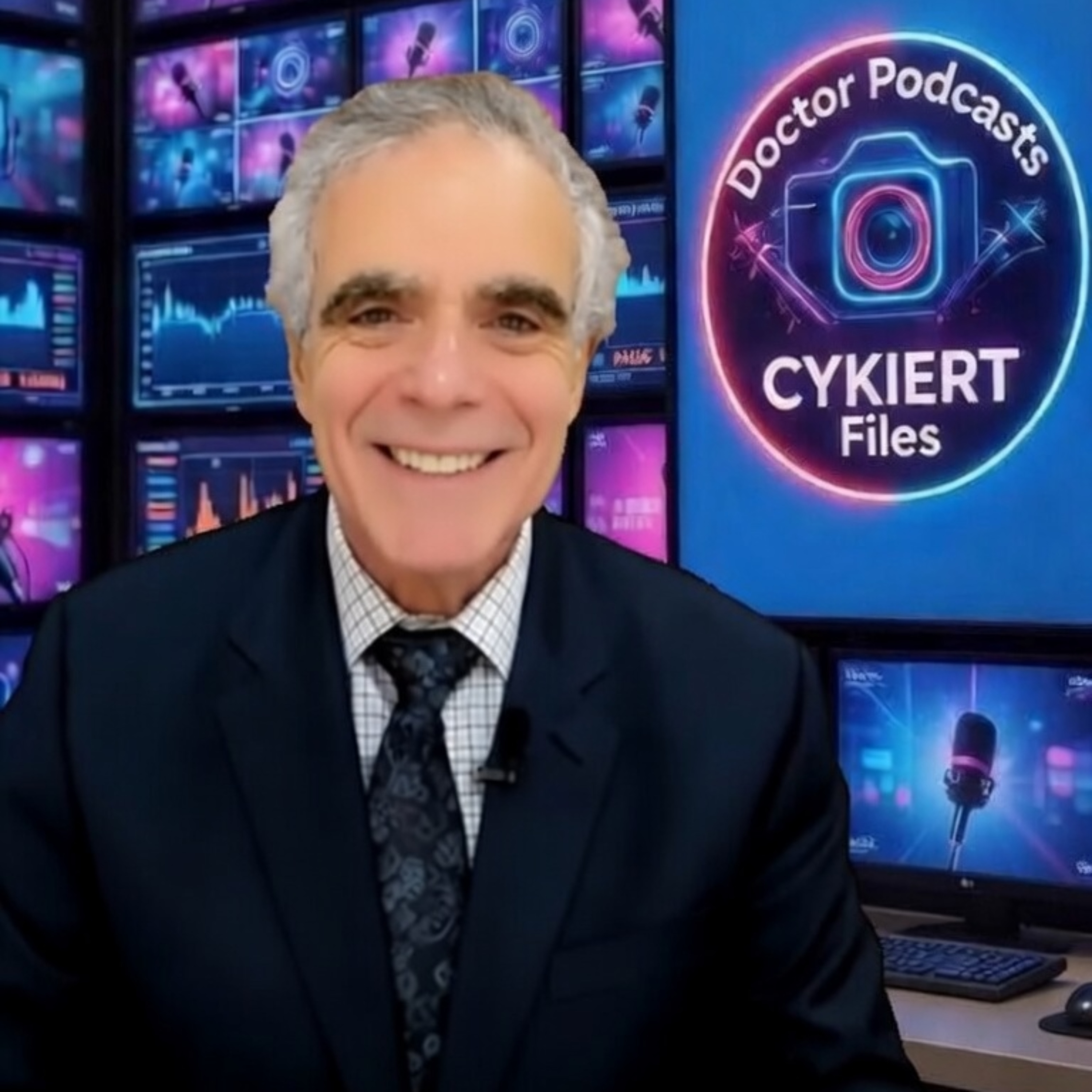
Thoracic Surgeon, Raja Flores, M.D.
In this episode
Fascinating interview of Raja Flores, M.D., Chairman of the Dept. of Thoracic Surgery at the prestigious, Mt. Sinai Medical Center in New York City https://www.mountsinai.org/about/news..., top mesothelioma lung cancer expert https://www.mesothelioma.com/treatmen..., and former candidate for Mayor of New York City https://rajafloresny.com.
Hi, it's Doctor Robert Siker with another great episode of Doctor Podcast. And today I'm really pleased to have a guest who is an incredible thoracic surgeons, one of the top thoracic surgeons in the USA. He's also the Chairman and Chief of the Department of Thoracic Surgery at the Mount Sinai Medical Center, which is a very prestigious Medical Center here in New York City. And my guest is Doctor Raja Flores, who's an incredibly accomplished thoracic surgeon. Raja, thanks very much for taking the time to come today.
I know you're extremely busy and I really do appreciate you coming. Now thanks for having me. Yeah, yeah. It's, it's going to be great. So can you tell us what thoracic surgery is, what that specialty is? So thoracic surgery is basically surgery of the chest where there are three main diseases that we treat, lung cancer, esophageal cancer and tumors that you get from asbestos, mesothelioma. People will hear cardiothoracic and cardio refers to the heart where you do the valves and the arteries and then thoracic refers to the lungs, the ribs and everything else.
So the three big diseases, lung cancer, esophageal cancer and mesothelioma, are the diseases that I treat. Right. And Speaking of mesothelioma, I've seen a lot of ads on TV law firms constantly advertising about mesothelioma. I understand that it's caused by asbestos exposure. Mostly. I thought that asbestos was not allowed to be circulated. Why? Why are people still getting mesothelioma lung cancers? So that's a fantastic question and there's a lot of politics associated with asbestos use and the development of mesothelioma.
So the reason why you hear so much from lawyers is because there's a lot of money to be gained from taking care of mesothelioma patients. As a lawyer, there are trust that have been set up for several decades because of all the lawsuits that have happened in the past and these trust have millions and millions of dollars in them. Now mesothelioma, you only get about 3000 cases a year compared to let's say lung cancer, which is about 240,000 cases a year. But it gets so much attention because of the lawyers, because of the lawsuits, because of the political battle that has happened around it.
So they connected mesothelioma with asbestos exposure back in the 1980s. In 89, it went through Congress and it was basically banned. And then big asbestos in 91 reversed it. So there's a lot of misinformation that asbestos is banned, but it is not. Asbestos is not banned in the United States. It's not in right now. There's a bill going through Congress to get it banned. But we've been fighting this for the past 18 years. So I just came back from Washington, where we went to sort of give information to the congressional staffers on why we need to ban asbestos in the United States.
So why does it keep happening? Because asbestos keeps getting imported at the chloral alkali industry. Brake pads recently crayons children's makeup had asbestos in it, so it keeps getting imported. That's the problem. Now you mentioned big asbestos. What? What is that about? I haven't heard that term. So there are a lot of companies, WR Grace companies that would that made insulation in the past that we're fighting against it. Right now, there's a lawsuit taking place in Libby, Montana where you had some asbestos mines that were owned by WR Greece.
And the railroad company that's being sued has now tried to discredit the clinic that takes care of the population in Libya and Troy, Montana because they're trying to minimize the amount of compensation they have to give out. And this railroad company is owned by Warren Buffett. And so, yes, so there there is a lot of powerful people behind the denial of asbestos Trump. They deny that asbestos kills you. But when they were abating asbestos in the White House, everybody got out of the way. So they will say one thing, but they will act another way.
Asbestos kills, there's no doubt about it. Yet it is still legal in the United States. And that, in and of itself is a crime. Wow. Warren, come on, get rid of asbestos, please. That's I I never knew that. I thought it was banned and that all the cases we're seeing are people who are exposed from years and decades. Yeah. No, there's deliberate misinformation about it. And we also have 911 where ton of people were exposed to asbestos. More people have died from exposure to 9/11 then on 9/11 as of today.
Wow. What are the symptoms that people get if they have a mesothelioma lung cancer caused by asbestos? So it's really non specific shortness of breath which you can get from a lot of things, chest pain that the really the classic physical finding is when they breathe one side moves and the other side doesn't. It actually looks like they've had their lung removed when we take out like the Pope has one lung and I'm sure when you watch him breathe, one side moves and the other side doesn't. And that's what happens when you have mesothelioma while the lung is still in there.
Because the outside lining of the lung is is kind of stuck and stiff. Exactly. That outside lining paralyzes the muscles of the chest, the intercostal muscles, the diaphragm, and it doesn't allow you to expand, to breathe in and breathe out. And it just sits there. On that top, what happened to the Pope's other lung? I wasn't aware that he's missing a lung. There's not a lot of info out there, but I understand when he was a young kid in Argentina, he had a bad infection. Oh, really? And they took out a lung.
And I mean, you see him, he bounces around with one lung in place. You know, he's got more energy than I do. Yeah, I have several patients who only have one lung was removed for various reasons, usually tuberculosis and. It could have been TB. For for been TB, that's interesting. Now there are other types of lung cancer and you mentioned there are about 250,000 cases a year. Are all of those related to cigarette smoke or is there other causes? A lot are related to cigarette smoking. It's about 80%.
But it's important to know that 20% of people who have never smoked, never been exposed to it, do develop lung cancer. The only requirement to get lung cancer is to have two lungs. So and that's a big deal because there's such a stigma associated with lung cancer. But smoking cigarettes and everyone asked me, what about other things? Cigars. What about marijuana? What about vaping? You have the same carcinogens in all of those things. You got the polycyclic aromatic hydrocarbons that cause cancer.
And so anytime if you just use common sense, like Yogi Berra said, common sense ain't too common. But if you just use common sense, if you burn something and you inhale it, that's not good for you. Right. It's a toxin. The toxin is the lungs. It damages the cells, damages the DNA, and then the cancer develops. Now, you also mentioned esophageal cancer. That's cancer of the esophagus. The esophagus is the tube that your food goes down into your stomach from your mouth. I've read that there's an increase in those cancers as well recently.
Why is that? So there's a lot of different theories behind it. My theory is it's associated with the obesity epidemic. You've get bigger and all that pressure in your abdomen causes more regurgitation of the stomach contents into your esophagus. Reflux gives you a heartburn and that's why there is a greater number of what we call GE junction cancers, which are cancers that occur in the bottom of the esophagus, as opposed to the old days where you had squamous cell cancers that occurred higher up.
Squamous cell cancers came from smoking. Adenocarcinoma of the GE junction which is down here comes from reflux, something called Barrett's esophagus. And that's why I think we're seeing a lot more of it is because most of the patients are obese because you think, well you got esophageal cancer, you can't swallow, you're going to be skinny. But it's the opposite there. A lot of the patients that we operate on are are are obese. Wow. So here's another disease that obesity causes, causes a lot of different cancers and heart disease and and so on.
All right. That, that's interesting. I didn't know all that. So what type of surgeries do you do for mesothelioma or lung cancer? Can you describe them? So there's a bunch of different surgeries that you can do for lung cancer and it basically depends on how big the tumor is and where is it located. If you find a small little tumor, all you need to do is take a pizza slice of it. You can do that with three little small holes and the next thing you know you're home, either that the next day or two days later.
Then if it's a little bigger and it's located in the middle, you need to do something called a lobectomy. You have 3 lobes on the right, you have two lobes on the left. We can also do that with small holes where we go in there and we take that out. So you make these holes in the front of the chest, on the side on the side of the chest. On the side, so we, we go on the side, we collapse the lung on purpose and we go ahead and we manipulate it and it's called a minimally invasive lobectomy at that's lobectomy.
And so that used to be the standard of care, but now there was a study that just came out that shows the smaller operation gives you the same outcome as the bigger operation. So there's been a shift towards the smaller operation where you just take a piece of the lung and then you have the new manectomy, which is what the pulp had, where you take an entire lung out. And that's usually done when you have a bigger cancer that's in, in the center and that's for lung cancer. For mesothelioma in the old days, we used to do something called a pleurectomy decorticate in extrapleural pneumonectomy, which is where we took out the lung, the covering of the heart, the covering of the lung and the diaphragm, the muscle in between your chest and abdomen.
And as a big, big bloody operation. And then little by little, we have shifted basically from a study I did comparing extra pleural pneumonectomy to pleurectomy dechordication, where the dechordication is like peeling an orange. So the the meat part of the orange is the lung and we just basically take off the peel and we showed that the survival is just as good with that, with a better quality of life because you're sparing the patient's lung. Right. Wow, that's that's fascinating that the surgery has evolved, the techniques have evolved so that it's less invasive.
Now you were involved in in some of the research that led to some of these newer surgical techniques as as the chairman over over a decade now, you've been chairman. Right. It's something I started my career in Boston in the 90s, and my mentor there, David Sugar Baker, was big on on this kind of surgery. And so I sort of evolved. When I started practicing in New York, I was first at Sloan Kettering before I went to Mount Sinai. And when I was there, I started seeing, you know, as a resident. You just see them in the operating room.
And then when I started working as an attending, you'd see them in the office and I saw how this disease came back. And it made me realize that if you're going to have a big operation like an extra pleural pneumonectomy or a bigger lung operation, you want to see a cure you want to see. And then when you realize you can do a smaller operation and get the same outcome, then that's in the patient's best interest. We see that with breast cancer where they're having smaller operations with sarcomas, lung cancer, mesothelioma.
So bigger is not always necessarily better when it comes to surgery. Right. The the less invasive, the better, the the quicker the recovery, the better quality of life afterwards. What's the If you could describe the esophageal cancer surgery, what what do you do there? So the esophageal cancer surgery is a very important procedure to get right. Too many people focus on how you do it, whether you make an incision in the belly and the chest and the neck. The main thing you want with esophageal cancer surgery is to have a low complication rate when you cut the cancer out and you bring the esophagus to the stomach, which usually replaces.
It you're reconnecting it. You're reconnecting it. You're taking out a big area of esophagus and that has to heal And so you have to make sure that your technique is such that it heals properly. Because if it doesn't heal and you get a leak which happens if you look in the entire country anywhere from 25 to 30% of the patients and that can lead to life threatening complications. And if you don't die, many people can't eat again. They have very a difficult quality of life afterwards and and you have to focus on making sure that there's a good blood supply to that connection.
It's actually a very basic operation, but it needs to be done right. And I think the biggest thing is many people will focus on gimmicks, whether you use the laser or use the robot or use certain things that catch the attention. But you need a surgeon with experience who is who really knows the basics of that operation. So you have to make a perfect connection so there's no leakage of food and no leakage of stomach acid into your abdomen and surrounding tissues. And you have to make sure you get a good blood supply established so that the tissues that you've cut and sutured can heal, right?
Yeah, I mean, that's what I tell patients is at surgery. I put them together, but then we have to wait a few days for God to sort of seal it. There's never a guarantee, but that operation can be done with the leak rate as low as 2%. And so it's important if you're going to see a doctor, if you have esophageal cancer, ask them what's your leak rate. That's fair game. Ask them what's your leak rate? Well, that's that's very interesting to know, very important. Now in addition to what you're doing all these surgeries and innovations, I understand you also do a lot of research and also have many grants and can you tell us about that?
So the research I do is basically connected to the surgeries that I do. So a lot of the research that I've done has been in asbestos related diseases. Asbestos not only causes mesothelioma but causes lung cancer. So like I explained earlier, 3000 cases of mesothelioma a year, but from asbestos there are 40,000 cases of lung cancer a year. What type is that? The adenocarcinoma. Usually the adenocarcinoma and what's interesting, asbestos. You have a greater risk of developing lung cancer than even smoking.
And so a lot of our research has been in screening as well. And you know, just like I said before, it's common sense. You catch something early, you cut it out, you got a better chance of cure. But in the early 2000s, important medical centers were not advocating lung cancer screening. That just happened in around the year 2011 when this big study came out. But there were people who actually so happened to be at my institution, Claudia Claudia Henchke, who really pushed the envelope with screening and she has changed.
Lung cancer is a disease where it's more curable now when you catch it at those early stages. But a lot of the research has been in showing clinically how screening saves lives and we are doing that in that little town I talked to you about in Libby, Mt, where we're screening not just for lung cancer, but for asbestos related diseases like mesothelioma, asbestosis. There are other diseases that you get that can hurt you. It's interesting. I saw a young patient the other day in my office, 30 years old, and he had changes in his chest from asbestos.
And you see that, you see it as calcifications and he's a young guy. So a lot of the research we do as well as investigating where did he get that? From I was just going to say how does a 30 year old get? That. And so when you dive deeper into his history, you realize, oh, this guy lived in New York City public housing in the projects. And it was his exposure, because it takes 20 years to develop it, and the guy's 30 years old, So he must have been exposed to this when his age was in the single digits.
And so when you go and you look for it, you find it. You just don't get mesothelioma out of thin air. Usually you've been exposed to asbestos, and so you've got to figure out where it came from. So that's a big research area. It's amazing that asbestos and cigarettes are still around and still being pushed. I mean that's right. That's always been the balance, you know, money and economy versus patients lives. I mean you see them more. Most of war kills people and it's usually done for economic reasons.
Right. Unfortunately. Sad part of life now you've mentioned that that you were up in Boston and then you were at Sloan Kettering for a while. Can you take us through how much training it took, how many years after college to become a thoracic surgeon and and be in your very prestigious position that you are now? So, I mean, it's a long time, but you can't just try to get to the finish line. You got to enjoy it along the way. So four years of college where I had a great time, I went to NYUI, was in Washington Square Park.
I was enjoying Greenwich Village. I had a ball. And then for medical school another four years, I went to Einstein in the Bronx and I had a great time there. We had a small group of friends where, you know, we studied together, we ate together, we ran to Fordham Rd. To get White Castles in the middle of the night. You know, you've got to enjoy it and and you know you're there with like minded people who have the same goal to take care of people and it was beautiful. And then for residency I did five years of general surgery after medical school at Columbia Presbyterian and that was a a great experience as well.
It's where I met my wife and then and then I went to Boston to do my cardiothoracic surgery at Harvard. And what was interesting is I had a big set back when I was applying for cardiothoracic residency. I didn't match, which is where you try to get the residency that you want and and it's something that makes you feel like crap, You know, you doubt yourself. You say, my God, am I cut out to do this? I remember laying down after not matching and just feeling like the whole world was about to end, and then you get yourself back up again.
And so I kept looking around and I kept banging down the doors and I realized there's a political aspect to it. The match was even though it seemed like it was a fair thing, and I travelled the country spending money to go to these programs that had already promised their spot to somebody else. And I realized, oh, there's a game behind this. And I didn't know that game. So I tried to make some connections and I connected with a guy named David Sugar Baker, who who's at Harvard and Larry Cohn, and they said, OK, you come, you do a year of research with us and we'll give you the spot here.
And being a Yankee fan, I wasn't crazy about going to Boston. I didn't have to. I didn't want to deal with the Celtics or or the Red Sox. But I went and it was a fantastic experience and it set me up academically because I fell in love with the research there. And then I started to incorporate that and what I did every day and they, you know, they got me my first job in New York City which was at Sloan Kettering and I stayed there for 10 years. And then then I decided to move over to Mount Sinai and and I've been there ever since and I'm so happy and privilege that I get to practice in that environment.
That's an amazing story many years, but if you enjoy it, it's not a job. Exactly. And that's what I try and tell my kids Do something you love and you never have to work another day in your life. Very well said. I like that now. You also currently train younger doctors, right? And medical students and residents and fellows tell us about that. So we have a residency program and a fellowship program, and we also have medical students. Basically, we train people the way I was trained to do surgery, but my door is always open.
I have a stream of medical students that continue to come to my office and they seek guidance. And I think it's important because there's a lot of things in medicine nowadays that can dissuade you. And I try to let them see the ideal part of medicine, How you really have got this one person who's probably in the worst time they've ever been in their life. And your words matter, and what you say to them can give them hope. And what you say to them can make them decide to just crawl up into a ball and and and give up.
And so it's important to be realistic yet have them see the glasses half full and there's an art to it. And I think, you know, many people say, well you're a surgeon, you just use cold steel to cut people open. I mean, I think you can treat patients equally with your knife and your words so that they can have a complete and and and healthy outlook on life. So you know them and their whole world around them, their whole family, the mother, the father, the sister, the brother. You know, as a doctor you have a unique front seat view into the human condition where you see people who suffer, people who overcome it, the interactions with the family and it makes you a better husband, a better dad.
Yeah, I I see patients. I'm an ophthalmologist. So it's different. But I see patients who have vision problems and that that can be very bad obviously. And sometimes I've seen other doctors who were very cynical and negative about their condition. And when I see them I I try to make them more hopeful and I also treat them and and get them better. And a lot of it is is mental and how they perceive their condition and how we're going to help them. So it is an art to some degree. And I mean, it makes you appreciate all these different areas in medicine.
I mean, as an ophthalmologist, if you can't fix that doctor that's in your office, he can't operate, you know, so it's we're all connected. Right now, it doesn't sound like you're too busy. So I understand you went out and and got a master's degree in Biostatistics as well. That was like in your spare time between between 1:00 AM and 5:00 AM, in between taking care of patients and doing surgery. So I realized there was a language taking place in research that I didn't know. And you know, like when people say, oh, is medical school hard?
Medical school's not hard. It's just the language and taking care of patients basically is a lot of common sense. And I realized the research world, I didn't understand that language. So when I started as a young attending at Sloan Kettering, I went part time at Columbia to get my master's degree. So I was not only, you know, working as a surgeon but running back up town to learn about numbers. I I had a lot of math background as an undergraduate and and this just fell into it. And when I was in Boston, I had taken some classes at the Harvard School of Public Health and I got a taste of oh, you need to understand this to basically figure out is the research BS or is it real?
And it also helps you think about the methods used to conduct your own research. But it really helps you sift through what's BS and what's real. Very important. When I read articles there's lots of statistics and information and sometimes difficult for me to figure it out because I don't have that background. I mean Mark Twain, he said. There are lies, damn lies and statistics. He's one of my favorites. He had. He had so many excellent quotes. Now another interesting thing, many physicians like you are sometimes just following in their parents footsteps or maybe another relative or something like that.
But you have a an interesting different type of background and and childhood. Can you tell us about that? Yeah, sure. I think, you know everyone has their own story. My story, both my parents were immigrants. My dad left when I was six years old. My mom worked as a secretary and basically, you know, we lived in a tenement, $200 a month rent and and you know, I saw how hard she worked and and so half of my motivation was, yeah, I wanted to take care of people and be a doctor, but I also didn't want to be poor anymore.
I didn't have to be extremely rich, but I just didn't want to be poor. I wanted to have a good job. So I I started working at the age of nine. I worked in a factory on 30th St. in a in a handbag factory up there. And then I I worked making sandwiches on the deli on 23rd. I worked for UPSI was a doorman Shine shoes. I I did everything I could get my hands on to work. And you know, people say you worked at 9:00, That's child labor. But you know, I wanted to, if I wanted to get those sneakers back then it was prok heads.
If I wanted to get those sneakers, I had to work. And my mom, I knew she was too busy trying to pay the bills. And so I'm very fortunate that you know, I was able to do stuff and to get an education and I always felt like I had to give back, which was part of the reason why I I wanted to go to Mount Sinai because it's Sloan Kettering. I was taking care of a a certain demographic and and over it at at Mount Sinai, you're on the border of the Upper East Side and Spanish Harlem. And I just felt like I understood that demographic and I wanted to make sure that I could take care of of everybody.
And so today, I mean I take care of everybody. So you aimed your goals high and you worked hard at achieving that and that's how you get success, right? And a little bit of luck. Luck always, you know. A little bit of luck. You can do everything right and you may still not get what you want. I guess it's like the song sometimes you find you get what you need. Right. Yeah, luck is luck is helpful, but you don't get luck unless you do the hard work. You do. You got to be set up for it. When luck comes your way and it's hard work, you just want to make sure you're prepared.
If you don't do the hard work, you're less likely to have that luck. Right. And I mentioned earlier, we're going to have a fascinating physician here today that we're speaking with and it's, it's indeed been fascinating. But even more incredible and fascinating is you ran for mayor of the city of New York about two years ago, right? Tell us about that. So my midlife crisis is over now and I I've gone back to operating into, but basically my run for mayor was stimulated by medicine. You know a lot of what we spoke about treating cancers and that prevention is probably better than anything else.
And it actually is in in the in the one of the versions of the Hippocratic Oath. I will prevent cancer. I will prevent disease whenever I can, for prevention is preferable to cure. And that has sort of been my foundation as a doctor. Yeah, I'd like to operate and I like to take care of people by operating on them. But if I see that I can prevent it, I feel it's my duty to do that and my run for mayor. I was realistic. I I don't feel like I fit in in any party in Democrat or Republican parties. I I feel like I'm politically homeless, which I think a lot of people feel that.
I like that politically home. That's very good. So I felt like I wanted to get this message out about what I was seeing in my clinics, about public housing, about fungus in their public housing where I've had to remove half their lung, like that young kid that I told you who's exposed to asbestos. And a lot of it was stimulated by what I was seeing in the pandemic. A lot of the people who worked in the hospital, transport, the radio, radiology, tax, the phlebotomy people, the nurses, they all lived in public housing.
So at least at my hospital and E Harlem is has the second highest concentration of public housing and my hospital, Mount Sinai is the greatest employer of that area. So most of the people that worked with me side by side, especially during COVID, the people, the janitors that had to go in and clean the room after a COVID patient just died. Where you have such a concentration of this virus in there, they all lived in public housing. And and I'm saying to myself, my God, I have to operate on them because of where they live.
For something that's preventable. I need to get this message out so little by little. I first wanted to do research to prove it, but then it you look in 2018, Howard Zucker, the commissioner and Mary and Andrew Cuomo put out this whole thing, that 80% of of public housing residents live with the severe health hazard, whether it was mold, asbestos, etcetera, 80%. So four out of five houses in public New York City public housing, NYCHA, they have a severe health hazards and I said I've got to get this message out.
So first I joined the local Community Board. I'm still a member of Community Board 11 in in in East Harlem, Spanish Harlem Elbario, whatever. You know there are numerous names. And then through that I found this one woman grabbed me and said, I want you to come to one of these meetings. And it was something called Community Voices Heard. And it was on 106th St. And I went to one of these meetings. And here you had people who lived in public housing, older women who had raised their families, who still lived in public housing, who were trying to make it better for everybody else.
And they were incredibly smart. They were very effective at organizing, not as much as what needs to be done. And and my heart bled for them. And I saw how much courage these women had. And I said, you know, I wanted to do this March on City Hall to bring attention to it. And then COVID hit and I said I can't subject the many of them were older, diabetes, etcetera. I said I can't subject them to something like that. I got to try it and and do something. So I said, you know what? If I run for mayor, here's a doctor running in the time of COVID.
I'm not going to run in with a political party. I'll be able to get my message out. And so that's why I did it. And what became apparent to me was how the political system is just so dominated by the political parties and, disappointingly, by the media, where outsiders are not given a platform. I had been on many other media outlets. I was on Fox, I was on NBCI, was on CNNI, was on the Rachel Maddow Show. I I I had been out there. So I said, well, the media is going to know I'm legit and they're going to want to hear, what is this doctor running in the time of COVID?
Maybe he has something to tell us. Crickets. I don't didn't hear anything when I went to go vote in my neighborhood and I went there. You figure the people who were working in the voting areas are civically minded. They would at least know who was on the ballot. And getting on the ballot, that was another miracle. But we ended up on the ballot for the general election. So when I went there, the woman pulled up my name and and I said does that name look familiar to you? And she looked at it. She goes, no, why?
And so I said, can you call him over there? She got another person over. Does that name look familiar to you? No. And then they got a third person. Does that name look familiar to you? No. Why should it? I go, Well, it's on the ballot right there for the second most important job in the United States. Right. And that's when I realized this was no accident. This was by design. It's not like I was overlooked. They knew me. They saw who I was. And deliberately didn't want to give any exposure. I think they're worried someone's going to go viral and is going to throw the duopoly for a loop.
And when we made our announcement that we were running for mayor and first of all, my campaign was run by 4 medical students, that was it. You know, it was very low budget campaign. I I actually really can't believe we actually made the ballot but for medical students. So did the before we did our launch, we talked to about 150 different people in the media. We did our launch in my old neighborhood in the meat packing area right in front of New York, one New York 1 News. And we figured someone's got to show up and we did the whole thing.
And you know, we had about 100 people there and we were launching. Not a single person from the media showed up and I had contacted everybody that I had any connection with. Nobody showed up. They didn't want you. There they did not want anyone to get any more exposure, and I saw that with the other candidates as well. You had the A-Team, which was Adams and Slewa, and then you had the B team, which is me and a bunch of other people where they kind of humor us. They have these other little forums for you to to go AT.
And but the A-Team is the Republican nominee and the Democrat nominee. And it was interesting. Come October, the New York Times had put out comprehensive guide to the New York City mayor's race. I said finally, we're going to get some exposure. They're going to see what I've talked about with NYCHA and they're going to realize that this is not only a political or a socio economic issue, it is a medical issue. And I go through the whole thing. I see it. It was written by Emma Fitzsimmons, and I looked at it and I said they've got to at least have one line of Roger Flores, candidate, main issue, NYCHA.
That's all I was looking for. Nothing. They went down the whole thing. They talked about Curtis Lee was cats. Who gives a crap about his cats? And so it really came to my attention that this is a concerted effort to keep the power in the hands of the duopoly and they make the rules. So for instance, you're supposed to get a bunch of different signatures, right? To get on the ballot, right? The Republican candidate and the Democrat candidate go 1st, and now the independents and the third parties go after.
If someone already had signed the thing, they can't sign your petition. When we were doing it, it was in the middle of COVID. They had reduced the number of signatures for the Democrat and the Republican parties. I think it was down to something like 2000 signatures. Meanwhile, if you're an independent, you have to get 4000 signatures. And so they are working together to keep the concentration of power with either the Republican and or the Democratic Party and everybody else. Their message gets lost.
And and that disappointed me. That disappoint. I didn't expect to win, but I expected to be able to talk about public housing in a forum that could make it a priority for someone's political, you know, agenda. And it didn't happen. So now that you know how it works and you know all of the barricades in the way, are you going to run for mayor or governor or maybe president again? I don't know if I have that in me anymore. It was so disappointing and I realized how difficult a job it would be. And I'm willing to do it.
And I I, I may do it one day, but it's so much easier to operate and take care of one patient at a time. And there's a purity in that. And there is a Peace of Mind that you get with that. I hate to say it, to make it in politics a prerequisite is you got to be corrupt because because like you see all this stuff coming out about Eric Adams and the he was in cahoots with people who were raising money for him. Of course he's going to say, oh, I knew nothing about it. They're raising money for you, you know about it, you know, So you kind of have to sell your soul to get the money to be able to get the exposure.
And then when you're in office, you owe them. And so the corruption runs very deep, especially in New York City politics. So if I did run for something down the line, I don't know would it be for Congress or something, but I would have to have a clear cut, a clear cut plan where money is something that I focused in on because I really didn't focus on the money aspect. I knew it and I thought, well, the media will give me some exposure. And you know, I know a lot of people in this city, they would donate money to it.
But the problem is no one knew I was running. And so my whole plan on how to get the money aspect, I realized that's got to be on the table from the beginning. And you've got to be able to get a certain amount of money to be able to get on the debate stage, to be able to get enough publicity to get your message out. And that was the biggest disappointing thing. Now I got to say, it was fun running and getting on the ballot and working with these students. These were incredible students, smart as hell, And they figured out how to actually get us on the ballot.
You know, you you really didn't have much in the way of independence. You had a Conservative Party, You got the Working Families Party. You've got the Libertarian Party. So there's a machine behind these third parties with us. We had no machine, we were just ideal. Let's do this. It's the right thing to do. Unfortunately it didn't work out. But now I do have an in depth knowledge of how the system works and how to beat it. And if I ever run again, it's to win. You're looking at President of the United States, Doctor Raja Flores, 2028.
Right. You know what if if, if that ever happened, I would do my best. But right now I'm just going to operate. I think you would do a great job because you are obviously intelligent, you do your research, you're knowledgeable, you approach things in a logical fashion, which I think is is missing in a lot of, you know, the leadership and the government that kind of approach. I actually think doctors would make the the best leaders because we're taught to analyze things in a certain way. And we deal with life and death.
The thing that I think is missing from a lot of politicians is a moral fortitude. And I think as a physician, you're always battling that. Am I doing the right thing for this patient? Am I being influenced by some other thing, whether it's a drug company, whether it's how it reflects on you as a doctor? Or am I really just doing what's in this patient's best interest? And I think many politicians, in order to become contenders, they've kind of had to sell their soul and they've many have lost that moral fiber that I think initially made them go into politics for the common good for.
And the system sort of beats it out of you. Right the the system is is difficult to work in. All right. Well, I I still think you'd make great present. Going going back to the asbestos thing again and the and the other cancers, you've probably heard about these PFAS plastics that are polluting our water and are contained in in things that people eat and drink. To me, it seems like our polluted environment, the air, the water is is responsible for the increased cancers, even though we figured out how to treat them better with medications and immunotherapy and surgery.
I think that's the big problem that we really have to conquer. Do you? What's your feeling on that? So I think that's a great point and that goes back to what we took in our oath is to prevent is preferable to cure and you know, the environment etcetera. I mean, there are many people who I see who actually come from very polluted cities in Asia, etcetera, who have cancer, who've never, you know, smoked or have never, you know, but because of the pollution, these plastics that they're finding, that's all we've got to take care of our planet.
We have one planet, you know, and before it gets too late, you know, we saw the fires in Canada right now, the fires in Maui, we saw the torrential flooding going on. I mean, stuffs happening and yes, there's a political agenda with it. And and I think we really have to try and put aside the politics and really find out what it is that we can fix with our world. Because we, you know, if we love our children, that's what we should do. Now the system gets in the way, unfortunately, and and that's politics and money and and things like that influence what happens.
But I hope we we figure that out pretty soon. We mentioned that that you're an expert in Biostatistics and and medicine and as you know AI is on the news all the time now artificial intelligence. So I'm I'm sure you have a good grasp for that. What do you think of is going to be the role of AI in the future of medicine? It's already involved in many specialties, things like radiology and other imaging type of medicine. Where? Where is it headed? So I think that is definitely in our future. You know, the other day I was writing something, I just didn't like the way it sounded.
I put it in ChatGPT and I'm like, Oh my God, you know, I'm like Charles Dickens and. Really. And so that blew me away. And so we actually have been doing work with our radiologist and lung cancer screening to try and create a a method of just having it automated where you know because it varies from radiologist to radiologist, if you can plug all of that radiology knowledge into the system, the system's probably better than any individual human being. Also in pathology all the slides are being digitized Now when you look at the H&P now you can dictate things in there and it'll put things and correct your mistakes.
And so I I think it is going to be a force for good.
But like anything else at the beginning we got to be careful there. There are going to be loopholes and and like right now I think if you look up a medical paper, it'll fabricate something, a paper that doesn't even exist. And so I I think we have to look at it critically and be sure that you know first do no harm and if it can help us, fantastic. I think it will. One of my concerns is even if AI is great and terrific, what if somebody hacks an AI medical system? Even now? Lots of hospitals I just read.
Many emergency rooms around the country were basically put out of business because someone hacked the computer systems and they couldn't take care of patients. Do you imagine if someone hacked an AI system that that's reading X-rays or CAT scans or MRI scans? That that's a big important thing that we have to focus in on. You know, in the old days when we before we started paying for everything online, everyone was worried that they're going to hack this, hack the banking system, all that kind of figured out a way how to contain that.
It still can happen, but, and I think we got to do the same thing with AI, we've we've got to make sure that, you know, we don't allow bad forces out there to hurt people. Right. When do you think AI connected to a robot like Musk's robot that he's creating with with Tesla will be doing lung surgery better than you? You know, if that happens, God bless them. If it's better for the patient, then that's the direction we have to go in. You'll. Be president so you don't care if you're out of job. But it's interesting, you know, because I've been around through the whole evolution of surgery and mentally invasive surgery and robotics and all of that and there's still no proven benefit of robotic surgery over regular minimally invasive surgery.
And you know, robots been around for 20 years. I used it back in 2000. And and so I think you got to be careful because some things are used as a marketing ploy, some things. So let's say for example, the Robotic company's Intuitive Surgical, it's a like $100 billion company. They're going to influence what happens in medicine and it's up to us, the doctors in the frontline, to say this is good, this still needs work, this is bad and that's a difficult thing because we wanna be on the cutting edge of technology, but sometimes it's just not there yet.
Right. Same things going on in ophthalmology. Now there there's a way to do cataract surgery with with a laser and that sounds great, but actually all the studies for many years now show that there's no benefit at all to doing laser cataract surgery versus a good skilled surgeon with experience. Plus, the laser cataract surgery is much more expensive, but there's a lot of marketing going on in that realm. So many patients ask about that and assume it's it's naturally better when it's actually not.
It's just more expensive. Yeah, I think, you know, whenever anybody asks me what do I look for in a doctor, You just need somebody you can trust. Because you know, if if you trust them, they're going to do the right thing. And if they don't know what to do in a certain situation, they're going to get help. You don't want somebody whose ego is the size of this room, because when they're in a situation that they are not sure about what's in your best interest, they will look out for their own best interest and and that's the main thing.
Find someone you trust and let them do their thing. What do you think are going to be the major developments in thoracic surgery in the next 5 or 10 years that'll be radically different or improve patient? Care. So it's interesting because surgery itself, you know the human body hasn't changed. What we've used to take care of the human body changes. And even though we've had mentally invasive surgery, vast video assisted thoracic surgery, robotics this or that, the fundamentals of performing the surgery are the same.
What I think is going to change, especially in my field, is how you diagnose these things. So screening like we talked about is the actually prevention is the best way, but if you're not preventing it, screening is the best way to identify a cancer early, right? Why isn't every smoker in the United States being screened, especially after we have proof positive that screening is 100% one of the best tools we have in lung cancer. Only 4% of those eligible for screening in the United States are actually screened, only 4%.
So I think part of our role in medicine is not just treating patients but disseminating information. So what you're doing here I think is invaluable. I think that we have got to be able to disseminate information so that the population, the patients can make their own decisions. Many patients when I, they'll come to my office and they'll say, you know, could this have been found earlier I said did you not know about screening? No. What what's that about? And so that that's, you know, sad. So tell us about screening.
That's very important. I think 20% of countries still smoke cigarettes. I think that's the latest data. So tell us how somebody who smokes cigarettes should be screened, what the process is, and does the rest of the public need to be screened as well? So I do believe that if you're a smoker and you know about this screening process, you will be screened. So what does screening entail? Basically, you want to make sure there's someone that's a high risk, which is someone who's exposed to smoke, asbestos, and what they do is they get a CAT scan.
A CAT scan cuts your body up like a loaf of bread and but. It's an X-ray. It's not cutting surgically. Exactly. So it's an X-ray and it slices you like a loaf of bread and you're looking at these little sections and you can find these little tumors that you can get out with just taking out a little piece of lung. You can run a marathon afterwards. And so I think that's where my field is going because like I said, only 4% of the population actually gets so. How often should a smoker have that CAT scan of their lung?
That's a great question. So once a year. So just like you get your mammograms once a year for breast cancer, same thing for lung. What if you smoked and you gave it up? How often are you supposed to scream? So they have a limit of about 15 years that if you gave it up 15 years ago, you don't have to be screened. I don't like that I have had patients who smoked 40 years ago who've developed cancer. So if you have smoked and were, you're at high risk for anything else. Asbestos family history, second hand smoke, whatever it is, I would make sure that you have this lung cancer screening, CAT scan.
It's the same radiation as taking a plane from here to Chicago. Really that little, it's that little. And so that would be my recommendation. There's no reason not to do it. No contrast, no risk, just sit there and be scanned. There's no downside. No pain, no discomfort, Nothing. How long does it take to have this special CAT scan? 3 minutes? 3 minutes? That's it. You heard it. If you're a smoker or if you smoked previously, you should have this screening done at least once a year and then if any problems are found, they can be taken care of easily before it becomes major surgery and major complications.
Well, that's been incredibly informative. I really appreciate Doctor Flores that you came in today to speak to the audience and thank you very much. No, thanks for having me. It's a privilege. Thank you very much.
 Apple Podcasts
 Spotify
 YouTube