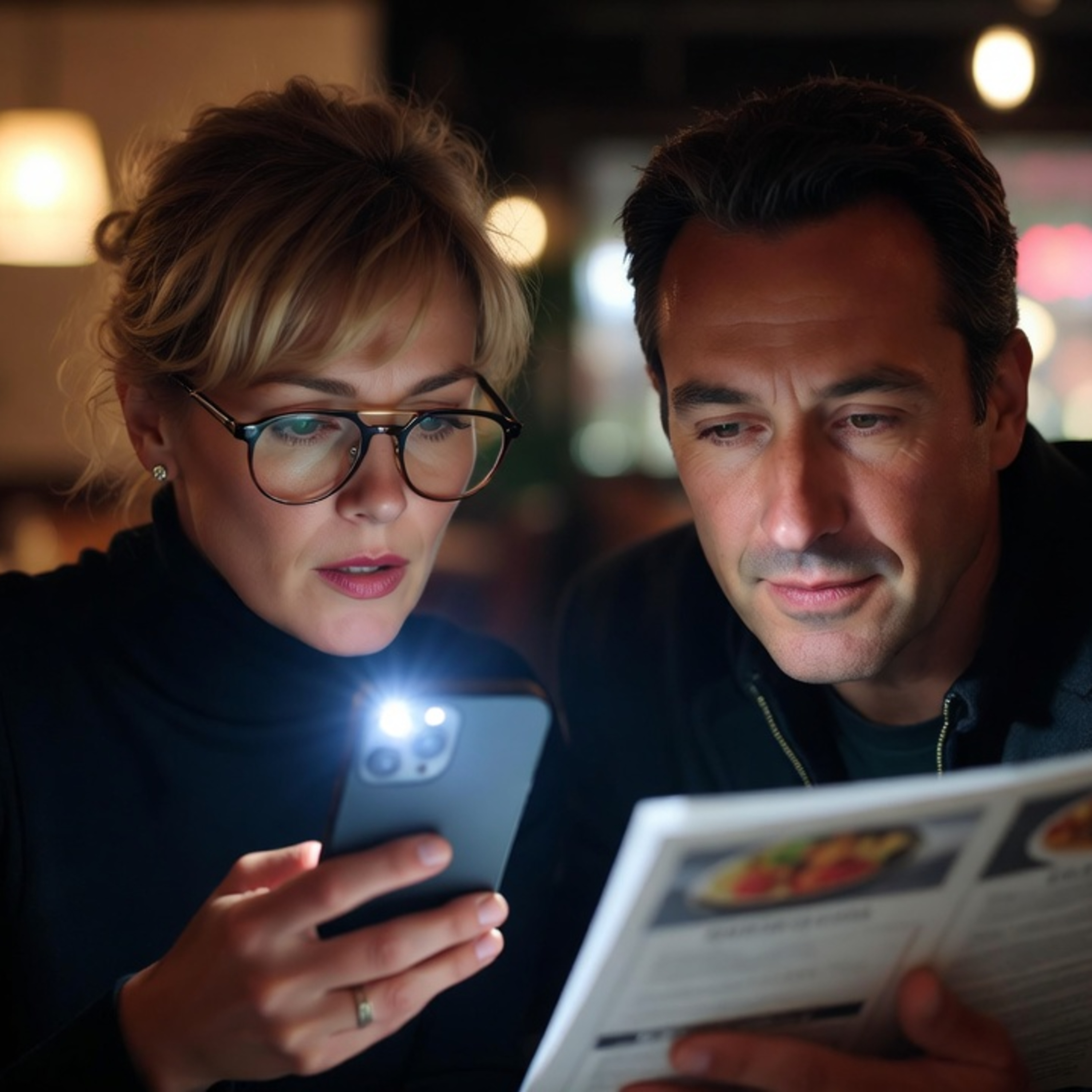
Want to ditch your reading glasses & bifocals?
In this episode
New, FDA-approved YUVEZZI eye drops made by Tenpoint Therapeutics, are changing how we treat age-related presbyopia, or difficulty with close-up reading vision. Two top eye doctors reveal how this unique 2-ingredient eye drop gives you sharp near and reading vision, without surgery. Watch DoctorPodcasts Episode 144 for more information. Check out https://www.yuvezzi.com and https://tenpointtherapeutics.com for details.
#DoctorPodcasts
#YUVEZZI
#presbyopia #readingglassespodcast #glasses #YUVEZZIEyeDrops
#DitchReadingGlasses
#NoMoreBifocals
#PresbyopiaTreatment
#FDAApprovedEyeDrops
#VisionWithoutSurgery
#CykiertFiles
#RobertCykiertMD
#EyeHealth
#Ophthalmology
#NonSurgicalVision
#medicalinnovation #doctorpodcasts #blurry
#bifocals
#contactlenses #carbachol
#brimonidine
#optometrist
#ophthalmologist
0:00 Hi, thanks for joining us and watching episode #144 of the Doctor Podcast Show. I'm your host and creator of Doctor Podcast, Doctor, Robert Sichert. Please subscribe to and follow Doctor Podcasts, and please click on the like and repost buttons for this and other episodes you enjoy and learn from. We'd really appreciate it. Today we're discussing a very interesting topic regarding eyes and vision. It's especially very exciting for me since I'm an ophthalmologist now. If you're over age 40 to 45, then you've probably noticed that you're having trouble reading small print, that you have to move things away from your face and eyes to look at your smartphone, to read the texts and emails, and that you often can't read the menu in dark restaurants unless you shine your phone light on the menu, which is very annoying.
0:50 The reason for that is a condition called presbyopia, which happens to virtually everyone in their 40s and older, and that's why they need bifocal or special reading glasses, which nobody really likes. Now, today's guests are very prominent eye doctors who are leading experts in presbyopia. We'll be discussing a new recently FDA approved eye drop called Uvezi, which may help you get rid of your reading glasses. So listen carefully. Our guests today are Doctor John Hovanessian. Dr. Hovanessian is a board certified ophthalmologist and partner at Harvard Eye Associates in Orange County, California.
1:29 He's a faculty member at the UCLA Stein Eye Institute with over 25 years of experience. He's also an internationally recognized expert in cataract, refractive, and corneal surgery, author of two textbooks and dozens of peer reviewed papers. He's a frequent lecture on 6 continents and creator of popular surgical teaching videos, which I've watched many, many times. And he's an incredible surgeon. He's been actively involved in discussing the latest presbyopia treatments, including the real world application of new eye drop therapies like Uvezi.
2:04 Our other excellent guest is Doctor Milay Brujic. Dr. Brujic is a practicing optometrist and partner at Premier Vision Eye Group, A multi location practice in Northwest Ohio in the Bowling Green area. He graduated from the New England College of Optometry in 2002. He's nationally and internationally recognized educator who has delivered over 2400 lectures and published more than 500 articles on eye care. He specializes in ocular disease management, contact lenses and glaucoma and also runs Optometric Insights, a career coaching service for optometrists.
2:41 He's one of the first eye care professionals to highlight UVESI as a game changing, long term friendly option for presbyopia patients. So Doctor Hovenessian and and Brujic, thanks for joining us on the Doctor podcast show to discuss presbyopia and this new great treatment for it. We appreciate it. You. Thank you. Thank you. Pleasure to be here. Thanks, Robert. Thanks. So Doctor Brujic, I'll start with you. For viewers who may not know, what exactly is presbyopia and why does it start around age 40 to 45?
3:11 And how does it affect everyday life? Well, you did such a nice job summarizing it. Now, the good news about presbyopia is that it happens to everybody, and it's just a slow loss of your ability to accommodate things. Essentially, see things up close. The closer we bring things to our face, the more we have to accommodate things and that near point just starts to regress over time. And it's actually occurs very predictably from the ages of 40 to 60. The good news is we do have options at this point.
3:40 Now, the bad news about it is it's unavoidable. Every single person will develop presbyopia, as as you're well aware. So again, the good news is there's options for it. Right. I tell my patient it's like Gray hair and wrinkles, hard to avoid. So Doctor Hovnesian, when was Uvezi approved by the FDA? And before eye drops like Uvezi, what were the main ways people dealt with blurry vision? It was a glasses, contact lenses surgery. And what were the pros and cons of these older treatments? Yeah, it's a great question.
4:13 Well, January was the approval by the FDA of this, this new drug and it's a it's an important drug because it addresses this problem in a new way. We have had eye drops designed to do similar things. And we're particularly excited about you because as we'll get into it's, it's unique in the way it's created to have to be particularly effective. So previously, what did, what did people do with this? Well, it's tough in the caveman days, they just struggled and and most of us didn't live past our 40s, so it wasn't an issue in modern in modern times, of course, reading glasses are, you know, widely available and quite effective, but of course nothing shows your age like putting on a pair of reading glasses.
4:50 Other ways that we could get around this were doing something called monovision where either with contact lenses or surgery, one patient, one eye of a patient could be focused for up close with the other eye for far away. It's an effective work around, but not for everybody because it takes a little adaptation and a little bit of tolerance of not having both eyes quite focused together. And there have been various other tried and failed attempts, should we say surgically to correct near, you know, the loss of near vision or presbyopia over time.
5:20 But really, reading glasses, contact lenses and monovision have been the primary ways we treat it. Right. And many patients were dissatisfied with one or more of those options. Yeah, absolutely. Right. So it's good we have new things now. Doctor Brujic, how's the landscape of presbyopia treatment changed in the last few years with new eye drop options? Can you tell us about that? Yeah. Well, so the principle is sound. And this is something we all learned back in optometry school where we could take small holes, we call them pin holes, and you can actually put them in front of an eye that's unfocused and it actually makes things look clearer.
5:56 Now for those that are listening that don't have optometric experience or ophthalmological experience, that's literally the equivalent of squinting your eyes to try and make things a little bit clearer, making the aperture, the hole that you're looking through a little bit smaller. So what the drops actually do is pretty unique because it actually takes your natural pupil, which is the black spot in the center of your eye, and it just simply makes it smaller. And when it does that, it has a similar effect of extending the depth of focus.
6:19 And when it does that, for those individuals that aren't reading the way that they want to, it just simply gives them that ability back. So again, this whole class, this whole landscape has changed dramatically over the last several years with the introduction of some of these drops that give us the ability to make that pupil small. And it has really changed the platform and even in terms of the way that we can now care for patients with this condition. Wow, that's great. Now, Doctor Hovnesian, this small pupil or pinhole effect that we just heard about, what's the advantage of A2 ingredient medication, carbicol and bramonidine working together in Uvezi?
6:57 And how's that different than previous eye drops? Well, this is an important concept because it's really what makes this particular drug unique and promising. So Carbacol is a medication that's been around a long time, but not used for this application and not combined with bromonidine as it is. So Carbacol is a medicine that just makes the pupil smaller. It takes the the tiny little muscle inside the iris in our eye and it constricts it so that opening gets smaller. Bramonidine helps do the same thing but in a different way.
7:27 There's just like there's one muscle to make the pupil get smaller, there's another muscle that makes it get bigger. So while carbacol drives the muscle to make it smaller work, bramonidine works to inhibit or stop from working the muscle that normally dilates the pupil. So you get a kind of a 1-2 punch with this, giving us particularly strong and durable or long lasting constriction of the pupil. There's some other advantages to the bramonidine component. We're getting a little scientific here, but it, it helps the first drug, carbacol to work better.
7:55 It increases its bioavailability inside the eye and, and another really important part of it, two other important parts 1 is that it whitens the eye. It's actually on the market, bromonadine as lumify, a drug that's sold just for whitening the eye. And 3rd it it also makes less headache occur, probably because of the way it works inside the eye on the different muscles that are affected by the carbacol. So lots of good reasons this this was dreamed up and and put together why I've had such a successful clinical trial.
8:25 Right now, Doctor Rujic, have you found that Uvezi has a either a stronger or longer effect than the previous drops that came out for treating Presbyopia because of this synergy between the bramonidine and the carbicol components that Doctor Hovanesian just explained? You, you hit on such an important topic because with these drops, especially when they're approved as a once a day dosing, you want them to be as long lasting or as durable like John described as possible. So this kind of 1-2 punch where you're not just constricting or making the people smaller with one muscle, but you're actually acting with the other muscle making it a little bit weaker.
9:07 That combination really seems to do nice things for patient efficacy and more importantly durability. That's the biggest thing people wanted to get through the work days. When people use these drops, they don't necessarily want to think about planning for when they stop working. So we really want something with as long of a durability as possible and and we've seen that's the case with these drops. Right now, Doctor Hovanesian, how long does one drop last? And is it given in both eyes or just one eye?
9:37 What? What's the recommendation and what experience? Yeah, the recommendation is to use one drop in each eye and to do so once a day. And so a typical scenario where someone might use this is and the drop to answer your question will last about 10 hours. It was studied and showed to have a, you know, a continuing effect for that long, although toward the end of that time, it does start to wear off just a little bit. And there's a good reason for that. If you think about it from the patient's perspective, anytime we make the pupil smaller, we potentially can make vision a little bit more dim.
10:09 Now, during daylight hours, that's generally not a problem for most of us. And so a typical scenario is a patient gets up in the morning, takes these drops waste a few minutes. If it's a lady, she may put on some makeup, but then because she won't have to take another drop later in the day, she's not going to mess up her makeup with with this drop. Go to work, be able to work on the computer, which is kind of at arm's life. Read your phone, you know, intermittently and do various desk work as well as recognize people far away and, you know, see distance vision and and not reach for glasses during that whole day.
10:40 And then after work, maybe you've got a dinner with someone and you can, you know, read your phone and your GPS to get to that. But by the time it's getting dark and you're driving home after that dinner, you don't want your vision too dim. So by that time the, you know, the, the drop is wearing off and you've got a, you know, easy ability to, to drive. Importantly, these drops are designed and tested so that they don't cause a loss of distance vision to, to be successful as a drop in this category, You know, we can't just trade our, our distance vision for near.
11:09 We have to gain new vision as well as keep our distance. And that that was indeed shown, you know, with with these drops. John, I'm glad you brought that point up. That's an important point because when we work with patients with contact lenses, if we're making one eye far away and one eye up close, that'll sometimes change the distance vision a little bit. When we fit multifocal contacts, that sometimes takes a little bit away from the distance where these drops are shown to not do that. So that's that's one of the strong pro pros when it comes to these drops.
11:39 So the distance vision is maintained and the reading vision is improved. That's exactly right. It's important to to know that any medication is going to have a little bit of learning effect when it's this type of medicine where we're trying to make our bodies do do what they do better. And so you know this, this drop does not make you 22 years old again. Sorry. It does not grow hair on my head. It does not, you know. Solve solve lots of problems. But it does a very good job of addressing reading vision for most people.
12:10 And so know that there is a limit to how tiny the print is that we can read. If you're, you know, trying to read a, you know, your serial number printed on your iPhone, you might not make that out. But you know, to read the screen of your iPhone with reasonable size, print reasonable screen brightness. Yeah, most people can do that just fine. And that's that's really what we're after 95% of the time. Right. That's great. Now, Doctor Brujic, I have some workaholic patients who work like 16 hours a day reading and on their computer.
12:40 Is there a problem of putting in an extra drop after that 10 hour period? If if let's say you're working on some important project and you know you're barely getting any sleep and you have to use your computer longer. You know, with any medication, it's always important that the person that's using the medication has a good relationship with the prescriber. And although there may be off label uses that some physicians choose to do, this is approved as a once a day dosing regimen. So what the most important thing is, is that people know what to do when the drop does wear off.
13:12 If they still need that efficacy, whether that be glasses, progressive edition glasses, make sure that your patients are equipped with those options so again, they know what to do when the medication does wear off. Right now, Doctor Hovnesyn, any tips on timing for people who are wearing contact lenses, for example, or using it alongside distance glasses? How? How does that fit in? Yeah, good question. You know, so typically if you're going to put a contact lens in, we try not to put medications on top of contact lenses.
13:46 They're not tested in that environment. And so the recommendation is to take the drop and then wait about 10 minutes before putting in your contact lenses. If you take other eye medications like for glaucoma or allergies, separate those by at least 5 minutes. So one drop doesn't wash the next one out. It allows it to sort of absorb and with glasses you certainly can take these drops and and continue to wear your eyeglasses. It's just going to help increase your depth of focus for up close. So yeah, so if you're near sighted or far sighted and have to wear glasses for that, you can still use these drops and it'll make your near vision better even with your distance glasses.
14:21 And it's a good point because a lot of people have either bifocals with a line or trifocals or progressive lenses where they blend away that line. But a lot of people don't like those. They don't adapt well to them and would rather take some drops that give them that extended depth of focus without relying on bifocals. So. John, you bring up such a good point and just one little point to add as well, too. So for people with progressives, if, for example, I was wearing no line bifocals right now, if I wanted to see this screen clearly, I'd have to tip my head back so that I was looking through the near portion of it.
14:53 So what the drops do in extending the depth of focus would give me the ability to see through the top portion of the lenses without having to tip my head back on a call like this again. That's one of the other advantages where you may see benefit with somebody who's already wearing a pair of Progressive Edition glasses. Right now, yeah. Doctor Rujic, What about people who use other eye drops? Doctor Hoganesian mentioned it briefly, but I have patients who have dry eyes, for example, and they need to use lubricant drops throughout the day.
15:24 I have some patients who have glaucoma and they're using glaucoma drops once or twice a day. How do you time these drops you visi with other eye drops that patients take? I always think of this medication in particular as a lifestyle medication. And when we talk to our patients, everything's always graded on a scale. So we have to make that clinical judgment to determine whether or not this is in the patient's best interest. And what we're really looking for with this medication is healthy eyes receiving this medication.
15:52 If they're on heavy medications for dry eye and several drops for dry eye a day, this may or may not be the best option for them. But if you, through consultation with your physician, find out that, yeah, this is, this is the right thing for me. Again, making sure you wait that 5 to 10 minutes. I like, I like thinking of 10 minutes as the marker because we as even myself as a patient, always cut whatever my physician tells me in half. So if somebody tells me 10 wait 10 minutes, I'm going to wait 5 minutes.
16:18 If somebody waits 5 minutes or tells me 5 minutes, I'm going to wait 2 minutes. But we just give them that time period so that the medication that they're using has its intended purpose. We wait 5-10 minutes and then we can use that next medication if multiple medications are being used. Right, so it's best to just ask your eye doctor. Are you a good candidate for this if you're using other eye drops? And we've actually gone so far as whenever somebody's a press be open our practice, we describe to them there's really four options, glasses, contact lenses, eye drops and surgery.
16:48 Now I can tell you based on everything that we just went over with your eyes, these are the ones that your candidates for and This is why. And then we create a strategy on how we're going to build out that that vision. Again, the plan for people on how they want to function as best as they can. And sometimes it's different environments, sometimes they just want certain things for certain environments, but we really customize that plan. Right now, Doctor Hovanezi and all medications can have possible side effects and in some people.
17:15 What are the most common side effects people experience with Uvezi and how long do they usually last? Yeah. Well it's a great question and well it's been well studied. In fact one of the nice things about this drug is that it has received the longest follow up, you know and and largest study of any of the drops for near vision a year long study looking at 400. Well, about half the patients were were were full year, but about 200 of them, but 400 total patients were studied in this with this drug.
17:46 So there's a, as I was saying, a little bit of a learning curve to any type of drops. Headache is commonly experienced a little bit of an eye discomfort is the way some people might describe it rather than headache, but it almost always goes away by the 4th or 5th day that the drug is used. We tell all our patients who are going to use Uvezi, you need to give this at least a week before you decide how well it's working and you know that it is going to be tolerable because first day or so it's not just a, you know, one and done try it type of medication.
18:17 Irritation of the eye is common. Importantly, what does not occur commonly with this medicine is a redness of the eyes. And that's an important symptom because nobody wants to get rid of the reading glasses only to have beat red eyes. And so, you know, because it's got the bromonidine in it. We think we we just don't see redness as a common occurrence at all. And the last thing I'll mention is in dim environments, you might notice a little bit of dimming of your vision because of course the pupil is a little smaller.
18:46 But typically when taken in the morning, it's not going to be a problem during, you know, daylight hours that we're we're generally in. So very tolerable, but there is a little bit of a learning curve. Right. So that's that's important about the dim vision. So Doctor Brujic, if if somebody's doing a lot of driving and, and let's say here in the Northeast, it gets pretty dark early, you wouldn't recommend that they start the drop late in the day? It's best to take it in the morning, right? Well, I'm, I'm a, I'm about two hours West of you in a plane if you're on the East Coast.
19:20 And I guess it depends what time of the year we're talking about, because in the spring, summer and early fall, we're OK, but later fall, the winter and the early spring are the tougher times. So you always want to make sure that if they're utilizing the medication in those dim environments, make sure they're testing it in a safe space before they go out and drive, for example. So again, individuals want to make sure they're comfortable with what the drop's going to do to their vision before they they really kind of go out there and experiment with it.
19:46 So being a passenger in a car is a great way to actually test it. But typically, typically we're really utilizing this drop for work day. People want to get through their work day with minimal amount of interruption from optical devices, taking them on and off. In particular, there are some people who like wearing glasses, but there are other people who don't like wearing glasses, hate the fact that they have to carry those reading glasses. So that's really the patient that's best poised with all of this.
20:11 And again, just making sure that the patient's in a safe environment when they're first testing it out in low light levels, because there are some patients who say, I'm fine. I don't know what he talked about with the low light level thing. And there are other people who say, yeah, I can tell it's a little bit tougher to see things in these low light levels. Are there any medical conditions or systemic problems that would be a contraindication for using this doctor Burzyk the ability? So some of the things, and again, when you're thinking about this medication and you're thinking, yeah, I want to talk to my eye doctor about this, what goes through our minds is, OK, are you a healthy person for this?
20:44 And there's several things that go into that process. When we think about things on the inside of the eyes, we always want to make sure your retina is very healthy. And what that means is there are certain things that we start to see and sometimes we mention them during an eye exam. And sometimes we may not mention them because they're more commonplace to us, but may make it so that you're not an ideal candidate for this thing. For example, let's say, for example, if you wear contact lenses and you have a -8 prescription, that means your eye is probably a lot different shape than somebody who doesn't have that level of prescription, where we may take pause to determine whether or not you're the best candidate for this.
21:18 So again, always the best thing is the patient communicating with the doctor and the doctor, we kind of calibrating that individual to make sure that they're ruling out any health issues that would prohibit that individual from utilizing the drop successfully. Because ultimately, that's what we all want. We want the patients that are using the drop to be successful and we want those patients to be successful. Right now, Doctor Hovnesian, from from what you've seen in the studies and and early patient feedback, how well does it balance clear near vision with minimal impact on distance vision?
21:48 Are the majority of patients overall satisfied with that? Yeah, not only does there tend to be a high satisfaction, but an increase usually in distance vision, not a loss. And it makes sense when you think about the fact that constricting the pupil makes vision, you know, more sharp. And and that's indeed what it does for distance. In the studies we saw that on the eye chart, patients read a couple of letters better in the distance vision, not worse. So you know, it's, it's effective and it it's not doing so by by creating near sightedness, it's it's enhancing your your distance sightedness to allow you to see up close as well.
22:22 So the pinhole effect actually improves the distance vision slightly as well. It does. That's, that's often the case. And a lot of times people who wear a mild prescription for glasses for distance don't need it while they're taking Uvezi because, you know, whether they've got a little astigmatism or a little farsightedness or near sightedness, it actually mitigates that so they see better. My second last patient today that I just saw is that person. So we just prescribed it for that individual.
22:49 So we'll see how that that works out as well. But that was the exact patient type that we just saw. Wow. Yeah. Now Doctor Brujic, on that topic, for someone who's been relying on reading glasses for years, what kind of wow moment or lifestyle change you typically hear about once they started you visit? You mentioned this one patient. What about other patients? So there's a few things that we always need to keep in mind when we're thinking about near vision. And every single time I have a patient in the chair and they talk about their near vision being reduced, they always bring things very, very close to their face.
23:18 First thing is, is good optical hygiene and I always talk to patients. A nice bent arms length is where you should really be looking at things. Whenever we measure near acuity or what your near vision is, we always measure it at 16 inches. Again, that's a nice right angle bent arm length. So that's really the distance that you should be looking at things at. But I always tell patients what the goal is. The goal is to make you more functional without your reading glasses. Maybe we can eliminate the need for reading glasses during the time of effectiveness during this.
23:44 But if you only had to pick up your reading glasses once in an 8 hour day versus 100 times in an 8 hour day, would that make you happier? So again, we know that the drops will improve near vision. We just don't know how much it's going to improve for that particular individual. So going through the trial like John was talking about earlier with patients is so important so that they get a chance to experience it in their real environment. The thing I think the biggest wow moment is again, the cell phone is so commonly reached for that.
24:13 It's something that we used to have signs in our office that said cell phones off. We now encourage people to bring their cell phones back if they're waiting for us. It gives them something to do. And it also is that immediate real life target that gives them the ability to to see how something is performing. Yeah, I think the wow factor is with cell phones and smartphones because everybody's on them all the time and I see a lot of my patients struggle seeing them without the glasses. So that would be great.
24:44 Now Doctor Ovanezi and Nada Dubezi is available at pharmacies and through direct to patient programs. Since it's been approved by the FDA for a couple of months or so, do you know if it's covered by insurance and and if not, how expensive is it or how much does it cost? Yeah. So first of all, it does require a prescription from a doctor and there's a recommendation that the doctor examine the retina of the patient, which is part of a really a general health exam that we typically do. So the the doctor would then allow, that would allow the doctor then to assess, you know, as Doctor Brujic was saying, the health of the eye and whether the patient is a good candidate for the medication and then give a prescription.
25:25 And it it can be filled through local pharmacies. But it's actually probably easiest to work through a specialty pharmacy that the company has contracted with because they, they work, they just make it easy for everybody. You know, they communicate directly with the patient once the prescription is received and collect payment. Now, insurance typically does not cover these medications. They are, they are paid for by the patient. The company has, you know, created kind of a pricing structure that tries to make it as affordable as possible, less than $80.00 a month for a A1 month supply.
25:55 And they sell a three month supply for, you know, about 2 1/2 times that so that it's a, a discount if they, you know, get a three month supply. So that's all obtainable through like an online pharmacy that they would. Work with, right, that's good. So they have good access to the drop. Now, Doctor Brujic, any final tips for our audience on when to try new presbyopia treatment versus sticking with glasses or contact lenses, or more and more patients asking you about these eye drop options? Yeah, so one of the most important things is when you go in to see your eye care provider, just make sure you're asking them about options.
26:31 Sometimes, and I see it in, I see it in people's faces, sometimes they get nervous to ask me about something in particular if they saw it online, they said, I don't want you to get mad at me, but I saw this online and I was wondering about this. And I always tell them, I say, I encourage you to ask me those questions because I don't know what you're thinking or wondering. And I can answer those questions directly for you and I can recalibrate things for you. If you see something that you're wondering whether or not you're a candidate for, I can tell you whether or not you're a candidate or not a candidate for that.
26:57 We can have a good discussion about that and figure out what's the best path forward because if you don't ask these questions, sometimes I don't know if you're interested in them. So one of the most important things for the audience is that if this is something that you're interested in, just have that conversation with your eye doctor. Make sure you're asking them. Make sure you're asking them whether or not you're an appropriate candidate. Sometimes we hear things and it sounds like it makes sense in our certain circumstances, but then when we ask, it doesn't make sense.
27:21 And other times we think, wow, that's probably not going to work for me. And it actually you are a candidate for it. So again, making sure that if this is something that's plausible or something that you're interested in, making sure that you're having that conversation with your eye doctor is the most important thing. And making sure you're sharing with them what your goals are as well too, because we will be as forthright as possible in trying to get you to those goals as well too. So again, that good working relationship between the patients and the doctors that care for them I always think is the most important.
27:50 And and again, never be embarrassed to ask your eye doctor if you've seen something online and you want more information on it, and ask them specifically if you are a candidate for it. Right now, Doctor Hovnesian, how did 10 point, the company and manufacturers Uvezi come up with this very clever idea of combining 2 medications that were actually around for a while before this? And how did they come up with this great idea that if you combined it to, you get this synergistic effect? Yeah, well, it's this was not AI.
28:21 This was not. This is old fashioned real intelligence on the inventor. Still around? It's not the first. All right, real intelligence. All right. That's right. So the the inventor of this is a guy named Herb Kaufman, who's now elderly but a a much respected legend in eye care. In fact, he created the first medication in the world that would fight a virus before we had a medicine called trifluoridine that he invented medications to treat viruses. Now we have dozens of antiviral medications, but he started that.
28:51 So he had this idea that, you know, knowing these drugs and they were both used for glaucoma originally putting them together, it was known that they they worked in this way. And, and indeed, when combined just in the right concentrations with the right formulations, which by the way, is preservative free, which makes it more tolerable and is, you know, less bothersome for, for patients eyes who have sensitive eyes. You know, it really has been a very effective and, and through a lot of testing and iterations over time to determine what was the right concentration and the right way to formulate it, we've we've seen that all happen over time and, and they've arrived at something that's a real win.
29:26 Wow, that's incredible. Yeah. Doctor Kaufman is is a legend in ophthalmology. He's trained numerous cornea specialists around the world for decades, and he's also come up with some amazing drugs over the years. He's he's like the Elon Musk of ophthalmology. That's, that's a little bit right. He's behind. The scenes of a lot of great technology and, you know, not quite as controversial either. That's great. Well, this has been very informative for me and I'm sure the audience watching as well. So I want to thank you both for taking the time to appear on Doctor podcasts and share your knowledge, expertise and experience with us.
30:05 It's highly appreciated. Thank you. Thank. You, yeah, Thank you for, thank you for. Inviting us. Thanks.
 Apple Podcasts
 Spotify
 YouTube