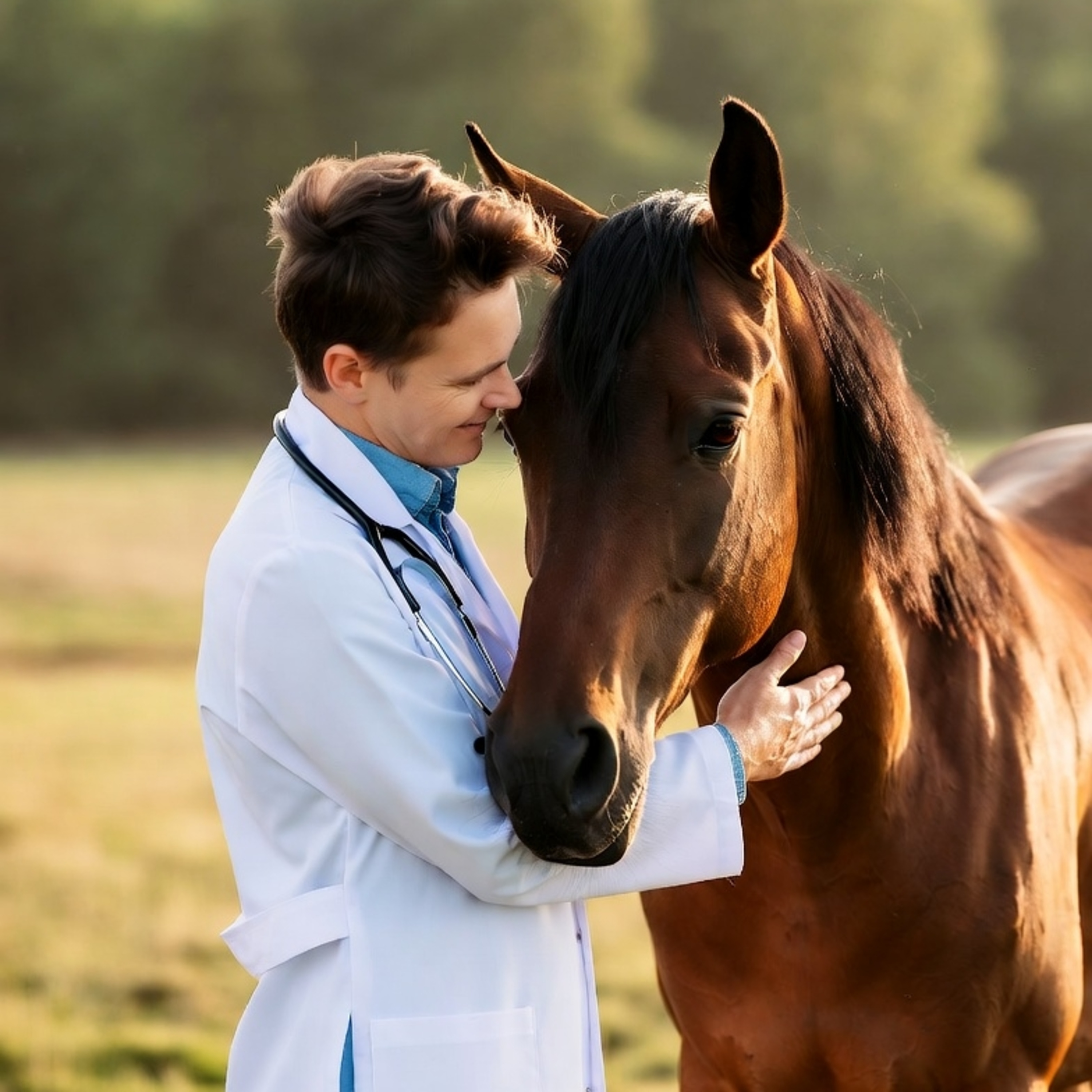
Horse Assisted Psychotherapy with Psychologist, Dr. Stefanie Mazer
In this episode
DoctorPodcasts EPISODE 124:Can horses🐎heal your💔heart? Dive into my video podcast with Dr. Stefanie Mazer, Psy.D., & explore the magic healing of equine-facilitated psychotherapy! From couples therapy to overcoming anxiety & trauma, discover how horses become powerful co-therapists. More information at DrStefanieMazer.com.Watch all 124 episodes of the DoctorPodcasts || Cykiert Files video podcast interview show with physicians, scientists, healthcare specialists, entrepreneurs and other experts. Please SUBSCRIBE & FOLLOW @DoctorPodcasts. Please LIKE, REPOST/QUOTE and SHARE the episodes. Send questions, comments and messages to @DoctorPodcasts. Thank you. Robert Cykiert, M.D.#RobertCykiertMD
#DoctorPodcasts
#CykiertFiles
#Cykiert
#RobertCykiert
#HorseExperientialPsychotherapy
#DrStefanieMazer
#EquineTherapy
#MentalHealth
#AlternativeTherapy
#Psychotherapy
#Wellness
#EquestrianSports
#HealingWithHorses
#CouplesTherapy
#AnxietyTreatment
#TraumaRecovery
#MindwiseInc
#LicensedPsychologist
#TherapeuticHorses
#EmotionalWellbeing
#PsychologicalHealth
#HorseAssistedTherapy
#WellnessJourney
#MentalHealthAwareness
Hi, thanks for tuning in to episode #124 The Doctor Podcast, Sicard File Show. And I'm Doctor Robert Sicard, your host as usual. And today we have a really fascinating episode. So please like it and share it and repost it and tell all your friends about it because it's going to be really, really fascinating. Our guest today is Doctor Stephanie Mazer. Dr. Mazer is a psychologist and founder of Mind Wise Incorporated in Wellington, FL and she offers in person and virtual therapy. She specializes in couples therapy and many other psychologic disorders related to that and and other things.
Now this is really important in her passion for horses LED her to doctoral work on equine facilitated psychotherapy. That means psychotherapy with horses, and she started that to help equestrians and then others to turn emotional challenges into growth. Her equine therapy and telepsychology services across 42 states in the USA empower clients to find healing through unique human horse connections. So Doctor Mazur, thanks very much for taking the time today to join us today to discuss this fascinating topic.
I really appreciate it. Thank you so much for having me. So how did you get interested in horses and combine that with psychology and the services you offer for patients? So I've been a horse person since I was a little girl. And when I started my Graduate School journey, I was already well on my journey with psychology and well on my journey with horses. And I had always wanted to integrate the two. And I happened to come across a book called It's not about the horse. And it was about somebody who was, who was integrating horses into treatment with people.
And so that was about in 2003. And that was the beginning of, of my integration of, of horses and psychology really. Wow, that's, that's amazing. You may not recall this maybe before your time, but there was a famous TV show in the 60s and 70s for a few years. It was called Mr. Ed, and it was about, everybody knows about Mr. Ed. It was about a, a character who actually spoke to his horse. And it was sort of a comedy drama show on every week where the horse actually talked to the owner and gave him advice.
Like lots of it was psychological advice. So this reminds me of that TV program. What is equine experiential psychotherapy and how do you use it with couples therapy, which you specialize in? Sure so equine experiential psychotherapy is working with horses in real time to understand relationship dynamics, behavioral dynamics, emotional dynamics that get re enacted in real time. So what I do is I, I have couples come out to the farm and they need a horse and working with a 1200 LB animal can sometimes bring up some anxiety or fears.
And when we experience anxiety, we feel it in our bodies very similar to a horse who you can actually observe a horse's nervous system get engaged. They're prey animals, so their mission in life is to survive by freeze or flight. They're not predators like us. So typically they're not going to fight, although stallions can and, and horses can. But unlike us who are predators, we have eyes, you know, facing forward. Horses have eyes on the side of their heads. They're prey animals. And so they're, they're very in tune with their environment and the, and their periphery and they're sort of scanning their environment for threats, which is what we call in polyvagal theory with people neuro reception.
We're, we're, we are scanning our environment for threats, but usually it's relational threats. So we can sort of draw a parallel between horses when their nervous system gets engaged because of physical threats and what's happening with partners in relationships when they're scanning, scanning their environment for relationship threats. And our defense mechanisms and nervous systems get engaged in similar ways. And we can use horses as sort of these live biofeedback machines. So what happens in in relationships when people aren't feeling emotionally safe is we engage in defensive behaviors.
And if we are engaging in defensive behaviors and we're not in the here and now and grounded, a horse isn't going to feel safe. So in order to engage in the here and now with a horse, a horse needs to feel safe. And so they provide these great dynamic mirrors for couples. Now, how does a horse display that it's nervous around a couple or or people? What do you see the horse doing that tells you the horse is nervous or anxious? They might move away. They might move away from from the person or or the couple.
They might freeze and sort of hold their breath and their eyes might get big.
It's a felt experience. You can feel when a horse is engaged with you or when they're in a Free State or in a flight state where where they want to move away, they don't want to share the space with you. And so the goal of the work is emotional honesty, congruence and presence. Wow. So you're saying that if there's a couple and they're not getting along and they're anxious and nervous and annoyed and angry at each other, the the horse will sense that? Yeah. And if you bring a a happy couple who've been happily married for 10 years and they love each other and everything is fantastic, the horse will react differently to that type of situation.
Perhaps, perhaps what we're really looking at is we're looking for couples to reenact some of their cycles and dynamics with the horse. So even if you have a securely attached happy couple, there are going to be some cycles that show up during times of stress. And so instead of sitting in an office with a couple trying to uncover some of these cycles and defensive behaviors like attacking or or withdrawing, defending or blaming, we're looking at some of the cycles under stress. And what are the underlying feelings?
Feeling scared, feeling alone, feeling like one partner is having to over function at times while the other partner becomes disengaged. So instead of, you know, a number of sessions in the office trying to identify what are these cycles and patterns that are showing up in the couple during times of stress, we can they can really act it out, re enact it pretty quickly in a session with horses. Really. Wow. So it it comes out quicker and more obviously when they're with a horse. That's fascinating.
Now, are there different horses that you use for different types of issues, or do you have one or two specific horses that are really good at this? I have a couple different horses that I use for this work. One of the horses I actually bred during Graduate School. She's now 17 and so she was born my last year of Graduate School and she was, she was really born to do this work. She's wonderful at, at working with couples, working with individuals and groups. And then sometimes I use smaller horses if there's a lot of fear I might be working with someone who is just just too scared about being around a, a larger animal.
So. That's fascinating. Do the horses need a license? Just kidding.
And that, that's pretty good. And you, how do you reward the horses? You, you give them a special type of food they like. I assume they they like to get a reward for doing this work. I think the biggest reward anybody can give to a horse is giving them that sense of safety. Really. Wow. And you can sense that that's, that's pretty amazing. Now, can you give an example of what a a session might look like with a couple just from recent experience that you had? Yeah. I would say that sessions are pretty dynamic, just like a psychotherapy session.
Sometimes you plan it going one way and, and you work with what's in the here and now. So I'm I'm a big believer in picking up what's happening in the here and now. I do have go to exercises that will bring up couples dynamics that might highlight power, trust, coercion, influence. I might have a couple do a simple task that will that I'll build on. Like I might ask them to lead the horse and I'll observe who takes the initiative, who hangs back? Do they argue over who's going to take the leadership role?
And then I might build on that and have them create an obstacle course where they navigate challenges together with the horse. So different, different exercises that will highlight collaboration, communication. And sometimes I present non verbal exercises or tasks so that the couple can pay attention to what's going on non verbally. And then sometimes verbal tasks where they have to, they're put in a position to collaborate and communicate clearly. Now are you in a room with with the horse there and and the couple is sitting on chairs and so are you or are you standing next to the horse and and touching the horse during these sessions?
Yeah, so we're outside. This is happening outside in a paddock or an arena or sometimes in the barn or in the horse's stall. So it's, it's nice for some people to get out of the therapy office into a less clinical environment and and sort of have fun with it. Right. Do do the couples or one or both of them ride the horse as well? No, everything is on the ground. I see everything. There's no riding. And I assume there are several sessions of this. Yeah, so just like psychotherapy in the office, some people only need a few sessions.
Some people I see for, you know, very long periods of time. So it's it's a very dynamic process. Right. Do the horses sometimes dislike certain clients of yours or certain couples? I don't know if they dislike, but they may not feel safe, so they may not feel safe. And how does a horse sense that they're not safe? What what is it? Is it a sixth sense that humans don't really have that that they have? You know, I'm not sure that would be an interesting research study if we could somehow boil it down.
I don't really know. I based on my clinical experience and observations, when people are not congruent, if they're more performative instead of present, the horse is going to respond to that. Wow. And you can sense that from the horse because you've been around horses for decades and and can see that. Yeah, and we can observe their behavior. Are they moving away from the people? Are they moving towards the person? Are they, you know, agitated and pawing a hoof?
Interesting. Now, when a couple first comes to see you, do you give them the option of the standard type of psychotherapy where you're just with them and then tell them, by the way, I do this special psychotherapy with horses that I found to be very valuable and then give them the option of choosing? Yeah, yeah, yeah, I give my clients the option. And would you say most of them want to do this or what percentage of couples or people want to work with a horse? I'd say actually that more people prefer in the office.
I don't know that a lot of people can imagine what what the work looks like. So more people prefer in the office. Interesting. Now let's talk about couples therapy. Get a little deeper into that. There's there several types of situations that occur that cause the problems. Number one is communication breakdowns between couples. Can you tell us how that happens and and why it happens? Well, there's a plethora of reasons why communication doesn't go as optimally as people would hope. There's a quote.
Let me think of it. The biggest illusion in communication is that it has even occurred.
I think it was. George Bernard Shaw I'll have to. I'll have to go back and look. People think they've communicated something and that they've communicated it effectively and it was never received for one reason or another. And who knows who's at fault for that? What? Where did the communication? Where was there a problem? One thing that I encourage couples to do is slow down. Slow down. Oftentimes people will jump to conclusions or make assumptions
or assume that as their brain is moving so fast that they've communicated what they would like to communicate. And maybe they were able to or maybe they were not able to, but if we can slow it down. So that's one thing that I encourage my clients to do is is slow it, slow it down. I statements are huge. As soon as we get into you, you, you, you, you, the person on the receiving end backs up. So using I statements, so I give couples, you know, communication skills as part of the process. Put communication tools in the toolbox and then we look at, you know, some of these patterns and cycles that couples get into and some some underlying feelings that maybe they don't even realize they're experiencing and so.
Yeah, sorry. Do communication breakdowns occur early in a relationship or late or can happen anytime? I think it can happen anytime. I think that, you know, there's, there's either miscommunications, there's unhealthy communication, there's violent communication, there's, there's all different problems that can show up in the domain of communication. But it's usually not communication is 80% of clients will call and say we need couples therapy because we need help with communication. Once we slow things down and start to examine dynamics, it's usually not a communication issue.
We find ways to communicate about the real issues, if you will. Does that make sense? Yeah, yeah, it makes good sense. Now another thing is, is trust issues. What causes mistrust between couples and how does that lead to problems? Well there there can be several reasons why there's trust issues. One partner may betray the other partner.
Another reason that trust issues might show up is for attachment reasons. Somebody might come into the relationship with an attachment history that involves neglect or trauma, and so learning how to trust them, their own self and their partner becomes part of the work. I see. Are trust issues sometimes incorrect? In other words, one partner thinks the other partner did something wrong, but it it really didn't happen and it's in their mind mostly. Yeah, yeah, absolutely. If somebody grew up with with caretakers or parents that they learned that they couldn't trust, you know, that sort of created a blueprint for how they enter relationships that people aren't safe.
Even people that I love and who are supposed to love me or who do love me aren't safe. And and it's, it's not safe to trust. And so that can that can show up in a relationship in terms of trust. And it can be very hard for the other partner if the other partner is coming in with a different attachment blueprint. And this, this shows up in the work I do with horses too, with couples is when somebody's attachment system gets activated, it's sort of like their threat system gets activated. And so when we look at a horse that's 1200 lbs and easy to model for us, what does it look like when this being's attachment, I mean, threat system gets activated?
They're they're in, you know, freezer flight mode. They're not engaged, they're not grounded, they're not connecting. The same thing happens with couples when somebody's attachment system gets activated, their threat system gets activated, and so the defenses come up and they become disconnected from themself and their partner. And the goal is safety, not connection. And what we want for the couple, we want both partners to experience connection and a prerequisite is safety. Right. How do you deal with with conflicts and and conflict resolution?
Sometimes these escalate and and just get more severe with time. How do you deal with that? For different people, it's different. If you look at things on a continuum, let's say on a scale of 1 to 10, I work with some clients that, you know, conflict is unhealthy. Conflict is, you know, 1 to one to five and they're going to respond quicker and a little bit easier to interventions than people who have much more violent ways of communicating during conflict. So we look at what's happening in conflict, What are the feelings that are coming up?
What are the behaviors? What are the behaviors that just can't continue and try to replace them with healthier behaviors? Right. What about emotional distancing? I'm an ophthalmologist, so I see patients for their eye issues, but sometimes couples, especially older couples, will tell me that they feel emotionally more distant from their partner, which seems to happen over long periods of time. What does that happen? Wouldn't you think the opposite would occur? They would grow together even more.
Well, that's what we're hoping for, right? We're hoping for two individuals to grow and for the relationship to grow and, and for all of that to happen simultaneously. What can happen is if one person is growing and the other one isn't, or both people are growing but the relationship isn't, they might turn away from each other instead of turning towards one another. And certainly in times of conflict, it is easier to turn away, right avoidance, avoidance versus confronting and showing up. It's easier.
But you do that for so long and the go to becomes turning away. It does create distance. So that's something else that I that I work with, with couples is even during times of stress and conflict turning towards one another. Is helpful and do you find the horses help that? In other words, if a couple comes in and they're kind of emotionally distance and don't have that much communication anymore, they sort of enjoy being with the horse and find themselves having a good time with the horse, which maybe helps them connect again.
Well, sure. I think anytime where you have a third variable, it can it can help dissolve tension and bring people together.
So, yeah, certainly. Now, do you think horses have some special quality about them? For example, can dogs do this too? I don't know if you have experience with dogs or with perhaps other animals or pets, because lots of people claim their their dogs do something similar. Or is this a unique thing that that only horses can do? So I have dogs, I love dogs. I have a a bunch of different animals, some some are, you know, have eyes on the front of their heads like us like dogs and some on the side like goats, which means that they're prey animals.
The reason that I like working with horses in this context is because because they are big, right? They're 1200 lbs and they can bring up fear and anxiety and I think whenever we put stress on a dynamic, we can uncover things quicker and we can help people confront things. Horses have nervous systems that quickly get activated and it helps people tune into their own nervous systems. Horses can actually be great Co regulators, so once they're present and relaxed, they can help help a human Co regulate if that's the person's goal.
Another thing about horses is they're they really live in the present. They're in the here and now. They're not thinking about tomorrow, they're not thinking about yesterday, unlike people. So they can really draw people into the present. So those are the reasons why I like working with horses and people. Right, which is different than dogs. What about other issues that come up where major life transitions or episodes in the partners lives occur and that creates A barrier between them? How do you deal with that?
Because you can't sometimes change what's happening externally that affects them. Sure. So I think, I think for everybody it's different, right. Looking at transitions, transitions are our pivotal times in our lives where we have new adjustment stressors and new adjustment needs that might be foreign to us, might be foreign to our partner. And so really processing and understanding what are the adjustment stressors, what are the adjustment needs? How can I ask for what I want need from my partner and how can my partner show up for me?
And if two people are going through a transition together, understanding that those stressors and needs might be different for both partners. So you have to figure that out and that takes time, and then they have to work on that.
Now you also do televideo psychology, right? You help patients in 42 different states I mentioned. Do you use horses with that as well? In other words, is is there a horse with you when you do that and that somehow helps even though it's it's remotely in another state? No, unfortunately, this is really something about sharing the space with a horse. So I do provide telepsychology. I work with families, perhaps their family members in different States and so I work with them virtually or I work with a lot of equestrians, so they might be in different states.
And I work on sport and performance psychology with equestrians. So and some couples. I have one partner in one state and and another partner in another state. I have to be honest, I prefer in person. There's nothing like sharing the space with with the person that you're working with. Right now, are there other psychologists around the country who do this as well, or are you unique? There are there are other psychologists. I don't know personally any other psychologist, but there are. There are.
I would just Google licensed psychologist and equine facilitated psychotherapy or equine assisted psychotherapy. Right and then that would bring up the different people around the country that are helpful. That's great So this has been very fascinating. I, I learned a lot I love horses. I, I think they have a sixth sense. Whenever I'm near a horse, I get the feeling that they're tuning into my brain and it's, it's very, very fascinating. So I want to thank you for taking the time to explain this to us.
An I think it'll be helpful for many people. Well, thank you so much for having me. I appreciate it. Thanks.
 Apple Podcasts
 Spotify
 YouTube