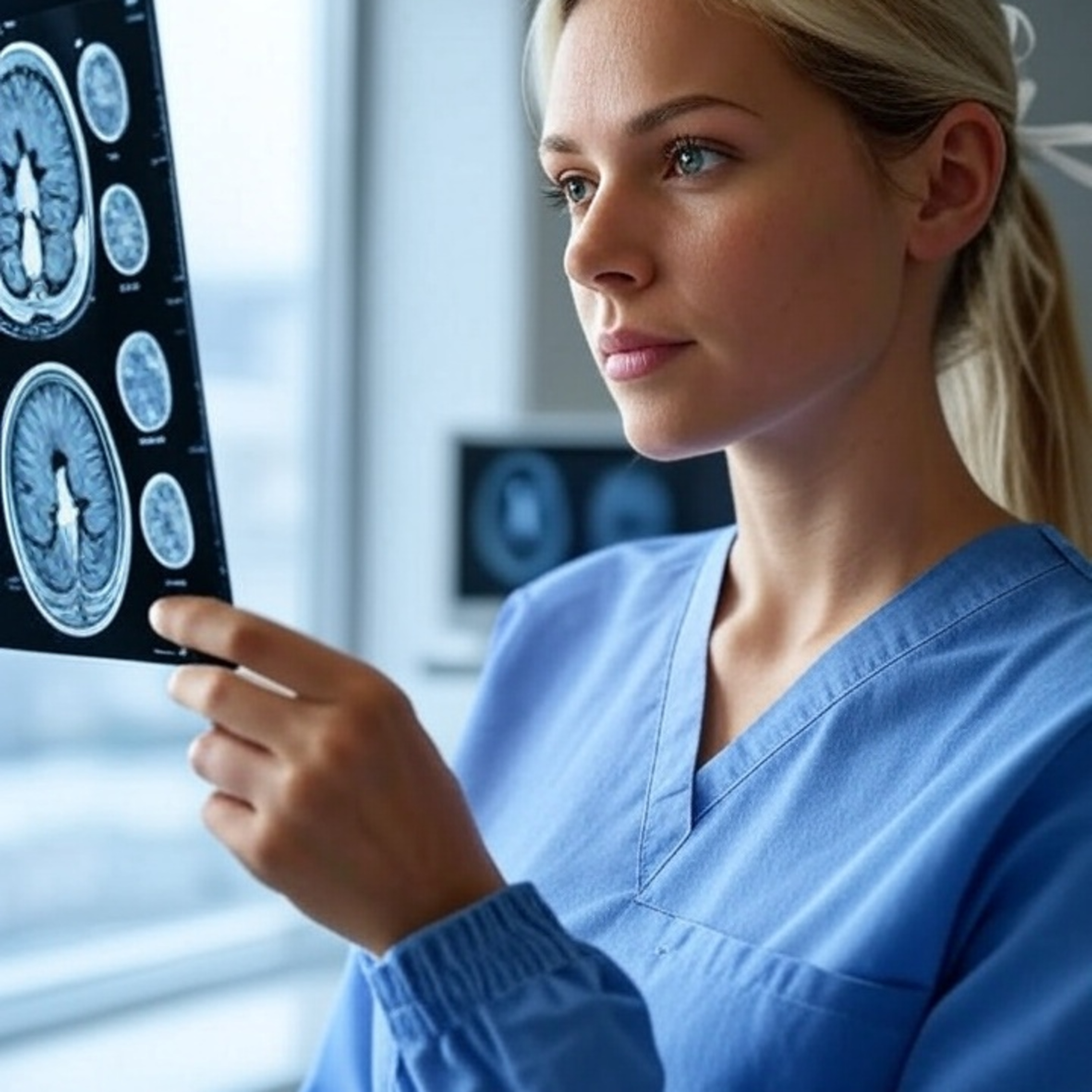
New brain cancer treatment being developed
In this episode
#DoctorPodcasts Episode 112:New hope for glioblastoma #BrainCancer treatment with Carthera SonoCloud device. Watch #video #podcast w/ Chief Scientific Officer, Michael Canney, Ph.D., explain how it modifies blood-brain-barrier & improves chemotherapy outcomes. May also help #Alzheimers as well.Watch all 112 DoctorPodcasts || Cykiert Files video podcast interview episodes with physicians, scientists, healthcare specialists, entrepreneurs and other experts. Please SUBSCRIBE & FOLLOW #DoctorPodcasts. Please LIKE, REPOST/QUOTE and SHARE the episodes. Send questions, comments and messages to @DoctorPodcasts. Thank you. Robert Cykiert, M.D.#SonoCloud9
#UltrasoundTherapy
#GliomaTreatment
#CarboplatinDelivery
#PaclitaxelTherapy
#NeurodegenerativeDisorders
#BrainTumorTherapy
#BBBDisruption
#ClinicalResearch
#MedicalInnovation
#NeurosurgicalImplant
#TherapeuticDelivery
#OncologyInnovation
#BrainHealth
#NonInvasiveTherapy
#GlioblastomaResearch
#CheckpointInhibitors
#CARTCellTherapy
#SoniMELStudy
#Phase3Trial
#BrainCancer
#Glioblastoma
#BloodBrainBarrier
#TherapeuticUltrasound
#SonoCloud
#DrugDelivery
#BrainTumors
#NeuroOncology
#MedicalDevice
#Carthera
#MichaelCanney
#ClinicalTrials
#Immunotherapy
#Chemotherapy
#BrainDisorders
#Neurosurgery
#LowIntensityPulsedUltrasound
#BrainMetastases
#AlzheimersDisease
#InnovativeTherapies
Brain cancer, also known as glioblastoma, is a very devastating diagnosis with an extremely poor prognosis. Today we're discussing a new treatment modality that gives hope to many patients and their families that suffer from this devastating condition. Thanks for joining us again for this new episode of the Doctor Podcast Sicard Files program. And I'm your host, Doctor Robert Sicard. Please don't forget to subscribe, follow, like and repost Dr. podcasts and this episode so we can continue to have great guests on the program like we have today.
Today's great guest is Doctor Michael Canny. He's the Chief Scientific Officer at Carthera, A clinical stage Med tech company advancing brain therapy through innovative ultrasound based devices. Under Doctor Canny's role as Chief Scientific Officer of the Carthera company, he's developing the Sono Cloud device, which we'll talk about in detail. It's an innovative ultrasound based implant that temporarily opens a blood brain barrier, which we'll also talk about to enhance drug delivery for conditions like glioblastoma and other brain disorders.
He's a co-author of more than 50 peer reviewed articles. He's a Co inventor of many patents. He specializes in neuro oncology or or cancer of the brain, glioblastoma and other neurodegenerative disorders such as Alzheimer's, which we'll get into as well. At Cartera, he's responsible for leading scientific collaborations with academic institutions and organizing USA clinical trials and more. So Doctor Kenny, thanks very much for taking the time to join us today. We really appreciate it. We'll learn a lot from you, so we appreciate your taking time to do this.
Yeah. Thank you so much for having me on today, right? Can you start off by sharing a little bit about yourself, your background, What inspired you to focus on neuro, oncology and medical device innovation? And tell us about your company, Carthera. Sure. Yeah. So I got into this field quite a while ago. I started out before I got into neuro applications. I got into the field of using ultrasound as a therapeutic modality. And so we think a lot about ultrasound as something that's used to image the body, look at babies and other things.
But you know, this field is very much growing in terms of what else can we do with ultrasound. And so it's being explored as modality to replace surgery, for example, to to destroy tissue and as well as many other things including drug delivery, which we'll talk about today. And so I started out focusing on this field during my PhD work, which I did at the University of Washington in Seattle. There is a great lab there that was doing a lot of ultrasound research. Specifically, they had a program around lithotripsy, which is also another therapeutic application of ultrasound, which is destroying kidney stones using acoustic shock waves.
But they also had some programs around the field of HAIFU, which is high intensity focused ultrasound, again, using ultrasound to destroy tissue and, and, and explore new mechanisms of ultrasound. And so I did my PhD work in Seattle with a fantastic team there, had some amazing advisors. And after I finished, I went on to do a post doc in Lyon, France at another therapeutic ultrasound lab. There's this great network of labs in in Lyon in France, specifically called INSERM that all specialize in different research areas.
And this specific 1 was devoted to therapeutic ultrasound. And so I went over there to do a postdoc. And while I was there, a neurosurgeon, you know, had started a collaboration with this lab to explore using ultrasound for the brain. And so he wanted to use ultrasound to to potentially replace surgery and also to to do drug delivery. And his name is Alexander Carpentier, and he founded this company, Carcera, that we'll talk more about today. Wow, that's amazing. So how long have you been in France now?
Well, actually live in the US again now. I, I went over to France and lived there for five years and had a fantastic experience and learned French and did all a lot of great things there. And I moved back into the US in 2015. I see, that's interesting. It's always somebody you meet just by chance that influences your life and career. Yeah, yeah, yeah, for sure. And brings up new and incredible opportunities. Now, as you said, we always think of ultrasound as just an imaging device. For example, I'm an ophthalmologist.
We use ultrasound to image the inside of the eye when we can't see in the eye. Women who are pregnant use it to to see the baby and there are numerous other applications. So how does ultrasound become a treatment tool instead of just a diagnostic tool? Is it a different frequency or wavelength of the sound waves from the ultrasound that allows you to do? That not necessarily different frequencies. So we're still working in exactly the same frequency space and you can get to some of these modalities in different ways.
So if you just crank up the power on ultrasound, you can start to heat tissue and destroy it using thermal mechanisms. In our case, we're using a little bit different way of using ultrasound in that we're using ultrasound in combination with a micro bubble. So we inject a micro bubble that actually circulates in the vasculature. And when you apply ultrasound, these micro bubbles actually vibrate in response to the ultrasound. So they're, they're resonant at the ultrasound frequencies we're using.
And, and that kind of mechanical energy transfer of energy to the micro bubble, then, you know, pushes on the blood brain barrier, which we'll talk about and, and, and creates the effect that that we see that we're studying here, which is disruption of the blood brain barrier. Wow, that's amazing. That's a a brilliant idea. Who whoever came up with that, that's really amazing. How does your scientific background Shaker approach the being the chief Scientific officer of a company focused on on brain cancer treatment?
Yeah, that's an interesting question. So I mean, when you get into some of these fields, you're kind of at the convergence of a lot of different specialties. And so I would say we we all show up with not knowing everything. And so it takes kind of a team of experts from all kinds of different mechanisms to, to develop a technology like this. You know, in this case, we've had, we had a neurosurgeon who specialized in brain tumors and he brought his expertise to the table and surgery and he, he developed some of the first designs in the system.
You know, we came with my background is in ultrasound. So I definitely have a background in ultrasound physics and what we can use and, and do in terms of ultrasound and what kind of devices we can create. And then of course there's a whole clinical regulatory side that you you need to develop a medical, new medical device. Right. So it's a team effort as usual with all these boring discoveries. That's great. Now tell us what glioblastoma is and what the treatment currently looks like and what the prognosis is currently for the treatments that we have available up to now.
Yeah. So glioblastoma is a type of primary brain tumor and and it's really the most aggressive type of primary brain tumor. We can also call it a grade 4 glioma. And so it's it's there's very few treatment options for global estoma. And what I always say is, you know, the current standard of care for this disease was established 20 years ago when in a pioneering study by Doctor Roger Stoop, who's a neuro oncologist now at Northwestern, who found that, you know, combining a drug, tumazolamide with radiotherapy after surgery led to prolonging of survival in these patients by really a few months.
But this is the standard of care that has been developed. And so just going back on that, when a patient is diagnosed with glioblastoma, you know, they typically get diagnosed because they come into the, OR they have seizures or they have headaches or they have different kind of neurological complications and then have an MRI and find out that they have in fact a brain tumor. But when a patient comes in for their initial treatment, they'll typically go in and get surgery and they'll get the tumor removed by a neurosurgeon.
And then they'll again, like I said, the surgeon can never quite remove everything. And so afterwards there'll be a follow up therapy with radiation and chemotherapy for these patients. And you know, the, the patients that we're treating right now in our trial, we're actually taking patients who have had this standard of care and then then recur after that. But this is really the standard of care for these patients was established 20 years ago. There's been a a ton of trials of new drug therapies and things that have happened and really nothing has has moved the needle for these patients, right?
So what's the current prognosis if you're diagnosed with that? What? What's your chances of surviving glioblastoma cancer? Yeah, it's quite low. So the median overall survival is, you know, one to two years exactly. That's a. Quite loud it's. A devastating diagnosis. So for our audience, can you explain what the blood brain barrier is and how the science behind Cartera's Sono Cloud ultrasound device and how it overcomes the challenges of the blood brain barrier in treating glioblastoma? Yes. So the the blood brain barrier is a protective layer basically in the blood vessels in the brain.
It's formed by the endothelial cells that have these things we call tight junctions. And so I think it was it was first discovered long ago and I don't know the exact person I should figure that out that they they injected a dye basically I think into an animal and they saw that, you know, if you inject certain dyes, you can get them to to color every organ in the body. But in fact, the brain was the one organ where, you know, you didn't see anything and so they discovered it. I think this way. And and what it does is basically protects the brain.
So it serves A physiologic function, you know, that that has evolved to protect our brain from anything harmful or toxins or different changes that make in the body. But it also has this effect of stopping most therapeutics from getting into brain tissue. And so, you know, about 98% and 99% of drugs don't actually cross the blood brain barrier across it, you know, very, very, very mildly. So you don't get much drug in. And so you can never really hit, you know, the therapeutic window or just get enough drug in to have a therapeutic effect.
And so it's been a big issue for, you know, treating brain tumors and other brain diseases. So basically if you inject A chemotherapy drug into the vein, like most drugs are are injected, they just go into the blood vessels in the brain, but they don't leak out into the brain tissue or where the brain cancer is because of this blood brain barrier. Is that right? That's exactly right, right? So tell us how Carthera's Sonocloud ultrasound device bypasses the blood brain barrier problem that we have with getting the chemotherapy and other drugs into the brain tissue.
Yeah. So I'll tell you more about our device. So it was really founded on this idea. We started out talking about therapeutic uses of ultrasound with micro bubbles. And so the first studies were done around 2001 by a researcher named Calervo Hinnonen, who discovered this technique of combining ultrasound with micro bubbles to disrupt the blood brain barrier. And since then, there was been a huge amount of research, a lot of labs working on this in preclinical models and demonstrating the safety and the parameter space.
But one of the main obstacles for applying ultrasound to the brain is that we have the skull. And so ultrasound doesn't pass the skull very well. And so crossing this bone is a big issue because you get absorption and heating of the bone, you get distortions, you have problems really estimating what you're actually delivering to the brain tissue. And there's been a lot of developments. There's companies that are developing very complex ultrasound systems to overcome this bone issue and apply ultrasound to the brain.
And, you know, they're doing fantastic work, but the innovation around Carthera was really from this neurosurgeon who came to an ultrasound conference and he, I think he saw all this development. He saw these very complex engineering solutions. And he said, you know, I have my glioblastoma patient, they're coming in for surgery. I'm going to remove the tumor anyways because right now I still have to remove the tumor. Basically the tumor can push on the brain and creates different, you know, some of the, a lot of the neurological symptoms that patients experience.
And so we said I'm going to do a surgery anyways in these patients. Why don't I just implant the ultrasound in that bone window at the end of the surgery. So this this came around. And So what we've developed with the Sonocloud is really an ultrasound implant and I have one here in my hand. This is the implant. And so when a surgeon goes in and does a surgical resection procedure, instead of placing back that bone window that they might have placed, they placed back this titanium mesh, which is already very commonly used in neurosurgery for for bone reconstruction of the skull, except that this titanium mesh now has ultrasound transducers directly attached to it and we can activate.
And so, yeah, so the implantable nature makes it somewhat invasive, more invasive than some other technologies. But the advantage comes later on when you want to turn it on, because when you want to turn it on, you can just plug it in. So we have this needle that plugs into this port, basically that's just under the skin. And so when you activate the device, you can just do it in the infusion suite when a patient gets chemotherapy. So a nurse can plug it in, turn it on for a few minutes, disrupt the blood brain barrier at the same time as they give chemotherapy.
And so it's a very simple procedure, doesn't involve a lot of equipment cost in the in the infusion suite can be done by nurses and so, so it really is very easy to implement clinically. Wow, that's that's amazing technology. Smart people invented that. Now tell us about these bubbles. How do you get the bubbles into the blood vessels? Yes. So the blood, the bubbles are just injected as you normally would just IV into a patient and so they circulate everywhere in the body. But as I mentioned, the ultrasound is really what what drives them and the ultrasound is really only applied to the brain.
And so that ultrasound interaction with the bubbles once they're circulating in the brain is what causes the disruption of the blood brain burner. So you get these bubbles to basically vibrate, which allows the chemotherapy drug to get through the blood vessels and diffuse into the tumor tissue. Exactly. Well, it's. Pretty incredible. How large are these bubbles? Is there a possibility of getting emboli or the bubbles blocking some of the blood vessels? No, we haven't seen any risk of that. So these bubbles have been used for a long time for ultrasound imaging applications.
I think they're used mostly for heart and liver and things like this, but they've been around for decades. They've been shown to be safe. You know, there's and we haven't really seen any additional complications from using this technology in the brain. So what sets this technology, the Sono Cloud or there a Sono Cloud, apart from other emerging therapies for brain cancer like immunotherapy or targeted drugs? I interviewed a doctor from University of Miami about a year ago and he was having some improved results with using immunotherapy for children with glioblastoma.
How does this compare, you say? Yeah. So it's actually complementary. And so you mentioned immunotherapy. We're we're starting out, we've been working with a lot of different therapies. In our phase three trial, we're using an older cytotoxic chemotherapy drug for these patients. It doesn't cross the blood brain barrier. That's a drug called carboplatin. You mentioned immunotherapy though. There's also a lot of interest in, in using our technology to deliver immunotherapies. And we have actually an open trial at Northwestern that is doing exactly what you mentioned, which is using immunotherapies in combination with our device.
Because a lot of immunotherapies are antibody drugs and antibodies are very large and they really don't cross the blood brain barrier at all. So they, they're like .1% of the antibody or less is crossing into the brain because they're such large drugs. And so actually it's very complementary because we can pair it with some of these newer types of therapies like antibodies, immunotherapy, CAR, T cells. We have a lot of ongoing work, you know, clinically and pre clinically exploring these different combinations as well.
Now, once this device is implanted, does it stay there? Does it have to be removed following the treatments? Yeah. So it it can be if a patient elects obviously to have it removed, they can have it removed. A lot of our patients have not had it removed. They haven't been bothered necessarily by the implant. I would say most patients only get it removed if they go in for another resection procedure and then they can have it taken out at that point. So can you walk us through the current stage of development for Sonal Cloud?
What have been some most promising results from your clinical trials and what phase clinical trials are you in currently? Yeah. So we did the first in human trial in France in 2014. This was like our very first patient really had ever been treated in the world with this technology. And it's, I think it's, it's an amazing thing to go through because you're very nervous and you're wondering what's going to happen after you do all these animal experiments and all this regulatory work. And you put, you put it in your first patient and you try it.
And luckily everything was safe. And that first patient, everything went well. And, and we had, you know, a trial just designed really to evaluate the first safety signal of using this technology in recurrent GBM patients. And that was with the very first generation of the device. After that, we, we saw that our device didn't necessarily treat enough of the brain. And so we, we actually expanded it. So this, this Sonocloud 9 is quite a bit larger. It's, you know, 6 by 6 centimeters. And so that the goal is to try to target as much as we can of this peritomoral region.
We'll talk about the peritomoral region, which is the the cancer cells that are infiltrated and that are left after the surgery that necessarily couldn't that be removed. Right. And the reason you can't remove them all is you might damage adjacent brain tissue, right? Exactly. Oftentimes there is eloquent tissue or there's a risk of complications after the surgery if the the surgeon was to be more aggressive. That being said, there are some surgeons that are pushing more and more aggressively into into doing aggressive resections, but there still is always a risk of complications if they start taking out too much.
But after that, so like I mentioned, we we developed this version, the Soto Cloud 9 that went into trials in 2019 and we ran a Phase 1 two trial that we published last year in Nature Communications. And so we treated patients and demonstrated that we could safely open a large region of the blood brain barrier. We also explored some other things like was there a difference in terms of when we gave the chemotherapy? So we had different cohorts in this trial where we gave the chemotherapy before the treatment to open the blood brain barrier and we also gave the chemotherapy afterwards.
And you know, got to explore. There's, there's a lot of logistical aspects to running a clinical trial. You discover very quick can be difficult once you sketch everything out on paper. But what we found is that giving the chemotherapy in this trial just before we disrupted the blood brain barrier, you know, seemed to give better tumor control, better outcomes in these patients. And another side effect of this logistical thing that happened in this trial was that we did a lot of more Mris than these patients might normally have.
But we wanted to look at whether we actually disrupted the blood brain barrier and whether it was safe. And so we did additional Mris in these patients after we activated the device and we were able to use this data in a pretty unique way in that because all these patients had Mris at different times. You know, the MRI is a is a hot commodity in a hospital and you can't necessarily just use it when you want. So sometimes you have to wait a little bit to get a patient in there. But we're actually able to measure the timing for the blood brain barrier to close in humans.
And this was an aspect that we published. And so, you know, we found that it closes pretty rapidly within about an hour, hour and a half. It's closed in humans. And you know, this was a really important finding in terms of how you give the drug, when you give the drug and how you can really maximize the efficacy of the treatment. And so these Phase 2 results that we published last year, you know, allowed us, you know, let us see some certain very interesting signals and, and safety data and, and early efficacy data and some patients that led us to our phase three trial that we're running right now, which is quite a large trial and a very different thing.
I don't know. We can talk about that as well, right? How long will the phase three trial take do you think? Yeah. So the phase three trial is running now at over 40 clinical sites in the US and Europe. So a lot of sites to to get going, but they're all recruiting patients and we're planning to finish recruitment next year. And then, you know, follow up these patients to to, to see what the, you know, what signs we can see in terms of safety and efficacy from this treatment. Can you guess or educated guess as to when you might get FDA approval if the results from all the clinical trials come out good?
Was that too difficult to say? It's hard to say. I mean, we, we have several more years of running this phase three trial, you know, before it will actually get to the final, final readout. That being said, you always design a trial to have some early looks at the data and you know we're planning to do some of those early looks at the data as early as next year. If those were really striking, you could always, you know, potentially tempt FDA approval a little bit earlier in the process, but that's what we're looking at now, right?
I would think that since the prognosis is otherwise extremely poor for these patients, that there would be a greater chance of this. This would be improved quicker because these patients have very poor prognosis. And if this helps just a little bit, then that's that's a good reason to approve it. But I know the FDA has its regulatory requirements as well. So it's a delicate balance. Yeah, I mean, the FDA has been great to work with. Actually. They've been very straightforward, very commutative, you know, very willing to work together.
Like you said, this is a disease that hasn't had a lot of successes and wins in the past several decades. And because of that, you know, they're very open to, to these kinds of new treatments and willing to work together with us. And so we've had, you know, good things. I think the, the, the main hurdle for this disease in particular is that it's difficult to really get an early efficacy signal. And so you try to look at the Mris, you try to look at the progression free survival in terms of when patients are recurring.
But for this disease, overall survival is still kind of the gold standard endpoint for for a clinical trial. Right now, you mentioned you've had several iterations of the device. You did you say you're on on the 9th 1, is that right? Yeah, we call it. It's actually not the. We haven't had 9 versions of the device, but we we we skipped right from the version 1 to version 9 and so. Oh, I. See, yeah, so, so the version 1 was just a single emitter and, and just disrupting a, a pretty small region of the blood brain barrier and, and we expanded it very quickly to 9 emitters.
And so the the version 1 was just like one of these emitters you can see on on this device. I said. The nine version is much a bit more complicated because it has some some more complicated electronics in it and it's it's it's you know, but it allows us to basically treat a much larger volume and to get drug into this larger volume of brain. That's great. Do the patients have any sensation when you turn the device on? Yeah, that's interesting. So we, we have seen depending on where the device is placed, patients have reported different, different symptoms.
And so some patients have blurred vision, for example, or they they may have trouble speaking for a little bit. I had one patient I always tell us he told me he felt like he was drunk when he was being treated, which is an interesting sensation to experience. We should probably just pursue that as a as a medical device instead. But but they do have these things and so it's kind of an interesting thing because it relates to potentially the disruption of the blood brain barrier potentially to ultrasound as a as a mechanism for doing a neuromodulation, which is a whole other field.
We haven't talked about that, that's also ongoing. But the interesting thing about all these neurological effects that we've observed is that they've resolved themselves for pretty quickly. And so patients who have blurred vision or something that it lasts for 20 minutes and then they, they, you know, everything is fine after that. And that's what we've seen is that all the effects have been reversible. It's just a transient mild side effect, which is great. Exactly. Exactly. All right now, are there plans to expand Sonocloud's applications beyond glioblastoma, for example, such As for Alzheimer's disease or other neurodegenerative neurological conditions where you need to get drugs into the brain that otherwise just don't get in?
Yeah, that's a great question. So we actually have been exploring other indications. We did a phase one trial on Alzheimer's. There was some very intriguing animal experiments that came out in different Alzheimer's models that showed that just disrupting the blood brain barrier and not giving any drug could lead to potential improvements in, in plaque clearance for Alzheimer's and, and you know, functional improvements as well in these animal models. And so we did a very early clinical trial, phase one clinical trial in Alzheimer's patients and saw, you know, kind of a mild therapeutic effect in terms of amyloid is the the plaque that is most commonly targeted in Alzheimer's.
And we saw very mild clearance of amyloid and when we targeted the ultrasound to to certain brain structures. And so that was intriguing. And then there was actually the follow on work published just last year by Ollie Reza as a neurosurgeon, a very famous neurosurgeon who's working with another system to disrupt the blood brain barrier. But using this kind of technology in combination with an antibody, which we touched on. That's, you know, there's a couple antibodies now approved for Alzheimer's.
And what he showed is if you disrupt the blood brain barrier again with an antibody that doesn't really cross the blood brain barrier much at all, you can get, you know, much more therapeutic effect in, in patients. And so it's pretty striking. He, he treated three patients and got very striking results. And and you know that that show this, this is a potential treatment for these patients. Yeah. So maybe huge number of applications for all sorts of brain and neurologic disorders for this. As you use it more, you'll probably figure out new ways to use it for other patients.
Now, how do you balance the demands of advancing cutting edge research with the practicalities of navigating regulatory pathways and keeping the FDA happy and other regulatory agencies in the USA and and France and around the world? That must be a difficult job. Yeah, we have to interact with a lot of countries and we've learned a lot, I think, in the process. We started our trials originally in France and had good interactions. The ANSM is is the equivalent of the FDA in France and they regulate things like this.
But you know, they allowed us to get our first in human trials going and then we went to the FDA. We've actually had discussions kind of ongoing with the FDA for a long time even before we started trials to have to learn more about the process and make sure that we could open trials in the US. The FDA has been great. I mean, they, they, they respond to, to everything. They give you suggestions, not suggestions, but they tell you what to do, you know, different, different things you need to do in addition to your testing.
But they allowed us to open our, our pivotal trial, phase three trial pretty quickly in most countries in Europe. We all had a similar experience. We're able to open very fast. Some countries in Europe we're kind of a black box. And so the ones who don't communicate well and you're waiting to hear from them, and some of these can take a long time to get going, but, you know, pretty fortunate, I think, with the FDA. Great. Does the FDA look at the results that you get in other countries or they're just interested in in what's going on here and monitoring those results?
They do. I think in terms of in terms of establishing the safety, you know, we were able to come with the with some human data that show that our technology was safe. I don't know if that definitely changes, you know, opening a trial, but it definitely changes what you might have to do, for example, for a dose escalation. You know, we're going to get in the nitty gritty of of clinical trials. The question is always, you know, how do you get your optimal dose of drug or ultrasound or micro bubbles or, you know, there's, we have a lot of big parameter space.
And so we were able to come to the FDA with a lot of that already figured out and to show them that it was safe in humans. And that basically allows you to, you know, reduce your numbers of patients early on and, and, and not have this dose escalation cohort where you might have to explore the parameter space a little bit more. That's great. So it just accelerates the process. Exactly. Now, what role do collaborations with academic institutions, medical centers, hospital and other entities play in your success, and how do you foster these partnerships?
Yes. So we were fortunate early on. Like I said, we were started really as a clinically driven company by this neurosurgeon, Alexander Carpentier and he's at PTA Sell Patriere Hospital, which is this beautiful old hospital in Paris, France. And it's in the middle of Paris, beautiful campus. And so he really had some collaborations there as well with a neuroecologist, had some research facilities. And so we're able to leverage a lot of that to to do the early work that that got us to the first in human trials.
And we're still working very closely with them. In fact, after that, we were actually approached by this doctor Rodger Stoop at Northwestern. I mentioned he's one of the leaders in your oncology for glulblastoma treatments. He approached us at ASCO later on as in 2017, 2018 and said, I want to explore this technology. Let's let's work together on it. And so we started a very close collaboration with Northwestern after that with him and a neurosurgeon named Doctor Adam Sonnaben, who's the the Pi of our he's the main investigator of our phase three trial.
And so they've done much more work, in fact exploring different therapeutics. They've opened this trial, as I mentioned, using our device in combination with immunotherapies. We've been exploring other drug combinations with them biomarkers as well in terms of figuring out which patients might respond and predicting that and all kinds of other, you know, really fun science. But so that's one of our kind of key collaborations, but we also have many more. And I think the the goal for us is to say, you know, we have this device that can get drugs across the blood brain barrier.
We know that this has been an obstacle for a lot of brain diseases. And so the academic collaborations are great because we can come and a lot of these labs have been struggling with how to get their new compound across the blood brain barrier. They don't know how to overcome it or, or they only have things that work in mice. And they may say, but I can take a mouse and inject this drug directly into the brain and get it to work, but how do I translate that into humans? And so we've established a lot of these collaborations by bringing our technology to them and saying, hey, let's work together.
Let's test out your new therapy, your new idea and glioblastoma and you know, other brain diseases like we mentioned Alzheimer's or Parkinson's or ALS, we're working it now and let's basically explore, you know, and, and test these compounds in preclinical models. And after that, if something looks interesting and we have a path to testing this clinically very quickly in humans. You mentioned ALS. It seems like it would also be very beneficial patients with Ms. on multiple sclerosis, where there's also difficulty in getting the drugs through the blood brain barrier.
Is that a possibility? Yeah. Potentially I have. We haven't dug a lot into that, but certainly there's a lot of possibilities. Yeah, 'cause there there are a lot of Ms. patients who have problems with getting treatments, so that might be a consideration. How many medical centers or hospitals are you participating with now in the USA? We have close to 20, I think the exact number is 18 clinical sites around the country, kind of pretty geographically spread out among all over the country. But yeah, we have 18 sites that are open and recruiting patients right now.
That's great. I asked all, all my guests, all the people involved in healthcare, if they're using AI for their work and everybody's got some use for AI now. Seems like AI would have a role with with this as as well. Have you been utilizing it or considering it? Yeah. I would say at the moment we we're not necessarily using AI for anything specific. I think it could be an interesting tool once we have all this clinical data to try to leverage and and see if we can find some new findings that maybe aren't obvious.
Definitely something to think about. Yeah, the AI data analysis might give you some information about which patients might benefit from this the most, especially if you combine other biomarkers or MRI results and and things like that. Sometimes it'll bring out things that don't seem that obvious just from initial look at the data. So hopefully that'll be promising. You mentioned Mris earlier. You have to do a lot of Mris to monitor how these patients are doing. That's one of the ways to keep track of it.
Is that still a problem for you and and getting frequent Mris? No, it's, it's, it's not a problem. It was really just something about the way the original, the first phase 1-2 trials were designed so that a patient had to have an MRI, you know, within an hour of their treatment. And that's, that's where it became tricky at some centers is to get that MRI allocated or available at the right time. So for our trial now where we've already established the safety and and everything of the technology, we're still doing an MRI within this hour window, but we're only doing it once.
And so basically at the first treatment we're getting an MRI make sure that everything is OK. But after that we're doing much less Mr. is. And so a typical glioblastoma patient will get an MRI about every two to three months to see if the tumor is growing or not. And so we're staying on that kind of schedule for these patients now. The reason I ask is I interviewed A neuroradiologist about a month ago whose company has a portable MRI device which can be moved around in in a hospital or clinic setting or even in a neurologist's office.
That might be useful possibly in in your future work now for patients. Yeah. I'm sorry. What did you say? No. No, no. Yeah, Yeah. Go ahead. For patients and families affected by brain cancer, what message of hope or advice would you like to share based on Cartera's work and and progress? Yes, I think we're, I'm, I'm very hopeful. I think that there's a huge amount of research going on. I mean not, not just by us, but by a lot of people. I mean, there's new therapeutics in the pipeline now that we have a new way of delivering drugs.
There's a lot of work on biomarkers and predicting, you know, is this patient going to respond to this therapy or should we give him this therapy or this therapy? It's pretty common now, I think in a lot of other cancers. But in glulblastoma, we still have a ways to go in terms of figuring out which patient is going to respond to which drug. We talked about immunotherapy. Immunotherapy hasn't really moved the needle at all in glulblastoma. There was some very big immunotherapy trials that were run and different patient cohorts with glulblastoma.
They didn't show a survival benefit at all. And I think that the field is still trying to understand why. But, you know, we're trying to look at it differently and say, hey, maybe if we deliver these drugs, maybe if we deliver them in a different way in these patients, we can actually see a benefit for the last stoma. So I guess I remain hopeful, you know, that the convergence of all of this is, is really going to lead to a new treatment for these patients, hopefully in the next decade, if not shorter than that.
That's great. So I want to thank you again for taking the time to educate us and inform us about this new treatment modality, which may be great for for patients who otherwise don't have much hope. So thank you very much again for coming on the Doctor Podcast show. I really appreciate it. Yeah, thank you so much for having me.
 Apple Podcasts
 Spotify
 YouTube