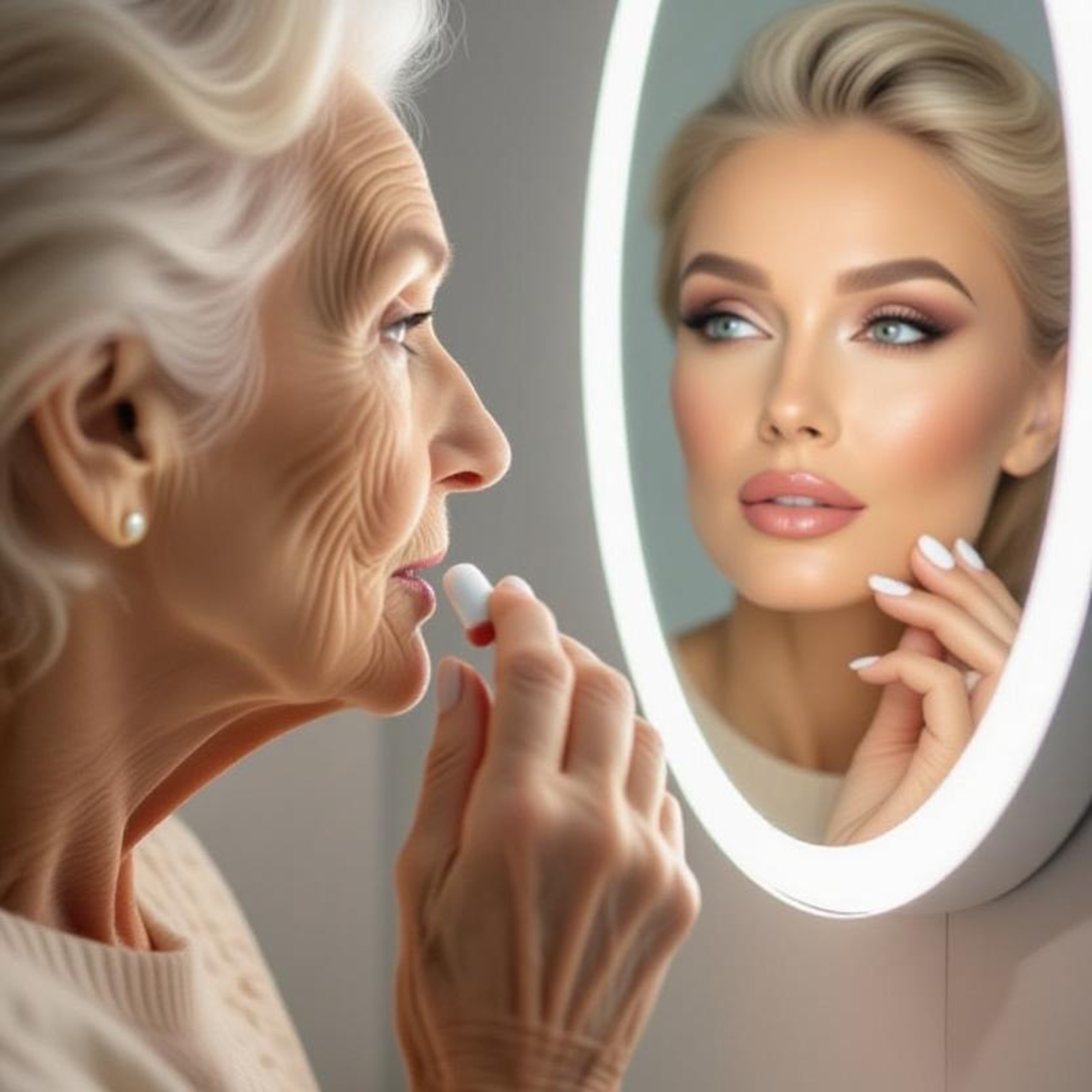
Ozempic and GLP-1 drug users are keeping plastic surgeons very busy.
In this episode
DoctorPodcasts || Cykiert Files EPISODE 126:#Ozempic users flocking to the knife. Dark side of #MedTourism disasters. Unrealistic #InstagramFace expectations. Watch board-certified #PlasticSurgery Dr. Fred Weniger: GLP-1s reshaping surgery, social media's double-edged sword, fake docs duping patients, & more!Watch all 126 episodes of the DoctorPodcasts || Cykiert Files video podcast interview show with physicians, scientists, healthcare specialists, entrepreneurs and other experts. Please SUBSCRIBE & FOLLOW @DoctorPodcasts. Please LIKE, REPOST/QUOTE and SHARE the episodes. Send questions, comments and messages to @DoctorPodcasts. Thank you. Robert Cykiert, M.D.
#robertcykiertmd
#robertcykiert
#doctorpodcasts
#cykiertfiles
#wegovyweightloss
#mounjaro
#zepbound
#bmi
#weightloss
#weight
#obesity
#overweight
#diet
#fat
#medicaltourism
#rybelsus
#plasticsurgerytips
#GLP1Era
#OzempicFace
#MedicalTourismRisks
#InstagramAesthetics
#FrederickGWeniger
#BoardCertifiedPlasticSurgeon
#CosmeticSurgeryTrends
#WeightLossDrugs
#FacialAging
#SurgicalInnovations
#PatientSafety
#EthicalDilemmas
#SocialMediaInfluence
#AestheticMedicine
#ReconstructiveSurgery
#PostOzempicProcedures
#BeautyStandards
#HealthcarePodcasts
#DoctorInterviews
#ozempic
#mounjaro
#zepbound
#wegovy
Welcome to episode #126 of the Doctor Podcast Sicard File Show, and I'm your host as usual, Doctor Robert Sicard. By the way, please subscribe, follow, repost, like, and share the Doctor Podcast episodes with everyone you know because that helps us have great guests like we have today. Today's excellent guest is Doctor Frederick Winegar. He is a board certified plastic surgeon with over 20 years of experience. He's doing all sorts of plastic surgery procedures and rejuvenating skin. Doctor Winiger has authored numerous articles in international and peer review journals and he's a speaker at many national and international plastic surgery conferences.
He's a member of the prestigious American Society for Aesthetic Plastic Surgery and he's also a Fellow of the American College of Surgeons, 2 very prestigious organizations. Doctor Winiger is based in South Carolina and has several office there including the famous Hilton Head Island. He provides all type of skin care, including Botox fillers and is also a highly experienced plastic surgeon and specializes especially in facial plastic surgery and facial rejuvenation. So Doctor Winniger, thanks very much for taking time and join us on the Doctor Podcast Show today.
Really appreciate your time and your expertise and your knowledge. Well, thank you. Thank you for having me. I'm, I'm excited to be here. Talk a little bit about what I love. Great. So the first topic I wanted to talk to you about. I'm an ophthalmologist and I take care of people's eyes and vision. But I noticed now that about 15% of my patients are taking the various GLP drugs either for obesity or weight loss or both. And also, some of them are taking it for diabetes, which also is associated with the obesity and weight loss issues.
And they're taking Wigovi or Ozempic, Mountjaro, Zetbound. Every patient's taking something different. And I noticed that many of them lose a lot of weight, but they also have lots of sagging skin in their facial area and in their neck area. And I recently read many articles in the general media and also in various medical journals about how the GOP one drugs are affecting the facial area especially and, and how it's affected plastic surgery. Can you give us some more details about that? Oh, my goodness.
Yeah. And I'll tell you what, probably not a clinic day goes by today, OK, that I don't see a patient who's on one of these drugs. Sampling error, I'm sure, but patients I see probably 50% that are here for body contouring, right are here after weight loss from those drugs. So this is as big of a deal, I would almost say for plastic surgery as you know, when Botox came around as and you know, how many times have we seen drugs or this that that are going to help people lose weight. But the effectiveness of these is unbelievable.
I'd say probably the average weight loss of someone that I see on these drugs is between 30 and 80 lbs. And I just did just three day Monday, you know, did a patient for body contouring around 100 lbs of weight loss. I mean, regularly I've, I've seen more than that. And so the number of people that come in for loose skin is like we've never seen. Wow. So this is generated a huge amount of patient volume for you. Now, is it difficult to to fix this sagging excess skin? Is it more difficult than in in patients who weren't on the GOP one drugs?
Are there things you have to look out for and things you have to do differently for these patients? No. It's it's similar in that it's the same operations that we've been doing, you know, tummy tucks and well shoot breast too, breast lifts. Everything droops with age, but everything droops faster when you lose a lot of. Weight, right? But what we used to call surgical weight loss and gastric bypass type, massive weight loss, let's just call it massive weight loss is a little different because the tissues aren't as good.
Let's say you have a certain amount of skin and your skin's a certain thickness, right? And let's say you double in size. Well, the skin gets stretched to half its thickness, right? I mean, it does grow also. But what we see as far as stretch marks, which is those are tears in the dermis. There's no dermis there basically anymore. So that, so how weak the tissue is, is, is an extra problem because you're not just sewing good stuff to good stuff, you're sewing stretched out things to stretched out things.
So it's not as strong in the end. And, and afterwards because of that, things are going to stretch more. So it is more challenging. But fortunately, we're sewing together things that aren't as heavy as they used to be because they're deflated, right? Right. That makes a lot of sense. The, the skin is, is much thinner because it was stretched out by the weight or the obesity. And so you're dealing with much thinner skin. Is that more of a problem if a patient has diabetes as well? Because diabetics just don't heal as well when you're suturing them and their skin may not heal as quickly.
Is that an? Issue yes, but think about this, I see so many patients who were diabetic or pre diabetic who are no longer taking their medicine, certainly not insulin anymore because of this, you know, I'll always ask patients, well, did you have a lot of these medical issues? You say you had this. Do you still have high blood pressure? No, I did I got off those medicines. Do you have this? I got I mean, it did really game changer from a medical standpoint. So that's, that's pretty, that's just wonderful.
But yes, there are things that go along with, you know, the medicine, Some people still have diabetes, but but probably a bigger issue. And it's, it's on the positive side when we're dealing with body contouring. We know now that the highest rates of complication aren't from smoking, aren't from diabetes. It's actually obesity, it's itself, it's body mass index, how thick the fat is compared to the stuff that you're trying to sew together. And you know, when we're suturing large amounts of tissue together, you're including fat in those tissues, which is not useful, it's harmful and the fat doesn't have as good a blood supply.
So when we do thinner patients who have lost the weight, it's actually far safer than if they hadn't lost the weight. So, so, you know, there's all kinds of unintended things we're finding or finding even over the last few years. And as we've done more of this that benefits and disadvantages in taking care of the patients. So things you wouldn't have thought of, but it it's, it's, it's still amazing. Right. So the key is just having a lot of experience doing this, your background of doing plastic surgery for many years and now you can adapt to that.
Now is, is it difficult to remove such huge amounts of skin? Are are there vascular issues associated with that? Or if somebody loses, let's say 80 or 100 lbs, do they need several surgeries and steps to remove the skin a little bit at a time? Or can you do it all at one surgical setting? Well, there's a couple parts of that. One is how much real estate are you going to deal with at one time? You know, are you going to deal with like circumferentially around the abdomen at once? I mean, in my book, I mean it depends different people.
Let's say that's a six hour surgery as an outpatient elective surgery already. I'm going to keep that patient overnight, but how far do you want to push it, right. So that might be one thing, a combination of arms, breasts and breasts, maybe arms and a breast lift or a breast lift with implants. Those are things that we'll sort of batch together because you don't lose weight in one spot, you lose weight everywhere. And we haven't even talked about thighs and we haven't talked about face. But but here's a fascinating thing about weight loss.
You know, someone gets double S their size, they need a lot more blood flow, right? And they're probably going to have a lot more blood volume, except there's not as much blood flow maybe going to the fat itself 'cause it's not really metabolically active, it's not doing anything. When you go back and operate on these patients after the weight loss, there's not twice as much thickness of tissue. There's a lot of skin. But the blood vessels are as big as you would have expected from back in the day.
All the, all the blood. There's the tiny vessels, you know, that don't even have names. But things that are important to us as plastic surgery that, you know, you don't learn in medical school, that superficial inferior epigastric artery. I mean, they can be big, so that that's pretty interesting. But what happens is that in the same operation as as usual, we're just removing a whole lot more skin and a tummy tuck instead of moving, removing this much skin. I mean, I've removed a foot and 1/2 in vertical skin access.
It doesn't weigh much but because it's deflated, but when you put it on the on the back table afterwards looking at it, it's amazing. Wow, so a lot of this is just judgement call based on your experience, how much you can safely remove at one time, and what parts of the body. You. Absolutely. So the key for patients who've lost a lot of weight and have the sagging skin is to have a qualified experience Board certified plastic surgeon like you. Results and safety. Right right now, what about I've seen a lot of social media and plastic surgery TV shows now a lot of celebrities claim they didn't have plastic surgery, they don't have Botox, they don't have fillers, but they all of a sudden look like they're 30 years younger.
How has social media and plastic surgery, TV and cable shows have a how they affected plastic surgery? Have they benefited or heard it? Are the expectations of of patients not good because of what they see on TV and on social media? The simple answer is yes to everything he just said. So is there more interest in plastic surgery? I think that's safe to say. Is there more recognition of different types of procedures? Yes. And is there, especially on social media, especially with younger people, are people kind of more aware of what we can do in different ways that we can do it?
Yes. So they're less confused about say what a breast lift does versus a breast implant, A facelift versus a brow. And then that's true. On the other hand, patients will come in. You were talking about expectations patients will come in with their the younger patients call them inso pictures, their inspiration and they'll say, can I show you some info pictures? To some extent it's good because I'm like, great. See the consult is it's about teaching. I think the consult is all about teaching. They're teaching me and I better be listening what they want.
And I'm hoping to teach someone on the same page and I'm hoping to teach them what's safe, what's possible and that sort of thing. So from that extent, the info pictures are great, but sometimes what happens when when you show you this person that I want to look like and my thought is, well, you don't look anything like this person, you know, I think you said unrealistic expectations and that can be that can be tough. On the other hand, it's a starting point for the conversation. OK, well here's what I see that's different.
Here's what I see that's attainable, but here's some structural differences in your face, some weight differences. How about some ethnic differences or, or skin differences from an ethnic standpoint thing, things like that that need to be sorted out, right? Because there's more general familiarity and understanding. But I don't need to tell you the devil's in the details. So a lot of it opens a lot of cans of worms that need to be. Addressed right makes sense, but it's a good starting point for a discussion.
So I guess overall, probably social media and TV shows are helpful because otherwise it would be more difficult to explain to these patients why you can't do certain things, why they're not possible with plastic surgery. So that's important. What about the the role of surgery versus injections and, and fillers and facial rejuvenation? Which is better or are they used for different purposes or do you combine those things for some patients depending on what they want and their age etcetera? Exactly, Yeah.
They're used for different purposes and they all have their role. Let's step back and say, OK, anything that comes out of a needle, any of your injectables can be fillers, which buildings and where we just say toxins, Botox discs are these sort of things that relax muscles, OK, And that's all they do. On the other hand, the face ages in three ways and you could say so does everything on your body. There's drooping, which doesn't necessarily have anything to do with volume changes. There's skin quality changes, right, brown spots, wrinkles, sun damage related to maybe accelerated by smoking, genetics involved.
And then the third thing we talked about drooping and and skin quality changes is volume ones. Now adding volume through fillers, you were saying, 'cause they fill, that's easy to understand and it's very helpful. And patients in their 30s forties, well really all patients are going to have some volume loss, which is why an overweight 50 year old looks better than if their face looks younger and then a very thin marathon runner 50 year old. OK, that's the volume that's super important. Fillers are extremely helpful.
On the other hand, what happens is patients, providers actually try to fill the drooping need with volume. Why? Because that's what a non plastic surgeon, that's what they have. And I can go on and on and on about what I see from the community, what patients have gotten, they've gotten filled and then they've gotten filled and then they've gotten filled because whoever's taking care of them can't do surgery. And you know, if all you have is a hammer, everything looks like a nail. So they just, they just keep getting filled, right.
And that's what in my seminars, in my book, what I focus on is for each of those types of three types of aging, there's a solution for skin quality. What do you do for skin quality? Medical skin care, lasers, chemical peels, that sort of thing for volume. OK, now you have fillers. And when I'm in surgery, I'm using your own fat to fill. I'm using back rafting with more than 50% of my facial surgery is probably a good bit more than that. And then for drooping, when patients come in and they they ask about fillers and they say, well, I want this.
I say, well, if you want to do this, you have to do this. And that's lifting. And again, it comes down to education that the fillers have a very narrow range of what they do it. It's the perfect solution for it. But if you look at direct to consumer marketing and what a lot of specialties are doing, that's all they're offering because that's all they sell. And that gets confusing and oversold. The unrealistic expectations from the patients because of providers. That's a tricky 1. You know in in practice what we, what we navigate day-to-day.
That's, that's very interesting. I didn't think of that, but I can think of some patients I've seen in my practice who I can tell have had fillers and they they've been overfilled, but that's. Overfilled filler face. Right. Yeah, exactly. And I'm seeing some of that in celebrities recently as well. I guess maybe they're, they don't want to have surgery, they're afraid of surgery and so they overfill. So you need a plastic surgeon that has both the surgical experience and the volume filling experience to combine them to get the best possible look rather than just doing one or the other.
What about, we touched on this a little bit in the discussion. What about the problem of people or patients who go to non board certified plastic surgeons and don't get the results they like? I've had some patients who've complained to me that their results were very poor and they had to go to another surgeon to fix it. How does a patient find a qualified, experienced, board certified plastic surgeon like you? If they're in South Carolina, they'll go see you, but what about the rest of the country?
Well, that's a frustrating problem. And it's it's a tough one. It's a tough one to answer for everyone. It's a tough one to answer for the patient because when you were talking about war boards or non board certified plastic surgeons, let's talk. We talked about, you know, if you don't offer if, if, if a practitioner doesn't offer surgery, you're not going to get offered surgery, even if it's the right solution, let's say it is the right solution. How do you make sure you're in the right place? And this has gotten really worse over the last five years because, oh boy, I'll tell you, I saw it's it upset me all day long.
It was kind of a disaster that I don't know that I can fix on someone's abdomen who had had liposuction. And I'm like, there was so much loose skin. They didn't need liposuction. They needed a tummy tuck. And and then I'm understanding. Well, the patient said, I don't really want to do anything to fix this. I was away for six hours of this. So I said you didn't go to a plastic surgeon. She said no. She went to life a family practice doctor. Really, who had and? Then I know someone who works in that office when they say someone went to a weekend course, it was a weekend course.
Come back with a liposuction machine. So what do you think happened to the very first abdomen that walked into that office? That how much is a loose skin like a weight loss patient? That guy suction caused so much scar tissue. All the skin is crinkled up into like a prune type shape that's scarred into that position now. So this is a top one because the patient went to a board certified doctor, right? Board certified by and board of family. Practice, right. That's that's terrible. So is there an organization that you would recommend patients go to that website to to find board certified plastic surgeons, not board certified other things?
You know, there's, that's a great point because you can look up an American Board of plastic surgery certifies us and, and, and you will people hopefully recognize the symbol for the American Society of Plastic surgeons. I don't think there is a board certified plastic surgeon that isn't a member of that society. So you can get an American Society of plastic surgeons ASDS website and and find out, you know, some names. Also, if you're like, wait, which board was it that he said, well, you know that the American College of Medical Specialties is who gives or who, who says these board certifications are legitimate?
I think there's 35, but then there's other people that you pay their money to when you get your board certification sign on the wall. And that is so confusing the patience. So I think, I think you have to ask questions. Wait, what board? And again, questions. And it's it's very, very hard to navigate because all the people in the other boards are trying to make it complicated, to make it hard to navigate to the right end point for a patient. That's why I say it's very frustrating. But I always tell patients, if you don't want to go to me, that's OK.
I want you to find someone who was board certified by the American Board of Plastic Surgery. Not cosmetic surgery, not this, not that, because you just don't know what you're getting. Right. So can you tell us what training you have to go through to become a plastic surgeon and then what makes you board certified? Maybe if we talk about that and stress that people will remember it more. You know, that's, that's a good point because why doesn't everybody just do that? Well, I'll tell you, it's, it's rough.
It's, it's long. A lot of it wasn't enjoyable because you go so much four years of college, right? And then you go to four years of medical school, right? And then you decide what you want to do, which is a tough thing to do. Now at one time, pretty much everyone went through general surgery before they a surgical especially, I mean, as you know, there was nothing other than surgery. I'm going to be a surgeon now. It's called a general surgeon, but everyone did that first. Now you can apply directly to plastic surgery residency.
There's only 86 spots in the country and so those are hard to get. And that's the, you know, top few people in any Med school who want to do it. Derms really tough too. And then that's it. It's anywhere between two and five years of general surgery. It's changed over the years. When I did it was 3 and then often times a research year, whatnot or two and then plastic surgery. So you're looking at being, I think I was 32 when I finish. And you know, it's a lot of training, which at the time wasn't fun, But just the other day you get yourself into situations that, wow, this is challenging.
I thought I even, I even texted a friend of mine. I said, thank goodness we did general surgery because I needed that for that patient. I didn't like general surgery, but my goodness it makes you a better doctor. Right. So you did three years of general surgery and then an additional two or three years of just plastic? Surgery turned out to be 3 but right. Exactly. Surgery makes you a good doctor. Taking care of sick people which is the hardest. What makes you better? Taking care of everyone, just keeping it safe.
Right. So that's that's the difference. Whereas the person who's board certified by the American Family Practice Board has no surgical experience basically. Now, Yeah, it's that's pretty scary. Now, on that topic going a step further, I've seen a lot of cases in the media recently of patients who go to South America or Central America or Mexico or Turkey or other places around the world. It's called medical tourism. Apparently they get the surgery done for less money, it's cheaper, but then they come home with all sorts of severe complications.
And recently I've read some cases where they don't come home, they actually die from some sort of botched surgery or complications in South America or Central America. What's going on with that? Why? Why are we seeing more cases of that? Speaking of scary coughs, right? Cost, you know a lot of it's cost. I had a patient that came back and it was difficult thing to treat because it's someone else's complication. And I had known her as a previous thing, as a previous, previous patient, right. And we had a great relationship.
She was happy said I know doctor, my friends were all going down here. They said, hey, let's make a trip, you know, and, and there were there were some nobody died. I mean, it's just some bad, just some bad results. And then what do you do about it?
I'm not, I, I'm going to talk about safety, but right now I have a patient who's not happy with the result. I make it right. Whatever we have a motto, whatever it takes, you know, if we need to revise something, you know, that's on me. I, I just want them to be happy 'cause it just, I mean, that's to have a good career, to have a long career, you need happy patient after happy patient, right? And you need to my family. There's another issue though, if someone has surgery in another country and something really bad happens, what's the recourse?
That's one thing to be concerned about. And what if that emergency happens a week after surgery? 2 weeks 'cause that can happen, right? These patients are getting sent home with really no follow up care, believe it or not. Instructions to go to the ER to have their sutures removed and that that's abusive of our health cares. That's hard to believe or to have a drain removed. I, I couldn't believe that the first time I heard it. But then you have this problem of when the patient comes back and has, has an issue, they had surgery, someone at somewhere else who's going to take care of that because now are are you, I mean, what this is a tough one.
And I jumped in and taking care of a complication because what are you going to do? But then there's, you know, a medical legal issue of do I want to get involved? But sometimes you just, you know, you're not going to say no, good luck with this. But there are some some problems also that can't be fixed. I don't know if you're familiar with the story of the, I think it was the three or four ladies that did one of these medical tourism trips, a girls trip for Tommy Jacks. There are four of them. I think one comes back, everything's fine.
She gets really sick, ends up in the hospital. They're asking her what did you what was wrong that you had your kidney removed for and she said I have two kidneys as they were inside they're working. So they CT scan the other three friends, they each had a kidney, taken an organ harvest in another country, which is, you know, you hear about this stuff but figured you'd never know and what are you going to go do? Go back to Turkey and deal with it. Wow, I haven't heard that story. That is just unbelievable.
That is such a hideous, horrendous thing. Yeah. And, you know, we would say that could never happen. It's unethical. But those are by our American standards to some extent. You know, there, you know, we know there are shysters everywhere, but I think it's a whole other level when you're not in a pretty reasonable society most of the time. Wow. Stealing an organ that's that's unbelievable. That's a whole different level. So I I think the recommendation is while you may save a few bucks, it's not worth it because if you wind up having a complication, you'll either get sick in that country, nobody take care of you, or you'll come back here and the people are hesitant to take care of you because it's either too complicated or difficult.
Or in a worse horrible scenario, they might steal one of your organs like a kidney. That's that's really terrible pays to save up a bit more and and pay the board certified plastic surgeon here, I think is a lesson from that. I I, I, I get there. I get why they do it, but it's your help, right? It's your child's mom. I mean, it's just save. Just wait. Don't do it. It's it's, it's scary. Wow. Yeah, definitely. And we touched on this a little bit. How do you deal with patients with completely unrealistic expectations?
Like, you know some guy who wants to look like Brad Pitt or you know some woman who wants to look like the latest supermodel on the cover of Vogue. And, and sometimes you can explain to them why you can't do that. But what if they insist on having surgery? Would you? Do you turn away patients where you say, look, I just can't do this? You need to find another surgeon. Uncomfortable when that comes up. That's probably my least favorite conversation, actually. There's two. There's two types of that.
There are two two versions. One is probably influenced more by social media that they think plastic surgery can make them look like a person that they will prefer to look like that they they want to be that person and they did. There's nothing about their face or whatnot that is going to make them look that way. Or it could be just as simple as just genetically a bigger bone person that I'm not talking about overweight. It just can't is, is not, it's not possible to look like that swimsuit model or that runway model, right?
That's a tough one. And to point that out and try to be sensitive about it. There is another problem. You familiar with body dysmorphic disorder? Yeah. There are patients who who really believe in, in a, in a mental illness way. In their mind, it's 100% true that there's something about them physically that's so bad it it almost ruins the rest of their life. Partly because they've had maybe these traumas and they brought it and they focus it on their nose. There I had a patient act. Now that I think about it, their mom was so mean to them, just constantly telling her she was ugly again and again and then mentioned part of it was their nose that 30 years later she was so self-conscious about her nose.
And that's and and when you see that kind of coming, you're like, oh, this is going to be rough. And I try to feel them out and I'm like, ma'am on AI think I think you look pretty good. But let me ask you on a scale of 1 to 10, if you were, if your nose was like, I don't know, an ear on your face and 10 would be like the perfect model nose. And I'm looking at a very pretty girl. And I'd say, where do you think you are? And they're like, I don't know one or two. I'm like, wait, wait, let me make sure you understand.
And then you just have to tell them, you know, I can't, I think you'll look great. I, I really don't think I can help you that much because there's no way you can fix their trauma. And, and it's not about their nose. And, and we know that it sometimes when you try to fix these patients, you add fuel to the fire because now they look more at their nose. Now they're constantly looking at their nose and won't leave the house. So you those people, you actually have to protect them from themselves. Right.
So you just have to turn away some patients and. It's, it's, it's tough and some people you want to say, you know, maybe you really do need someone who's more of an expert on this and that these patients, I will tell them, look, here's what I think. I think you're best off not doing anything. And I tell them there are about 10 surgeons in a row who are going to operate on that. And I really think you need to know that it's not in your interest people are going to do this. I think you really shouldn't.
Sometimes you have to say I, I think, have you talked to someone about this, like a therapist or something like that? That's an awkward conversation, but you have to try to help. I mean, kind of you have to be a doctor more, more than a plastic surgeon. That's that's a tough one, but it's part of what we do. Right. I occasionally encounter that in patients who come to me to have LASIK done. They want to get rid of their glasses or contact lenses. And I asked them, you know what? What is it that you don't like about your vision?
And they say, well, I don't see that. Well, I have to wear my glasses. All that like, OK. And and then they say something like, I want to be able to read a car license plate from a mile away in the dark. And that's. Yeah. And then I realized that I'm dealing with unrealistic expectations because I'll never be able to achieve that. And then I I have to explain to the patient that, you know, I can give you a perfect result, but you still won't be able to see a license plate from a mile away. So some of them are accepting of that, but some of them don't accept it and say, oh, I'm going to find a doctor who'll do that.
So we have to carefully do a psychological evaluation of patients, especially when we're doing surgery that's in the cosmetic. Realm absolutely. I my I, my grandpa is my hero, is a psychiatrist. I went to school wanting to be a psychiatrist and I became a surgical psychiatrist, I tell people. Right, that's great. So this has been very informative for me. I, I've learned a lot and I'm sure the audience will appreciate your honesty and explaining all these things and will help them make better decisions when they pick a board certified plastic surgeon to do their surgery.
So I really want to thank you for your time and expertise and knowledge that you've shared with us. Oh thank you for having me, really enjoyed talking about these things. Thanks.
 Apple Podcasts
 Spotify
 YouTube