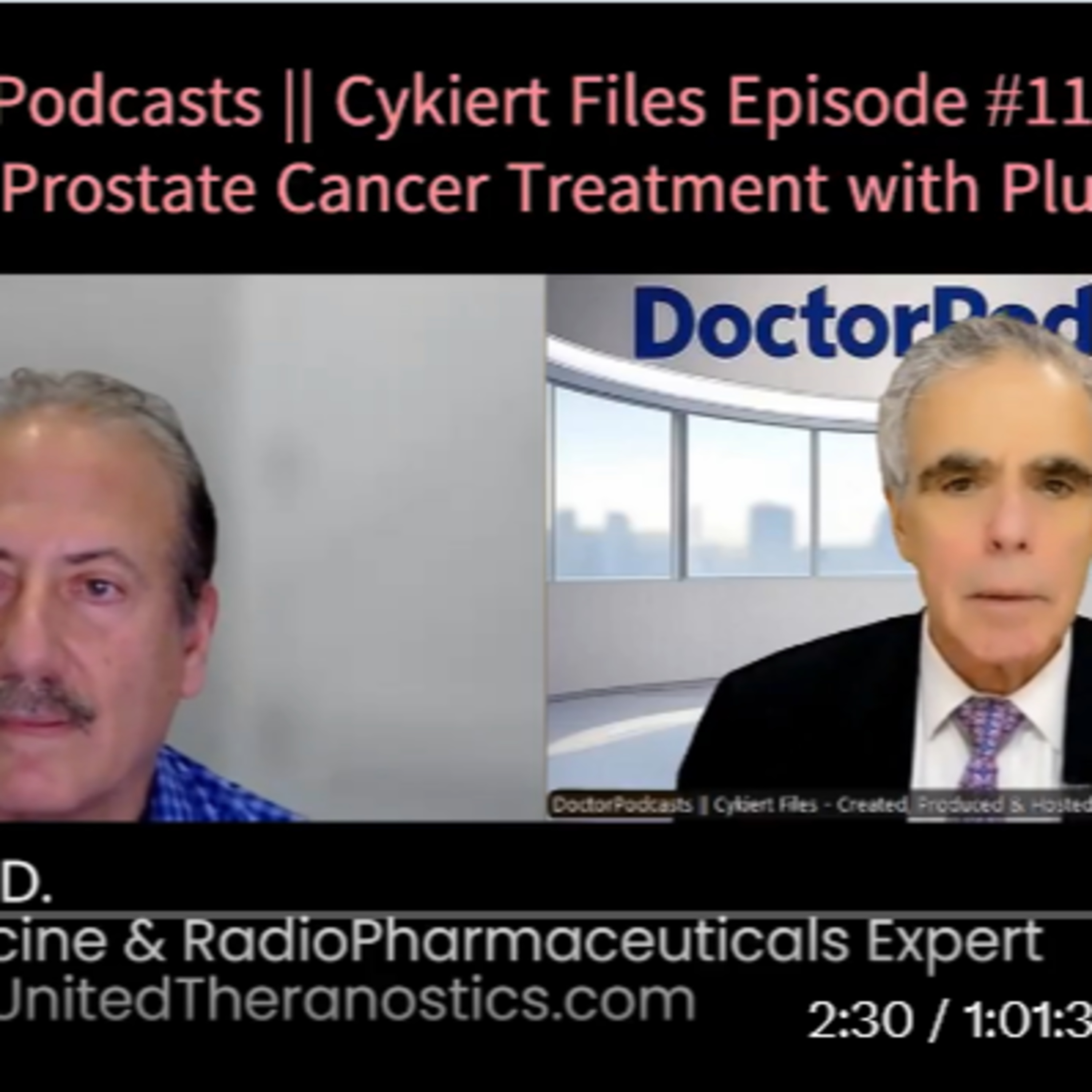
President Joe Biden has metastatic prostate cancer. Watch this for new treatments.
In this episode
#DoctorPodcasts Episode 115:Metastatic #ProstateCancer kills 35,000+ people in the USA annually. Former president @JoeBiden is at high risk. Watch Nuclear Medicine physician expert Eliot Siegel, M.D., co-founder of @usTheranostics discuss unique @Novartis RadioPharmaceutical drug @PLUVICTO_US treatment. More information available at https://www.unitedtheranostics.com and https://us.pluvicto.com
Watch all 115 DoctorPodcasts || Cykiert Files video podcast interview episodes with physicians, scientists, healthcare specialists, entrepreneurs and other experts. Please SUBSCRIBE & FOLLOW #DoctorPodcasts. Please LIKE, REPOST/QUOTE and SHARE the episodes. Send questions, comments and messages to @DoctorPodcasts. Thank you. Robert Cykiert, M.D.#ProstateCancer#MetastaticProstateCancer#Pluvicto#PluvictoTreatment#RadioPharmaceuticals#Novartis#Theranostics#NuclearMedicine#CancerTreatment#ProstateCancerAwareness#DoctorPodcasts#CykiertFiles#Episode115#MedicalPodcast#HealthcareSpecialists#ProstateCancerSurvival#ProstateCancerResearch#Oncology#Urology#CancerCare#PatientEducation#MedicalInterviews#HealthExperts#ProstateCancerTherapy#AdvancedCancerTreatment#ClinicalTrials#MedicalInnovation#CancerManagement#ProstateHealth#MedicalScience#HealthcarePodcasts
As everyone probably has heard, former President Joe Biden was diagnosed about a month ago with metastatic prostate cancer that spread to his bones and possibly other organs. Now, according to the CDC, there are about 250,000 new cases of prostate cancer annually in the USA, and there are about 35,000 deaths annually for metastatic prostate cancer. So it's a big problem in the USA and around the world. Fortunately, there are some new treatments available for patients with metastatic prostate cancer, and hopefully President Biden is listening because he might be a good candidate for this.
Now, today on the Doctor Podcast Show, we're going to be discussing one of those new excellent treatments for metastatic prostate cancer. And this is episode 115 of the Doctor Podcast Cycered Files program. And today we have an excellent expert on the topic that we just talked about, metastatic prostate cancer. It's Doctor Elliott Siegel. Dr. Siegel is a renowned radiologist and innovator. He's a professor of radiology and nuclear medicine at the University of Maryland School of Medicine. He's a pioneer in medical imaging and informatics.
He led the development of the world's first filmless healthcare enterprise at the Baltimore VA and created the National Cancer Imaging Archive, which significantly advanced imaging informatics. He's the cofounder of United Theranostics. That's a company which we'll talk some more about. And Doctor Siegel cofounded United Theranostics, which is a national leader in radiopharmaceutical therapy, which we'll talk about in detail, and molecular imaging, and it's dedicated to providing personalized cancer care in community settings.
With decades of experience in nuclear medicine, he's at the forefront of expanding access to cutting edge treatments like Plavicto for metastatic prostate cancer, which we'll talk about in detail. Doctor Siegel is authored over 300 publications. He chairs many national conferences on medical imaging, and he's a sought after speaker on AI and precision medicine as well. So, Doctor Siegel, thanks very much for taking the time to join us today on the Doctor Podcast program on a very, very important topic.
Yeah, it's really a privilege to have the opportunity to to share some insights and, you know, some of the exciting developments in the field. So thank you so much for having me on the podcast. Sure, now you Co founded United Theranostics to bring radiopharmaceutical therapies closer to patients. Can you share the story behind starting that company and your vision for making Theranostics accessible in community settings and tell us what Theranostics is? Yeah. So theranostics is actually a combination of 2 words.
It's a combination of therapy and diagnostics. And so the term theranostics, which has been coined quite a few years ago, really focuses on the idea of being able to create molecules and create therapies specifically that allow one to be able to both diagnose patients with a variety of different diseases and to treat those patients with diseases. Our focus is on using radiopharmaceutical imaging and radiopharmaceutical therapy to be able to both diagnose and then treat patients. And then after we treat them, then we diagnose them and do that in an iterative fashion so that we can create precision treatment and precision diagnosis for those patients in a way that really isn't popular with other types of therapy.
Right. So it's a customized treatment and it can be done in the community setting. Yes, exactly. And you know, you had asked about sharing the story about starting the company. I had a couple of former residents at the University of Maryland who came to me just a couple years ago or so and took me out to a dinner at a Chinese restaurant and told me that they had experience. And they had created a clinic in the Baltimore area that was called Advanced Molecular Imaging and Therapy. And that clinic was treating patients with Lutathera for patients with neuroendocrine cancers and Plavicta for patients with prostate cancer.
And it was one of the earliest facilities to actually utilize those radiopharmaceuticals. And really the, the story was that they had told me that they were hoping to be able to bring this type of care on an outpatient basis to because 60 to 70% of all cancer care actually takes place at an on an outpatient basis. And so those oncologists and urologists and other physicians who are treating patients on an outpatient basis in that Baltimore, sort of Washington, Philadelphia area really did not have options from an outpatient perspective.
They also wanted to, in addition to improving access, they wanted to be able to advance the field of nuclear medicine. And so in the United States, the general perception is that we're behind in nuclear medicine in comparison with Europe, for example. And the idea of being able to attract the best and brightest medical students to the field of nuclear medicine, the idea of being able to make nuclear medicine a really strong subspecialty in medicine associated with this brand new pioneering field was really the goal of theirs.
And my response to that is, well, if you want to improve patient access on a really large scale, and if you want to change the whole practice of nuclear medicine in the US and really improve that practice and make it desirable and be pioneers, how about if we essentially extend it to the entire country? And how about instead of maybe two or three centers, what would it be like if we had a goal of having access to patients in every state in the United States and allowing patients to be able to benefit from this brand new, exciting and emerging branch of of oncology and nuclear medicine?
So they were enthusiastic and asked me if I would join them in the practice that they had already and work with them to build up the practice so that we would, over the course of several years, be able to achieve that goal where we could provide outpatient access to this really exciting nanotechnology that we believe will cure overtime, thousands or millions of patients over the next several years. Wow, so it all started on a napkin in a Chinese restaurant, right? Yeah, it it almost sounds like a a plot for a a a movie, but that's exactly how it started.
Wow, that's great. Now your company recently secured $15 million to expand its network of clinics. And how will this funding enhance access to therapies like Plavicto around the USA, especially for patients with advanced prostate cancer who have difficulty traveling and and getting around? And how many centers do you have now? Yeah. So we currently have three clinics that are open. We have the original one in the Baltimore area, and then we have one that's in Princeton, NJ. And additionally, we have one in Las Cruces, NM.
And you might wonder, you know, why Las Cruces and why Princeton specifically? And the answer to that is that part of our goal is to find the very best physicians for our clinics. And so one of my former residents at the University of Maryland just happens to live in Las Cruces, NM. And it certainly is consistent with our goal of bringing this brand new nanotechnology to an area of the country that really would not have access to it otherwise. Princeton, NJ, happens to be the home of the former head of nuclear medicine at Mount Sinai Health in New York, Doctor Munir Ghasani, who also was the president of the Society of Nuclear Medicine and Molecular Imaging.
And so he left his position as head of the department in New York, and he happens to live in Princeton, NJ And so it was really a great match also. So those are the three centers that we have open. But by the end of the year, we're also hoping to open centers in Chicago and Los Angeles and then soon to follow in Dallas, Orlando and a number of other places. And hopefully in the next 5 or 6 years or so, we would meet our our dream goal of being able to provide really high quality access to this emerging exciting technology for all patients that that need it.
That's really exciting and and wonderful that your former residence people who you've taught in the past are now working with you on on this. That's really very nice. Yes, yeah. It's been really satisfying working with people where I had the opportunity to serve as their mentor. And then Dr. Ghassani has become our Chief medical Officer. And so I know a lot of people from my experience in diagnostic imaging and Dr. Ghassani knows so many people. And so, you know, part of what we have been doing is recruiting some of the best physicians in the country to come to join the practice, which is really a combination of not only clinical care, but also research.
Research in a way that would be comparable or even, you know, higher quality than much of the research in some of the major academic centers. And so being able to combine this clinical care with research, with clinical trials, with a precision and informatics perspective has allowed us to be able to take this exciting technology to the next level. That's great. So your company's also doing clinical trials for new radiopharmaceuticals. We are in. Fact, there are dozens and dozens of candidate molecules for a wide variety of cancers.
And so now the major cancers that we're seeing are patients with neuroendocrine cancers and prostate cancer, with prostate cancer being so much more common than neuroendocrine tumors. But as time goes on, we're doing clinical trials now, multiple clinical trials in areas where we're looking at being able to treat patients with breast cancer, lung cancer, pancreatic cancer, colon cancer, ovarian cancer, Melanoma, pretty much, you know, the the major cancers. And so this approach of being able to create design or designer molecule specifically to be able to find quote, UN quote, the address on specific cancer cells has been really an incredible focus within pharma.
And over the past short number of years, there have been billions of dollars, perhaps 10s of billions of dollars invested in finding molecules that will not only find the cancer cells so that we can create images and diagnose the cancers, but also to be able to utilize a similar approach to be able to then deliver a payload of radiation to those patients. Right. So let's get deeper into the Pluvicto therapy. First, tell us what is PSMA positive prostate cancer and what is the mechanism that Pluvicto uses to get to those cancerous cells in the body?
Yeah. So PSMA positive prostate cancer refers to prostate cancer cells that express a very specific protein on their surface. That's called prostate specific membrane antigen, which is a PSMA. And as I mentioned, you can kind of think of it as a unique address on a cancer cell. The vast majority of prostate cancers, especially those that spread outside of the prostate, are PSMA positive, meaning that they have these PSMA receptors. And so that makes it a really excellent target for precision medicine.
And so if you remember the movie from I guess the 1960s Fantastic Voyage, where they took a submarine, the Proteus, and shrunk it down to the size just a bit smaller than a red blood cell, injected it so that it would be able to go through the bloodstream and treat a disease in a patient that had sustained trauma. In this particular case, these nanoparticles are thousands of times smaller than even that Proteus in the in the movie. And at nanoscale, there has been an incredible concerted effort to develop specific molecules that will find specific types of cancer cells.
And so PSMA is one of the earliest ones that was developed. Initially, it was utilized to diagnose prostate cancer outside when it is spread outside the prostate. And so PSMA diagnostic imaging has become a major game changer. And so patients that have an elevated PSA who then have a biopsy of their prostate, they need to have a determination made about whether or not the cancer is only in their prostate or whether it is spread outside of their prostate. Whether it is spread to lymph nodes around the prostate or other lymph nodes in the abdomen or pelvis or to the bones or lungs or or liver.
And the reason that it's so important is that if it's only in the prostate, it's possible to do surgery or radiation therapy and treat it effectively. But once it's outside the prostate, radiation therapy really is not able to treat prostate cancer that has spread to lymph nodes and these other organs. And surgery really becomes something that is not able to treat the patients at that point, right? And so they have limited options. Right all over. Right, exactly. Yes. And so the idea of being able to inject these nanoparticles that selectively are injected into the bloodstream and find those cancer cells, whether they're in the prostate, whether they're outside the prostate, whether they're in the bone marrow, liver bloodstream or in the bones is really a game changer and allows us to be able to have a precision that we don't have currently.
The analogous treatment is chemotherapy, taxane based therapies. The challenge with those is that they have a really significant number of side effects associated with that therapy. Their efficacy, their effectiveness is unlimited. And so the question is, is there a smarter, is there a more precise sort of magic bullet to be able to find and treat cancer cells? And so both Pluvicto and Lunaferra have been the earliest FDA approved medications for treating patients utilizing that approach. And I think we're just starting to scratch the surface.
Right. So tell us what the Pluvicto nanoparticle is specifically? Yeah, right. So specifically, it's part of what we call radiopharmaceutical or radio ligand therapy. And there are two parts of it. 1 is a targeting part, and that's the part that finds and binds to the PSMA on the cells that we were talking about. It's almost like a magnet direct. It's almost like a magnet or it's almost like a key that fits into a a lock. You can think of it that way also. And so now we can inject this material and we can image it by tying it to a radioactive substance that will allow us to create a picture that shows us a where is PSMA throughout the body.
But even more basically, is the type of cancer that this patient, any given patient has, does it really express PSMA? The majority do, but it's not 100%. And then the second part is a therapeutic part. So it turns out that you can take the targeting part and then take that key that we were talking about that fits into the lock and add a piece to the key that represents a tiny radioactive particle. In the case of Pluvicta or Lutathera, it's a lutetium 177 molecule and or atom and so on. That radioactive particle then is delivered with the key that then ends up fitting into the lock.
And so the Pluvicto combination targeting and therapeutic parts are then find the surface of the cell and then they end up through a process called endocytosis, actually getting engulfed into the cell or swallowed into the cell. So the cell swallows this radioactive tiny particle. Exactly. And then once it gets into the cytoplasm of the cell internally, then it's even closer and it's essentially bound now to the cell and it ends up impacting the DNA structure within the nucleus of the cancer cell.
So now you have cancer cells that have these beta particles that are being emitted by the lutetium 177 that disrupt the strands of the of the DNA. And so one of the types of radioactive particles and the one that we're using currently are called beta particles, which really represent an electron. Wow, that's amazing. Now how specific is this targeting? Does it get into normal cells or or other types of cells in the body that really don't have cancer? Yeah. So that's a great question. And indeed they do the way that they're eliminated in the body and the areas that they go to or they're eliminated through the kidneys and also they end up going to liver, they're eliminated through a stool and eliminated to some extent through a sweat.
And so these, the Pluvicta or Ludaferra ends up going to the salivary glands, ends up going to the kidneys and liver and bone marrow. And so one of the things that's so unique and so interesting about these radiopharmaceuticals is that not only do we have the capability to image where they go, which is completely different than chemotherapy. When we give chemotherapy, we're hoping it works. We're hoping it goes to where it should. But we don't have any mechanism to be able to know or image, whereas we do have that capability with these radiopharmaceuticals.
Not only that, but perhaps as important or more important, we have the capability of being able to measure how much of the dose that was administered goes to all of these other areas. So we have the ability to read out how much of the dose went to the kidneys, how much of the dose went to the bone marrow, how much of the dose went to the liver. And by doing that, we're able to determine for every patient what is the specific dose that that patient had. It may be that one patient's kidneys clear out the radiopharmaceutical more rapidly and maybe have a different dose.
It may turn out that another patient has a larger or smaller liver dose. And so this gives us the the potential, especially moving forward in the future to be able to tailor the doses specifically to a particular patient. So if we know what the toxicity levels are for the patient, then we can tailor the dose to that. In general, what we want for our patients is to be able to deliver the highest dose, but the safest dose or a highest dose within a safe parameters. And so the amount that would be optimal in patient A may be different than B&C.
So after we give our therapy to the patients, we then are are able to image those patients using spec CT, which is a type of nuclear medicine camera. And we're able to image them not just right after they've had their therapy, but multiple times for days after they've had their therapy. So it allows us not just one time point, but multiple time points. So for the kidneys, for example, we can construct a curve of how much activity is in the kidneys over the next few days after they've had their therapy as it ends up clearing through their kidneys, through their liver, through their bone marrow.
And we can measure the dose so that we can make sure that the dose that we're delivering in future doses is optimal for the patient. We also are able to take a look at how much of the dose was delivered directly to the cancer cells and we can measure that also. So this dosimetry that we're doing that allows us to be able to visualize the therapy that we've given and to quantitatively determine the dose that the different organs received allows us to remain safe yet as effective as possible. There is no other therapy that allows one to be able to deliver treatment and then measure throughout the body exactly what the exposure was to all of the sensitive organs and to the cancer cells, which is something that's really unique and why this is, you know, referred to as precision or personalized treatment.
Right. So it's targeted and also customizable and and precise that that's amazing. Yeah, that's a great summary. Yeah. How long does the Plavicto stay in the body? And I assume patients are kind of slightly radioactive for for a short period of time. How long is that? Yeah. So the amount of time that it stays in the body for Plavicto, for example, is approximately or the half life is approximately 6 days. But it's important to note that because the patient is clearing it through the kidneys, clearing it through stool, through sweat, that that dose is not only physically decaying as time goes on as far as the amount of radioactivity, but the body is constantly clearing out the radioactivity from the patient's body.
And so the good news is, is that it's cleared out. The half life is 6.7 days, for example, for for Lutetium on 177, which is what is used for both Pluvicto and Lutathera, But there are precautions to to minimize exposure to loved ones and so for a few days after the treatment, typically two to seven days, depending on specific guidelines in the patients. We advise patients to limit close prolonged contact with others, especially children and pregnant women. The patients are advised to flush the toilet twice after use and to wash their hands thoroughly and frequently.
Drinking plenty of fluids is so important because it helps to clear the radioactive material from the from the body more rapidly and travel. We give the patients a card to indicate they've been given a radioactive medical treatment because when the patients go to the airport, for example, then the detectors are so sensitive that they pick up the radioactivity. And so these patients are questioned about it. Just parenthetically, I had a friend just recently get pulled over by the local police here in in Delaware.
He had had a cardiac nuclear medicine scan. And it turns out that the police now have sensors or radioactive sensors that are so relatively sensitive that they were able to pick up minute amounts of radioactivity that are only a small fraction of what we deliver for for therapy. And so, you know, having those cards allows patients to be able to explain much more readily and rapidly, you know, the fact that it was a medical treatment. But those are all things that we counsel our our patients on. Yeah, that's that's good to know.
You you don't want to wind up in TSA jail after a. Exactly. And, and you know, it helps the TSA agents, you know, really rapidly understand what the issues are. Right now, is the pluvicto given intravenously an injection into a vein? Is that how you? It is, yes. It's infused over a period of time and the time is different for Plavicto over Lutathera in comparison to Lutathera. But these patients come to our centers and end up spending time in the center receiving the radiopharmaceutical therapy.
But it's really only at that infusion is really only a part of the the whole therapeutic process. These patients come to us initially often referred by their medical oncologist and increasingly they're referred by their urology providers. And we initially evaluate the patients, evaluate all of their medical records and in really close consultation with the urologist and the medical oncologist, we end up working collaboratively with them to be able to provide the subspecialty type of therapy. But you know we become their subspecialist providers and we are in constant communication with those referring physicians.
But during the safe six weeks times six week cycle, we have 6 cycles every six weeks for PLUVICTA, for example. You know, these patients come to us and we become their providers for this therapy. And so we get to know the patients, we get to know their families. When the patients have issues that may or may not be related to their therapy, for example, dry mouth or changing in taste, for example, during the therapy, but even other issues, they often come to us and see us as their providers. And so, you know, it's not really just that we do the infusions, but we really become their subspecialty providers in concert with their other providers for that period of time that we're treating those patients.
And so the emphasis on clinical care and direct, you know, a patient involvement is really critical to the quote UN quote DNA of our practice. Right. So how many treatments are there and over what period of time? Yeah. So for Plavicto, it's 6 cycles of in of infusion of Pluvicto and that is every six weeks. So the total period of time is 36 weeks. And during that time, the patients will undergo multiple PET scans, PSMA PET scans, and maybe FDG PET scans to better evaluate the treatment response and to see how well patients are responding to the the therapy that we are giving.
We also do multiple SPECT CT scans that allow us to be able to determine the dose that the patients are getting with each treatment so that we have the capability to be able to modify the number of treatments. Right now, the FDA approval is for exactly 200 millicuries in every single patient. And that's really just because the approval utilized the same dose that was being used for the clinical trials. But in discussions with FDA and the way that patients are treated outside the USI think that we're going to evolve very rapidly to being able to do individualized doses for the patients.
Some patients may need more than that 200 millicuries. Some patients will invariably, you know, need more, some need less. And so being able to utilize the dose symmetry is really critical. And the dose symmetry is absolutely essential for all of the different clinical trials that we're doing. And so that becomes important because as we do the clinical trials, it's really important to know where the radiopharmaceutical is going and exactly what doses are being delivered to the tumor and to various organs.
Right. So what kinds of outcomes are you getting now? And is it true that the quicker the patient is treated, once the diagnosis is made, the the better the outcome? Yes. And so that's a really important and insightful question. And so, you know, we evaluate a number of things. We evaluate of course patient mortality, but we also evaluate quality of life, overall patient
health and also a pain management also. And so in line with the results of the vision trial, we consistently observe patients having improved quality of life, enhanced mobility and a significant pain relief. It's not uncommon for patients who initially present for consultation in a wheelchair or Walker end up experiencing mobility after just a few cycles of Plavicto. And so they typically see excellent disease symptomatic improvement with Plavicto or at least disease stability in most cases. In some cases we've actually seen a complete change where there's now no evidence of residual detectable disease, at least in the, you know, relatively short period of, of years that we've been treating patients.
But you know, most of the patients we end up essentially treating their symptoms, slowing down the progression of their of their disease. But you know, it's important for patients to continue to follow up on their disease with the PSMA. And so we can continue to monitor these patients also. And what's really been interesting have been combination therapies looking at the possibility of doing Pluvicta or Lutathera with a variety of other treatments, including new immunotherapies. PARP, which is a Poly ADP ribose polymerase treatment, which essentially takes away on one of the repair cycles for patients who have BRACA one or BRACA 2 mutations with their prostate cancer.
You're probably familiar with BRACA for breast cancer, but it represents a repair mechanism and we can inhibit that repair mechanism with PARP, new immunotherapies and repeat hormonal therapies. All of these, in addition to radiation therapy, are potential combinations that we can apply along with the radiopharmaceutical therapy that we're doing. Right now, before Plavicto, the treatment was just hormonal therapy basically, right? Yeah. So hormonal therapy is still a mainstay. And so once a patient is diagnosed, then hormonal therapy becomes the initial thing that a patient has once that patient is diagnosed with with prostate cancer.
And then as the patient's PSA values may continue to go up as they're monitored after they've had prostate radiation therapy or prostate surgery, then the next question is whether to change them and to modify their hormonal or androgen deprivation therapy or to look then at that point at a chemotherapy. So the taxane types of chemotherapy. But after those chemotherapies did not work or after they failed and a patient still had castration resistant prostate cancer and metastatic disease, then at that point, Pluvicto became the next in line.
What's happened recently, just in the last couple of months is the FDA has now approved based on clinical trials that have been done recently. They've the PSMA for trial. They've approved the ability to be able to give Pluvicto prior to taxane therapy. And So what has been found is that patients do really well after they have tried one of the hormonal therapies. And if that doesn't work, then going directly to Pluvicto, putting off the taxane therapy and allowing them to be able to go directly to radiopharmaceutical therapy has been proven to be really highly efficacious and is significantly better than the strategy of changing them to another hormonal or androgen deprivation therapy.
And so to your point, it turns out that now we are able to treat patients significantly earlier in the process and be able to essentially attack the disease even earlier. And so this allows us to be able to delay the time period at which they would then be changed to a taxane therapy. And this is a major game changer. It also means that we're able to work with the urologist directly before they begin referring patients for chemotherapy. Now crapolating that a little further can opt out of hormone therapy because it has a lot of side effects and just.
Go yeah. So hormone therapy, even with plavicto, is still a mainstay. And so it turns out that the, you know, hormones end up nurturing and accelerating the growth of the prostate cancers. And so we really don't have a mechanism at this point to stop that phenomena from taking place. And so at this point, we continue to do the androgen deprivation therapy along with Plavicto. It would be great at some point to be able to obviate the need for that hormonal therapy, but at this point it still is best practice by far to to utilize that in addition to other types of therapy.
Right. So the androgen deprivation prevents progression and then at the same time the plavicto kills whatever cancerous cells are around. That's correct, yes. That's, that's amazing. Now, I mentioned earlier about President Biden, he was diagnosed with metastatic prostate cancer, Gleason score 9, which is and it, it spread to his bones. They didn't mention if it's spread to other organs. I had this suspicion, you know, he's had some cognitive issues as well in recent years. And I was thinking, does he have brain metastases from the prostate cancer, which isn't common, but it it can occur.
Do you have any thoughts on that? And as a theranostics expert now, can you explain what his diagnosis means in terms of disease progression and? Treatment. Yeah, happy to to to do that. So I mean, when we hear a diagnosis like former President Biden's metastatic prostate cancer with a Gleason score of nine, which is significantly higher than we typically see for a Gleason score, even in patients with metastatic disease, it indicates a really aggressive and advanced form of the disease. Gleason's score of nine signifies the cancer cells are highly abnormal and have a strong tendency to grow and spread quickly.
Metastatic disease to the bones essentially makes this stage 4. As you pointed out, they haven't really shared whether they've done the PSMA study to determine whether the cancer is in his lymph nodes, whether it's in other organs. It would be unusual. Prostate cancer typically metastasizes to the brain very late, so that would be less likely, but a PSMA study would allow us to be able to know all of the different areas that are involved. One interesting thing is even though it may seem to be counterintuitive with extremely aggressive, highly undifferentiated prostate cancers like you might see with a Gleason 9, they can sometimes have changed in such a way that they do not express the PSMA.
And so in some instances in patients with really advanced, very aggressive tumors, you may not have PSMA expression. That's why it's so relevant and so important to have a PSMA PET scan for the former president. And crucially, PSMA PET is really the ultimate determinant for somebody like the former president. That scan would be performed to confirm if indeed the metastatic lesions that we know he has to the bone are indeed PSMA positive. If they quote, UN quote, light up on the scan regardless of the Gleason score, it means there's sufficient PSMA expression for targeted therapy.
And in most patients who have a Gleason score of 8 or 9 or in these higher, more aggressive tumors, they do express PSMA and they are responsive. But there is a small subset that would not be so in his case. It would be important to do that PSMA study. I'm confident that he's in good hands from a oncology perspective and that I would imagine that they would have done the PSMA study at this point and and would know where that metastatic disease has spread to in addition to bones, if indeed it is more than than just the bones.
You would think so, but from what I read his last PSA test was in 2014, which is surprising. So it looks like they either didn't do it or they missed it. I'm, I'm not sure what happened there, but it's, it's kind of unusual that he didn't have that test for over a decade. Yeah. You know, I think that the issue is really one of screening and patients who have a greater risk, For example, African American patients or patients with a history of family history, strong family history. Those patients should probably be screened early on in their 40s, in in the patient's 50s.
It's important to discuss getting PSA studies with patients, physicians and certainly patients in their 60s should also. One of the interesting things is that there has been a recommendation not to do PSA screening in patients who are 70 years or older. But the the challenge really is that I think the screening decisions are highly individualized. There are a lot of people who are otherwise really completely healthy and in their 70s and would have an expected significant life, you know, a significant number of years.
And so I strongly believe that those patients should be screened in their 70s. And so I think it's a decision with one's physician. But I, you know, do believe that, you know, looking at the guidelines and then taking each patient into consideration is really important. So I think they did probably follow the guidelines after 2014 or recently to not do the studies. But I believe that in many patients cases, and I would imagine the president or former president as well, you know, one can and should continue screening past 70.
I think the reason not to screen would just be the fear of false positives or the fear of finding a non aggressive cancer and then having a patient be more aggressively worked up, which could potentially do more harm than good. But my own feeling is I, I really am a strong believer in screening. And so I think that the decision after 70 should be individualized to each and every patient. And so I, I, I agree with you. I I think that in retrospect, you know, it may have made sense in his case to have continued to do that screening.
Yeah, I think it's important to screen once a year and if it's negative then you don't have much to worry about. If it's positive, you can then discuss the pros and cons of further diagnostic procedures like biopsies or treatment, but you have time to do that. On. Screen and you're just kind of guessing, you have no idea so. Absolutely. And then with PSMA, PET imaging, even more than that, we have the capability of directly visualizing the cancer cells themselves. You can have an elevated PSA not uncommonly due to an inflammatory process, prostatitis, which is very common.
And so it turns out that it can be a dilemma in especially older patients who have a higher incidence often of prostatitis, whether or not that elevation represents cancer or an inflammatory process. And getting serial Psas over time, which is another argument for screening, allows one to know whether or not somebody is significantly elevated compared to their baseline and then to get another PSA within a relatively limited period of time to see whether or not there's a significant change. It might drop if there was prostatitis significantly, might steadily increase in the case of cancer.
So I, I, I think that screening is really important. You mentioned the ex President Biden and you know, his team mentioned hormone therapy in a daily pill. And so that most likely represents a powerful combination treatment designed to suppress testosterone in two different ways. The first way is essentially androgen deprivation and its primary goal is to stop the testicles from producing testosterone and that's typically an injection, although sometimes it can also be a, a, a implant under the skin.
And then the other one is that a daily pill that is probably likely a second generation androgen receptor inhibitor. And so that is a second weight. What that ends up doing is it blocks any remaining androgens from fueling the cancer cells. And so those two together in combination will minimize the impact of the propensity of testosterone to accelerate the growth of of cancer cells. Right I I have a feeling you'll be seeing him in your center very soon. Yeah, well, I, I think that he would be appropriate.
And you know, what's really important is that when well known people, you know, develop a, a cancer, it really raises people's understanding and vigilance for their own family members and for themselves. And so I, I, I believe that, you know, the brave thing that he did to essentially announce, you know, what his health was and share that really will save so many lives by people looking at doing just what we've been talking about. And that is in PSA screening, understanding that there are therapies beyond just the chemotherapy with it's this new generation of radio pharmaceuticals.
I know so many urologists and even many medical oncologists are not fully aware of radiopharmaceutical therapy and certainly patients to much lesser extent, which is why I'm so grateful that, you know, you're making a radiopharmaceuticals, the subject of, of this podcast. And you know, for United Diagnostics, really the one national outpatient provider, you know, to make patients aware and providers aware of this as a treatment modality. And we would then ask, you know, the patients to go back to their providers, ask about it and to, you know, be able to make sure that it's an option for those patients.
Right. Yeah, what what triggered me to do this episode is I was shocked to see that President Biden had metastatic prostate cancer and that wasn't picked up earlier. And then in my research of treatments for it, I came across Plavicto and and your company and I decided it was a good idea to do this to bring more attention to the problem because as I mentioned, about 250,000 cases annually and many deaths. So the public should know about this now. Yeah. As a leader in the field, what key trends in theranostics are you most excited about?
And you mentioned earlier that this may be evolving to treat other cancers. Where? Where are we with respect to that? Yeah, so it's really exciting. I mean, the this field is just in its infancy. And so there's incredible things that are going on with precision oncology and radiopharmaceutical therapy, and I'm really excited about those. So one of them, as you mentioned, is expansion beyond prostate cancer. Even though it's a fantastic success story, the most thrilling trend is the exploration of theranostics for new cancer types and targets.
We're seeing intense research and new targeted therapies, brain cancers, lung cancer, breast cancer, I mean I talked about a number of those already and I think that it really broadens the reach. I would not be surprised if we have 10 radiopharmaceutical options that are FDA approved just in the next relatively short number of years. The other thing is novel isotope on development. So we talked about beta particles, which are electrons, but it turns out that the next phase and what we're already doing clinical trials in are alpha particles.
So instead of attaching to that key that we were talking about a beta particle, we actually have the capability of being able to put an alpha particle, which is the nucleus of a helium atom. It's essentially 2 protons and two neutrons. That is 8000 times the mass of an electron, which means that these alpha therapies, which are being used for prostate cancer and neuroendocrine cancer, now have the ability to be able to utilize this particle, which actually once it gets to the cell, travels even a shorter distance.
So it's very targeted, it stays in the cell and yet it's 8000 times the mass. It's able to completely obliterate a portion of both strands of the DNA. And so, you know, we're looking and really excited about patients who are even failing the beta radiopharmaceutical therapy. Now the alpha therapies are out and available and are really incredibly exciting. And so that is a just a brand new world. So now we have multiple different molecules that are being developed for different cancers and now we have the ability to deliver a payload of a beta or an alpha particle.
And then the other thing I'm excited about are the combination therapies. I mentioned park therapy, but there's combination with external beam radiation and immunotherapy and others. And so rather than just looking at radiopharmaceutical therapy in isolation, the ability to be able to combine it with other therapies is really exciting. And then as you know, I have a really strong interest and run a national conference in artificial intelligence. And the ability to be able to essentially, as we end up seeing thousands of patients across the country, being able to take every patient, not just the clinical trial patients, but just imagine the ability to create information systems and data lakes and analytics using large language models and other AI tools.
And being able to, for any given patient, looking at all their information and looking at what would be for that particular patient, the right combination of therapy, the right dose, should it be an alpha or beta, which particular therapy? And you know, even the cancer therapies that only work in 15% of patients, just a hypothetical cancer therapy that worked in 15% of patients, If you knew which 15% of patients those were for that hypothetical patient hypothetical therapy, then you would be able to essentially cure 100% of patients that you're treating.
And so it's patient selection for the right combination and the right treatment and being able to have these radiopharmaceutical therapies along with AI to be able to mine and analyze the data, being able to utilize the dosimetry data with AI, being able to look at the images and analyze where the cancer is in a way that may surpass what we can do with our, you know, typical human eyes and human vision. Those were all incredibly exciting AI applications. And as somebody whose career has really focused on AI and data analytics and digital systems, being able to combine that with the latest and greatest therapies has really been exciting and gratifying.
Yeah, the diagnostic potential is huge. I'm interviewing a radiologist in a few weeks from Harvard who recently got approval from the FDA for imaging using AI that can predict the risk of developing breast cancer from mammograms, which is incredible. And it's it's using AI. Yeah. And and taking that same strategy, looking at a mammogram and predicting the relative risk of cancer, knowing a patient's history and knowing other information and looking at the images is completely analogous to what we can do with the nuclear medicine and CT images and SPECT and dosimetry that we have.
And perhaps even in some ways you know, multi modality data collecting it from MRCT, PET scanning, SPECT scanning and potentially even within PET, looking at FDG PET, which is the one that most people know, fluorideoxy glucose and then PSMA and other radiopharmaceuticals that multi modality imaging to then be able to diagnose patients and predict the type of cancer and which patients will respond is is incredibly exciting. Now most cancers have specific antigens or proteins on on their surface. So I would I would think that you could create models for just about every type of cancer with that lock and key mechanism that you described.
Yeah. So there's about 100,000 candidate model molecules that have been investigated. Of those about 150 are really promising and major drug companies are looking and my and smaller drug companies are looking at those 150. And of those a subset will get FDA approval in the US over over time. And so there's so much need right now or theranostic centers to be able to do clinical trials to investigate all of those new candidates and to be able to treat patients, which is why I'm hoping that you know what we're doing in the outpatient space, which you know, there are so few centers that are doing it.
I'm hoping that there will be others that provide that access that patients so dearly need. There are so many patients that are not geographically close enough to be able to have that six cycles of therapy over the 36 weeks. And that's why we want to be in as many places as possible. But we realized that United Diagnostics, you know, really is going to need many additional centers to be able to treat all the patients that really need that therapy. So we want to work to promote and get past some of the barriers and challenges associated with radiopharmaceutical therapy to increase the number of centers.
Right, which company makes the Pluvicto? Yeah. So the company that makes the Pluvicto and Ludafera is Novartis. Novartis So I would think that Novartis would want to partner or work with you to get centers opened up all over the country because they benefit by helping patients and they also help you with. Financial backing they do, and we also want to work with them on clinical trials and on research for new radiopharmaceuticals too. But they've been great to work with. But you know, there are so many companies that are out there now that are looking for an entity that is able to bring in patients from all over the country.
One of the criticisms of clinical trials, as you know, is that they haven't really represented the actual US population as well as they could. They, they may not represent some of the OR minorities may be under represented. Women may be under represented in neuroendocrine or other types of trials. There's lack of geographic diversity, you know, Hispanic patients, for example. And so by having centers all throughout the country and by having a single entity, United Diagnostics, where they can essentially create a clinical trial with this national entity so that they don't have to go necessarily to every individual hospital that may be treating or every facility.
But to have a national practice where you can essentially go to 1 entity, create a clinical trial structure and then be able to have that propagated allows us to be incredibly efficient and allows, with our geographic distribution, for example, the Las Cruces, NM site, to be able to offer patients that would never really be able to make it onto clinical trials. So you're right, I mean whether it's Novartis or so many of the other bigger and medium and smaller pharma companies, we're really being approached by all of them who are super interested in being able to do those clinical trials and look at doing research with us.
So for me, you know, as, as you know, an academic for so many years and somebody, you know, really interested in the research part of it and you know, now being able to go out and provide this throughout the country from a clinical care perspective and yet collect the data so that we can have insights using AI and other advanced machine learning and statistics has really been fantastic. So, you know, rather than retiring after the, you know, my career at University of Maryland and the, the VA, being able to, you know, pioneer this new specialty with my former residence has, has really been incredibly gratifying.
That's great. Well, I hope this video podcast gets you more intention and also gets you more funding so that you can expand this so that people all over the country benefit from it. I want. I really appreciate it. Yeah, I want to explain all the great questions. It's been a great discussion and really appreciate the the opportunity. Yes. Thanks very much for taking the time to do this. The public will learn a lot and it will benefit everybody, So thank you. Excellent. Thank you.
 Apple Podcasts
 Spotify
 YouTube