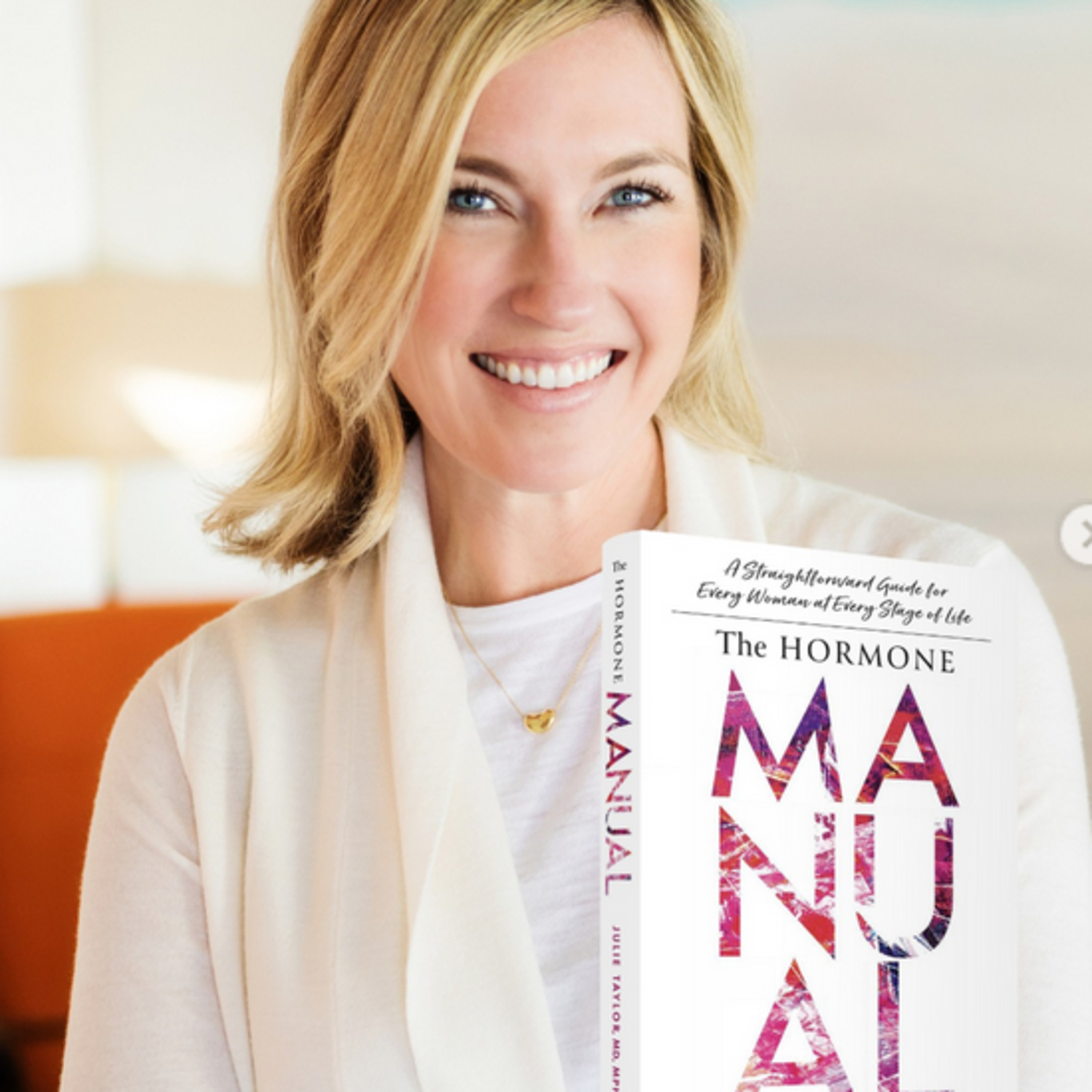
Hormones & Women: From puberty to menopause; with Julie Taylor, M.D.
In this episode
#DoctorPodcasts Episode 114:Hormones & Women: From puberty to menopause. Watch the video podcast with functional medicine expert, Julie Taylor, M.D. She discusses estrogen, progesterone, testosterone, PMS, gut health, microbiome, bio-identical hormone therapy & the role of men in women's health. For more information go to JulieTaylorMD.comWatch all 114 DoctorPodcasts || Cykiert Files video podcast interview episodes with physicians, scientists, healthcare specialists, entrepreneurs and other experts. Please SUBSCRIBE & FOLLOW #DoctorPodcasts. Please LIKE, REPOST/QUOTE and SHARE the episodes. Send questions, comments and messages to @DoctorPodcasts. Thank you. Robert Cykiert, M.D.#Womenshormones
#Pubertymenopause
#Estrogen
#Progesterone
#Testosterone
#PMS
#Guthealth
#Microbiome
#Bioidenticalhormonetherapy
#Roleofmeninwomenshealth
#Functionalmedicine
#JulieTaylorMD
#Hormonereplacementtherapy
#SafetyandefficacyofBHRT
#RobertCykiertMD
#CykiertFiles
#DoctorPodcasts
#Healthinsights
#Expertinterviews
#Menopause
#Hormonalbalance
#Womenshealth
#Endocrinology
#Reproductivehealth
#Hormonalchanges
#Menstrualcycle
#Hormonelevels
#Hormonetherapy
#Bioidenticalhormones
#Naturalhormones
#Hormoneimbalance
#Hormonesymptoms
#Hormonetreatment
#Hormoneexpert
#Medicalpodcast
#Healthpodcast
#Sciencepodcast
#Healthcareexperts
#Functionalhealth
#Hormoneeducation
#Womenswellbeing
#Hormonalhealth
#Menopausesymptoms
#Hormonefunction
#Hormonephysiology
#Hormonescience
#Hormoneimpact
#Hormonebenefits
#Hormonerisks
#Hormonealternatives
#Hormoneoptions
#Hormonecare
#Hormoneawareness
#Hormoneknowledge
#Hormoneunderstanding
#Hormoneperspectives
#Hormoneinsights
#Hormoneconversations
#Hormoneexpertise
#Hormoneguidance
#Hormoneinformation
#Hormonelearning
#Hormoneawareness
#Hormoneeducation
#Hormoneempowerment
#estrogen
#progesterone
#testosterone
#pms
#bioidenticalhormones
You hear about it all the time, and many people are afraid to discuss it. We're talking about hormones and how they affect women. Welcome to episode #114 of the Doctor podcast, Sicard File Show, where today we're excited to speak with Doctor Julie Taylor. She's a functional and preventive medicine physician based in Pasadena, CA, and I'm your host, Doctor Robert Sicard. Doctor Taylor's the author of the USA TODAY bestseller book The Hormone Manual, a straightforward guide for every woman at every stage of life.
It was released just about two weeks ago on June 3rd, and we're thrilled to have her here as a guest with a thriving practice treating about 1500 patients annually. She specializes in bioidentical hormones, gut health, which we'll get into more deeply, and addressing the root cause of symptoms. Her book, The Hormone Manual, empowers women to understand and manage their hormones from puberty all the way through menopause, tackling issues like PMS, fertility, postpartum depression, and aging. A sought after speaker featured on the Doctor Phil Show, Doctor Taylor is here to share practical insights to help women take charge of their health.
Thanks very much for coming to join us today on Doctor Podcast Show. Julie, I really appreciate it. It's great that you've taken time from your busy practice to join us today. Thank you so much for having me. It's an honor to be here. Thanks. Tell us about your training in medicine and how you became a physician first to start. Yeah, so always. Wanted to be a physician since I was five years. Old SO. It's been a long road and initially started out in primary care in my residency program after medical school and pretty quickly into my program I. Realized that.
I did not want to practice medicine the way that I was being trained to practice medicine. So but didn't really have, you know, a clear path at the time. So, you know, went through about half of the residency and eventually got up the. Courage to speak. To my residency director and told him that I really wasn't happy and wanted to shift and something else. So I left my residency pregnant with my second baby, not knowing what I was going to do and really didn't want to leave medicine. I mean, this was something that I was super passionate about, you know?
Always had. This on my mind always wanted to help people in this capacity and so I felt like maybe I just need to figure out something else. So I on one of my walks with my my first baby, I was on the phone with a friend of mine who was in medical school at Loma Linda, which is our only Blue Zone in the United States. And she said to me, you. Should really check out the. Preventive medicine program at Loma Linda, I think. You'll really love it. And I said preventive medicine. What is that? Never heard of it.
Right? We don't. Right? We don't. Yeah, we don't. We don't learn about that much in medical school, you're right. Yeah. So-called the residency director, went out and had an interview. They just so happened to have a spot open that summer. I didn't have to. Wait a whole year. Like we normally would and unlike my primary care residency from the. First day I started that. Program. I knew that this is where I wanted to be and really the program was all about teaching prevention, teaching how to. Reverse disease.
And it was there that I really started to learn about bioidentical hormones and I had always been interested in Women's Health, in fact. I had. I had really. Considered being an OB Guine but knew I wanted to have a family and so didn't necessarily want to have. Those types of. Hours and that that type of lifestyle. But within my preventive medicine residency, my mentor had a bioidentical hormone practice and so I worked with him and rotated through his clinic as often as I possibly. Could. And that's really where I learned about using bioidentical hormones to treat hormone imbalance.
And that changed everything for me. And immediately upon finishing my residency program, I started my own practice in hormone management. Wow, it's amazing story. So doctor tale, in your book The Hormone Manual, you say hormones are why we feel and act the way we do. They control many things in our lives. What are the key hormones women should understand at different stages of life like puberty, pregnancy or or menopause? And tell us some more about the bioidentical hormones. Yeah. So bioidentical hormones are different than synthetic hormones and typically what you will find.
Through. Just sort of. Conventional medicine is access to synthetic hormones, which is what's in birth. Control. It's typically what's. Given to menopausal women. Medroxy, progesterone, conjugated equine estrogen all. Of those are words for. Synthetic hormones. When we look at bioidentical hormones, we're. Actually, they're actually. Identical and chemical structure to the hormones that we make so when we take them in whether. It's as a patch. Or a cream or a gel. Our body understands what to do with it.
It goes to the receptors. Like it's supposed to and it's. Metabolized like it's supposed to. So when we talk about hormones at these different stages of. Life if we talk about. Teenage years, a lot of symptoms that teenagers. Will get if we go. Through them, right? PMS, heavy bleeding, terrible cramps, migraines, anxiety and depression. All of that is. Commonly commonly happens because. Of a. Estrogen to progesterone imbalance. So during the luteal phase. Which is sort of the. Phase leading up to the period, it often happens that progesterone can be too low relative to estrogen, so then estrogen becomes the dominant hormone where that's not how it's supposed to happen.
It's actually. Supposed to be the reverse. As the body's preparing for implantation, if progesterone is too low, it can cause a lot of those symptoms that I just mentioned. So I think that women really need to focus on, OK, if my teen is having these symptoms, I really need to look at her hormones before I look at anything else. If we look at. Postpartum. Like you mentioned, postpartum often has to do with. Low. Progesterone. So when we are pregnant, we are flooded with progesterone. We are bathing in progesterone.
Progesterone again is our happy hormone. It's the hormone that helps us to not feel anxious. It's the hormone that helps us not to feel depressed. You know, it cons us it on our GABA receptors. It's really, you know, a calming hormone. And so when we deliver and I've had three babies so I know what it's like when we deliver that placenta, we're literally delivering most of our progesterone when that happens. And if we're already at a deficiency or progesterone prior to becoming pregnant, then now we're even at a greater deficiency and that's what leads to postpartum depression.
And then when we get into menopause, we're talking about all the hormones. We're talking about estrogen, we're talking about progesterone, we're talking about testosterone. All of those decline as our ovaries really stop doing their job. And all of those hormones cause an array of symptoms, from hot flashes, tonight sweats to anxiety and depression. To low libido. And difficulty sleeping and foggy thinking. I mean, there's an array of symptoms that are really. Related to. Hormones that drop in menopause.
So do we know why there is a deficiency of progesterone in a teenager? Well, I think it's complex, right? Why are some teenagers able to just skate by and have totally regular periods no problem? Their period comes, they don't really feel any different. You know they're not lying on the couch unable to go to. School. Right. They're not dealing with migraines and having to be on, you know, Motrin every month or get on a triptan every month for their headaches and migraines. And they're not dealing with anxiety and depression and and why are other teenagers dealing with all of that?
So I think. That a lot of it has has to do with. Sort of the things leading up to puberty. What is the body like prior to puberty? You know what happened during those first ten years of life? Was that child on multiple rans of antibiotics because they had recurrent ear infections or they had chronic strep throat and now all of those antibiotics have disrupted their gut microbiome? Were they dealing with Constipation? Were they dealing with IBS? Did they have? A lot of trauma, right? So trauma causes.
High cortisol levels. High cortisol levels disrupt hormones, so and then we're taught and then if. We talk about diet. And you know, did they? Eat a lot of. Endocrine disrupting foods, things that were filled with hormones. Lots of dairy, lots of eggs that were. You know, chickens were pumped with hormones. I mean, all of those things impact. How that girl? Is going to potentially go through puberty. So it's complex and multifactorial and there might be some environmental issues like various pollutants or now the plastics that we're all consuming.
So it's it's difficult to pin it down. Doctor Taylor, what's the biggest misconception about hormones that you encounter in your practice? And how does your book help women separate fact from fiction? Yeah, I think the biggest misconception is that my symptoms aren't related to my hormones. So I have a symptom. I think it might be hormone related. I go to my doctor, I get my hormones tested, everything comes back normal. It must be, it must not be my hormone, so it must be something else. That is a huge misconception that I see all the time.
And I also think that, you know, your symptoms are little messages telling you that something's wrong. So I think that the other misconception is, you know, trying to treat every symptom with a different medication, you know, Tylenol for my headache, kind of suppressing symptoms constantly. I think that we have to really be in tune to our body and understand what's going on. So that we are. Really treating the root cause of our symptoms rather than just treating symptoms alone. Right now, you mentioned there could be a progesterone deficiency in the teenager and you mentioned that it's best to treat with bioidentical hormones rather than synthetic hormones.
So how do you treat that in that teenager, for example? And can you share an example of how this approach has transformed the patient's life, particularly with hormone related issues? Yeah. So I think. For the teenager and I have a budding 13 year old daughter so I'm getting there. You're an. Expert in all of this stuff? You've been through everything. Here's a lot going on. But I think. That, you know, there's some things that moms really need to focus on with their teenage daughters and, you know, kind of the basics are.
Look at their diet. Right. I mean, I understand I also have a 14 year old boy so I understand that like. Diet is very. Difficult in teenagers, but I think if we can educate them on how what they eat actually impacts their gut, which impacts their hormones, which impacts the way that they feel. I mean, the more information that we can give them and teach them, the better that they're going to know how to how to handle their bodies and how to listen to their symptoms and. Fix the root cause so. For teenagers, I think diet is.
Key. Especially if they're having symptoms. Right. So so decrease dairy. If not, eliminate, eliminate gluten, if possible, eliminate sugar. And you know, those are kind of the big ones. Make sure that they're drinking a lot of water, staying hydrated. Look at their stress levels. I mean, are they really overwhelmed? Right. Stress. Really. Impacts hormones in teenagers. You know our body. Produces cortisol. That's our stress. Hormone. So when we're in. A stressful state, our body. Is producing all of this cortisol in?
Order to deal with the. Situation under chronic states of stress that so many teenagers are under nowadays because so much, you know, so, so much in academics or athletics are put upon them. That they are, sort of. Chronically producing excessive amounts of cortisol, and that is actually impacting how much estrogen and progesterone and testosterone they're producing. So I think stress is key, diet is key. Making sure that they're sleeping. You know, teens are notorious for staying up late and, you know, waking up late and really not having the proper sleep during the proper time.
So sleep is really important and then exercise, moving the body. Is key, so those that's kind of the 1st. Place to start and then I would. Say if the. Patient is still having symptoms. If the teenager is still having symptoms then it's time to sort of think about. I usually will start with supplements to. Try to help boost. Their own natural production of progesterone, unlike my menopausal patients where the ovaries have really just kind of shut down. Teenagers are just at the beginning, right? So their body is working.
It might just not be working in the proper way. So if we can sort of wake up the ovaries and allow the, you know, allow the natural process to happen through supplements, then we can sort of get the progesterone to be where it needs to be. And then I think the. Last resort is really. Doing any sort of progesterone, bioidentical progesterone hormones for the patient. So which supplements specifically are you referring to? So there's a supplement called. Vitex It's a chase Berry tree extract, so it's very.
Natural and I use it a lot in my patients and I will cycle it during the. Luteal phase because that's really. When we want the progesterone to be. At its highest, so I will cycle it. You know at ovulation until you know through their luteal phase until their cycle begins and that. We we really give that. You know as as much time as we need in order to get the progesterone to produce naturally on its own. What's that called again? I. I. Vitex. How do you spell that? BITEX and it's a chase Berry tree.
Extract and you know it tends to work really well. Wow, that's that's great. What about you mentioned gluten is is not a good thing? How does gluten adversely affect the hormone balances? Yeah, I think that that one maybe not as much as the others. You know, I think sugar increases insulin. That impacts things. Dairy can have hormones in it that can impact hormones. I think gluten is sort of more indirect, and it's not necessarily for everyone. I mean, some people are able to have gluten and they're not really impacted.
But gluten can cause disruption in the gut. It can cause leaky gut, and it can cause inflammation within the body. And inflammation in the body can then lead to, you know, things sort of not functioning the way. That they're supposed to. Doc Taylor, your book also highlights the link between gut health and hormones. And you mentioned gut health a few times. Can you explain what the gut microbiome is? It's a relatively new concept in recent years and how a healthy gut microbiome impacts hormonal balance and prevents issues like autoimmune diseases or irritable bowel syndrome.
IBS. Yeah. So I think the father of medicine, Hippocrates said it best when he said all diseases start in the gut. So this is not a new. Question he knew, even thousands of years ago. Right, like we all. Learned that in Med school, right? Right, so so. It's not a new concept. It's just that we have. Driven so far away from, you know, looking at that as as really the root cause of inflammation and of disease. Right, it's actually an old concept, but we've ignored it and now we're just beginning to pay attention to it.
Exactly. Yeah. So I think that one of the things with the gut microbiome, you know. If we talk about. Constipation I think is one thing. So So when women or men are constipated, it prevents them from really excreting their excess, excess hormones like. They're supposed to be. That's just one thing IBS is 1 like you mentioned that you know, is a reflection of gut microbiome being out of balance. And really when we talk about the gut microbiome, we're talking about all the bacteria that live in the gut.
I mean we. Are flooded with right like all this bacteria that. Live in the gut, billions. Yes, it's it's. Crazy to think about, but. But if there's a. Disruption in the balance? Of bacteria if there's extra. Of this and not enough of this, then it actually prevents the gut and the bacteria from all working together. There's something called. SIBO, which is small. Intestinal bacterial overgrowth and actually a lot of gastroenterologists. Will test this. In their patients and we're not really supposed to have an overgrowth of bacteria in the small intestine and the symptoms that result from.
SIBO are so vast. You know, certainly bloating and acid reflux and kind of things that you can feel, but also anxiety and depression and also autoimmune. There's a. Whole host of symptoms really and and diagnosis that are. Really related to SIBO. In particular. It's good to know. So diet again is is critical because it keeps the gut microbiome normalized and allows for a balance of hormones, right? Yes, exactly. Now you mentioned acne, heavy periods, PMS aren't normal part of teen life. Why are these the big issues now and is this also being aggravated or exacerbated by oral contraceptives and using medications like Motrin or Advil or the non steroidal anti-inflammatory pain medications?
Yes, I think all of the symptoms that you mentioned are indications that hormones are off. So really. You know, when a teenager is experiencing those things, they shouldn't experience those things they shouldn't experience. These terrible heavy periods. And these terrible cramps and terrible acne. So it's an indication that something is off, something is out of balance and that root cause really needs to be looked at and and dealt with and treated. So, you know, really treating symptoms with Motrin and other NSAID's and Tylenol.
Or what have you is. Sort of just masking the symptom. It's not dealing with the actual imbalance of hormones that these teenagers are really suffering from. So you want to get to the root cause. Now it's sometimes difficult to control diets and tell kids to exercise and sleep right and avoid sweets and things like that. How do you manage that? And you're, you've got your own teenage daughter you mentioned. So how do parents control that? Yeah. I mean, I think it's. Hard, but I. Think that the more that women moms can understand their own hormones and understand what hormones, how they fluctuate and what's supposed to happen within the cycle, then they can really start to educate their teenage daughters.
You know, we really just kind of think that hormones are a problem, right? You're PMS saying you're hormonal. It's all. Just a four letter word. All the time. And I think that hormones really make up who we are. I mean, they really are everything. This is, I tell my patients, I've said it so many times, your hormones are everything. Every single single thing that you think you've got to think about your hormones from how you feel here. To how you feel physically. You have to think about that. So I think that the more that moms can understand what's going on hormonally within their own bodies, they can now start to educate their teenagers so that, you know, teenagers are really embracing their hormones instead of just ignoring them and wanting them.
To go away because that's. Really how it's been ever since birth control started in the 60s. I mean it's. Like, let's shut this. Down we are literally shutting down the brain connection to the ovaries and we're saying we don't want that to happen anymore. I mean, imagine if we did that to men. Imagine if we said we're just going to completely cut down the brain making testosterone in the testes like done. It's causing a problem. It's too much. I mean, men would. Be aghast, right? Men wouldn't tolerate that.
No, but that is really what we've done with.
Right. There are hormones in the brain that control the hormones in in the ovaries and other parts of the body, and it's all connected. Exactly. Right now you mentioned earlier sometimes a blood tests are normal. So if you take your teenage daughter doctor and check the progesterone, estrogen levels, testosterone levels, the doctor says hey, they're all normal. This has nothing to do with hormones. How do you deal with that? Because that's probably very common. Yeah, it's very common. I hear it all the time in my practice and I think it's important to understand who you're talking to.
So you have to seek out the right provider for the right. Care. Your gynecologist is really important for doing certain things. Right, they do your paps. You know they take care of things if something's wrong, the OB. 'S deliver your babies like. They're really, really important. I loved my OB's, but they might not be the person to go to for your hormonal imbalance. Again, we're not educated on this in medical school and we're really not educated on this in residency. So you kind of have to figure my MD.
That I typically go to. Might not be the person. To go see I, I. Reference this in my book and I say, you know, it's kind of like asking your plumber to. Do your electrical work. Or it's kind of like asking your electrician to do your plumbing. Sure, they understand the the insurance and outs of what's behind the walls. They've seen the pipes, they've seen the wires. They know and they can sort of make maybe make something happen, but it's not really the right person for the. Right job. It's a good analogy like that.
So I think it's. Really key to. Find the person who really understands all the nuances of hormones. How to test what to look for because you really. Don't want to? Go get a blood test. And have everything be told that it's normal from somebody who doesn't really understand the nuances of hormones. Right. So if somebody's in Pasadena, they go see you, Obviously you're the expert in this. But what if they're in New York, where I am, or Maine or Florida? How to how do parents find the right doctor that understands all these hormonal concepts and how they control the body and the mind?
Right. I think that so I did a lot of my training through IFM, the Institute for Functional Medicine, and a lot of MD. 'S will go through that institute in order to do. Kind of training post residency. So that's one place to go. You can go to ifm.org and, and you know, find a practitioner in your area. I also think another great thing to do is to call your local compounding pharmacy. If you have a really good local compounding pharmacy in your area or in your state, ask them who they would recommend who's the best person in the.
Area to do this because. They know you know the providers in the area. Who? Really. Focus on hormones because most. Doctors who do what I do we're. Working with compounding pharmacies. And that's because these compounds are not readily available in drug stores. You just can't get it off the shelf, so you have to go to a compounding pharmacy. That's a great idea. What about the thyroid hormone? We haven't mentioned that. That's a critical hormone, controls a lot of things in the body, both in the brain and physically.
How do you check for that? And should that be checked in teenagers even? Yeah. I mean, it's definitely. One of the the. Kind of section of lab markers that I will do in my new patients and will monitor once a year, you know? TSHI look. At free T3 and I look. At total T4. I might look at TPO antibodies. If I feel like they're. Sort of a Hashimoto's component, but I think looking at TSH, looking at free T3, looking at total T4, and really making sure that they're between the middle to upper end of the range is important.
And TSH you know when you look at TSHA reference range of. TSH, it's so broad. It's a really wide right, So yeah. Good point, right? Yeah, I think in functional medicine, we always look at optimal levels, right? We're looking at what's optimal, not what's within range. That's a key difference. And so for T. Shi will. Look at, you know, really kind of being. At the lower. End of the range not accepting ATSH. That might be 4.5 which is the upper end of the range, but really trying. To get that TSH closer to.
To 1.51 something like that, because I know that at. Those levels. Thyroid is more optimal. So that's important to monitor as well. Doctor Taylor, what about postpartum depression? It's a major concern for new mothers. I'm hearing more and more about it, reading about it, what causes it and what non medication strategies do you recommend to ease it? And how does breastfeeding play a role in postpartum depression? Yeah, I mean, postpartum depression is near and dear to my heart after having three children of my own.
And I feel like postpartum depression is so significantly mismanaged. And, you know, even in my area, I've known, you know, young moms who have taken their lives because they haven't been managed properly. And it just breaks my heart. So I. Think that you know. Really the culprit for postpartum. Depression is low progesterone until proven. Otherwise. So every single. Woman who has postpartum depression really should be started on progesterone right away.
It's a super safe hormone. It's safe to take when you're breastfeeding, and that will. Help. Women who are suffering from postpartum depression because of low progesterone feel so much better so. Quickly. Now, is that the synthetic progesterone or is that some sort of supplement that causes progesterone production in the body? So I don't do any synthetic hormones. So when I'm referring to hormones I really am only referring to bioidentical. I really don't even think synthetic hormones should be on the market.
They shouldn't really be available. So progesterone Bioidentical progesterone, either in the form of a cream or a. Capsule. So, you know, every single night until women start to feel better and they and they can still better very quickly. You mentioned breastfeeding and the, the impact of that breastfeeding is so important. And I, I again, I think that's another thing that we've sort of, you know, kind of moved away from the importance of breastfeeding and, you know, we talked about formula and, you know.
All of. All of. These things that I think that so many women. Who otherwise could be? Breastfeeding are not breastfeeding and and breastfeeding releases oxytocin. Which helps the uterus. To contract. So you're kind of bringing your body back into balance physically, and you're also creating that baby bond. That is so crucial. And it's, it's, you know, oxytocin is so important for helping the mother. To feel better so. You know, the more women can breastfeed, the more that we can really support breastfeeding for women, the better.
And I, I think that that's. It's a. Crucial thing that we've really got to emphasize and support mothers along the way. Does breastfeeding stimulate progesterone production as well or or not really? Yeah, I think it just kind of helps everything to sort of get back into balance again. I don't think it necessarily directly stimulates, but it really is such an important hormone postpartum that helps women to not feel so depressed and not to feel so anxious and and indirectly really supports their hormones so.
It's it's all part of the recovery process. Right now, Doctor Taylor, in your book, you also debunk myths about menopause, like the inevitability of hot flashes. What's the truth about that? And what should women expect and prepare for perimenopause and and menopause? Yeah. So I think that we really think of menopause as hot flashes and night sweats. I mean, it is like those two things are very much together. And there are some women who really don't get hot flashes and night sweats, but they still go through menopause.
I mean, every woman goes through menopause. There are so many symptoms that that start well before, you know, menopause actually happens. So perimenopause can be a very long road. You know, it can start 10 years before the cessation of periods. Things like foggy thinking and memory loss. All of a sudden women think that they have, you know, early onset Alzheimer's when? Really, it's just that their. Hormones are dropping. They'll start to feel depressed. And they don't know why they think, Oh my gosh.
I have this great life. I have these great kids. I have this great husband, you know, like everything's going well. Why don't I feel good? Why am I not feeling myself? It's hormones. Until proven otherwise, I think that, you know, starting to feel like you have joint pain or you have fibromyalgia. You know, so many women are, are diagnosed with fibromyalgia in their thirties, 40s and 50s. And it's sort of, you know, that diagnosis of, of exclusion like. OK, we've we've. Tested everything. You don't have any major disease.
We don't know what's going on, so we're going to diagnose you with fibromyalgia. Chronic fatigue syndrome is also sort of in that category. Right. So all of that is. Very much, you know, the result of a hormonal decline and perimenopause. Estrogen is so important for our joints. So when our estrogen is. Low it causes. Those symptoms of feeling like you have arthritis and you know you can't go for a run like. You used to or. You know, every time you wake up in the morning, you're just sort of, you know, cracking your knuckles or, you know, you don't know what's going on.
That could very much be a hormone decline that starts. Like I said. Several years before the onset of the period ending. So how do you treat that? Hormones typically. Typically, yes. So. I I say that you can't really treat. A hormone imbalance without really treating with hormones. It's kind of like, you know, we can do all of these other, you know, if. You had a thyroid issue. And you needed thyroid hormone because your thyroid wasn't functioning. You're not going to do all these other things. Sure, like other things might help, like AB 12 might help you with your energy.
You know something else might help. With your sleep maybe? You try something else for weight because you're increasing your weight because. Your thyroid is off. But really what's going to fix it is getting your thyroid supplemented with extra thyroid hormones. So sometimes, you know, that's sort of what we need to understand is that sure, all of these other things can work. You can take magnesium for sleep because you're not sleeping as well. You know, you can take something, you can take a Tylenol for your headache.
You can kind of do all of these different things, but it's really not going to treat the actual hormone imbalance. Now, are these again, bioidentical hormones that you get from a compounding pharmacy, or is this the things that many doctors just prescribe? It is hormones. Typically bioidentical hormones that I. Will use. Through a compounding pharmacy. If I have a. Patient, that is. Really adverse to. Using a compounding pharmacy. Because of cost there are. Some bioidentical hormones that are available through your local pharmacy, things like Prometrium, that's a bioidentical progesterone and estradiol patch is bioidentical.
So there are some options that are. Available through your regular. Pharmacy that that insurance. Will typically cover. But by and large, most. Of what I use is. Through a compounding pharmacy because I'm able to, you know, do things in different dosages and really sort of create a plan that is really personalized for my patient. Right. So it's customized for every patient. Yes. So the key is to to get a Doctor Who has a connection with a compounding pharmacy. Otherwise you're getting the synthetic hormones.
Yes. OK, now what about testosterone? It's typically considered a male hormone, but there's testosterone in in women as well. And the levels go down with menopause because the ovary stops producing testosterone. So what effect does that reduction in testosterone have on women, and what should they do about it? Yeah. So testosterone is such an incredible hormone, and it really is one of the first decline in women. It declines typically before estrogen declines. And in fact, women make more testosterone than estrogen, but we typically think of testosterone as a male hormone and estrogen as a female hormone.
But women make more testosterone than estrogen. So when our testosterone starts to decline, it causes weight gain, it causes muscle mass loss, it causes decreased energy, it causes lack of motivation and drive in general, and then of. Course it causes low libido. And that can really impact relationships. So, you know, women will start to say, you know, I'm uninterested. I don't want to have sex. This is an important, it is important. We all know it's important, and it's important to recognize that when you.
Start to feel that way. Get your testosterone checked. Because testosterone is so vital to how you feel. I think typically most doctors don't check testosterone levels. Even OBGYN doctors don't really check it in in women, do they? No, I don't think so. And I think the other thing to know is that there is no FDA approved testosterone. So even if they did check it in women, what are they going to do? There's nothing that they can do about it. They're not going to there's they can't prescribe something unless, again, they go through a compounding pharmacy.
So you get that through compounding pharmacies? Yes. Right. Testosterone's gotten a bad name because some people abuse it to try to put on muscles and work out in gyms. So it's it's become sort of a taboo. But you're saying compounding pharmacies can mix up the right compound, right concentration to make sure that it's safe and effective? Yes, that's right. Yeah. Now you emphasize in your book the hormone manual testing for a hormonal imbalances even when results fall in the normal range. Are there special laboratories that will do a more sensitive test of the hormone levels so that it just doesn't come out normal and and the doctor ignores it?
Yeah. So I use very specific testing. There's companies. Like ZRT out of. Oregon, they've been around for a long time. They do a lot of very. Specialized testing related to hormones. They're fantastic. They check cortisol. They check, you know, hormones in, in, in women who are menopausal. They check hormones for fertility purposes to see if there's a hormonal imbalance related to fertility. So that's super key. And the reference range is. Is very specific for that. Time. Of life for that, that.
Woman and where she is in her cycle, if she's still having a cycle. There's also the Dutch. Test, which is a urine test and that's also very comprehensive and very focused on you know really treating the nuances of hormone imbalance and really looking at those reference ranges particular to that patient so I don't really rely on blood work for checking hormones I really. Look at these other tests. Because they give me so much more information and really help me to treat and track as I treat the patient.
It's very interesting. The regular labs have a broad range of normal, as you mentioned for TSH, for example. So there might be little nuances that you don't pick up in those blood tests. Now we touched on it briefly. Should women be taking birth control pills? What? What do you think about that? Yeah, well, so birth control. Interestingly, was the very first medication that was treated that was given chronically. It was the very first. Pill, the very first medication that was given long term, you're going to take this and you're just going to take it forever or however long, you know, they decide.
It used to be that medication was, you know, sort of an acute situation, right? You come out of the hospital, you're on something short term, and then you get off it. So birth control has just become one of those things that is, you know, that everyone. Takes for for lots. Of different reasons, whether it's. Headaches or heavy periods or fibroids or. Acne, you know, there's so many different reasons why birth control is sort of just. Passed out like candy. And, you know, we don't really talk to women.
About what the effects are. And, you know, both short term and long term, and I think it's interesting that, you know, often times within a year of getting on birth control, patients will then start on an antidepressant and they don't make the connection. That their birth. Control is actually causing their mental health issues. So I don't love birth control. I really don't love it because. It is. It creates such a. Disconnect between how your brain is communicating with your ovaries and how it's able to produce hormones and it causes symptoms that we're just not focused on.
So I think that there are, there are not a lot of really great birth control options out there, but you know, I would. Say that the IUD is probably. One that I talk about with my patients as being sort of like, you know, maybe the best option in. Regard to those types. Of things on the market there's the Mirena that has hormones and better than that is the copper that is non hormonal. Interesting. Yeah, they birth control pills may be responsible for for a lot of problems and who knows what the long term side effects are.
Even if you've stopped it, it could have effects years later. Yes. Now, your book is already AUSA Today bestseller. That's awesome. Congratulations. After two weeks, this indicates people are very interested in this topic. As I mentioned earlier, what's been the most rewarding feedback you've received from readers about how it's impacted their lives so far? Yeah, well, as you said, we're. Just very new into this, but it's very exciting and I'm so honored and you know, just. For all the. Readers out there, just so grateful.
But I just think that, you know, really people starting to have answers. That's really the most rewarding thing to them. To me. It's, you know, they're getting the information, They're starting to have a different perspective on how they've thought about things. It's really, you know. I hope. Like I I wanted to kind of cause a mind shift of how women are really analyzing their symptoms and really thinking about their hormones. So that's really. Been the best thing. Is is that? You know they're getting answers when they never had them before.
Right. Instead of being ignored, now they're getting answers. That's great. That's a huge accomplishment. Should men read your book The Hormone Manual to find out more about how women work? Absolutely, it's key. I think that men really need to understand, and in fact, the more men understand, the more men can really guide their. Wives, their daughters, their sisters. Their mothers to have their hormones analyzed. There's oftentimes where I have the a male call my office wanting to make an appointment.
For his wife because. He knows that she's going through this. So the more that we can, you know, educate men, the more that they can understand what's going on. The better support that that. Woman is going to have. That's awesome. I assume your website has information about your book? What? What's your website? I'll post it on the video podcast. Great. Thanks. Yeah, it's Julie Taylor, MD dot com and then my Instagram, which we have a lot of information on is Julie Taylor, MD and the book is available on Amazon.
It's available on Barnes at Barnes and Noble. And for people who want to know more, I'm developing a course an online. Course that really goes. Through the different nuances of all of this. So if you subscribe. On Instagram, we'll have more information there for when that will be released. That's great. So they'll go to your website and find out more information. So this has been very educational for me and informative. I learned a lot. I'm sure the public is learning a lot out there as well. And your book is great for women and for men as well.
So congratulations. Thank you, Doctor Sicard, Thank you so much for having me. My pleasure. Take care.
 Apple Podcasts
 Spotify
 YouTube